
The Rise an fall of Klaarg Tordenzme
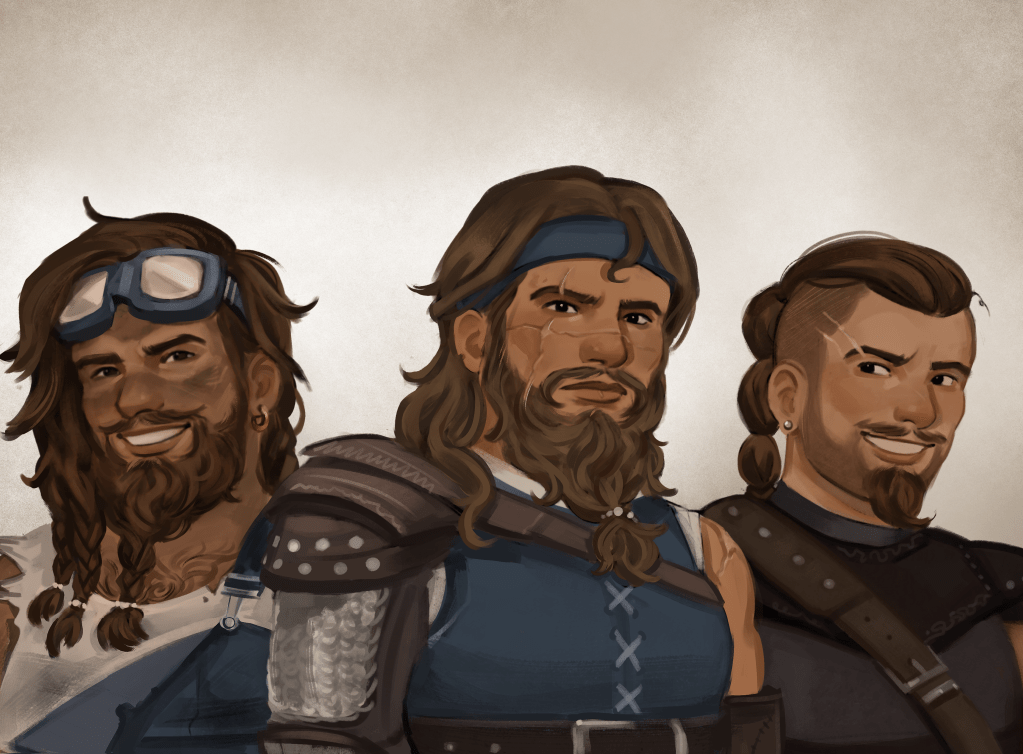
Dwarves in fantasy roleplaying, especially in the modern sense, have become stereotypes. Loosely based on Gimli from Lord of the Rings, it’s a common shorthand, found in several fantasy settings beyond Middle Earth. Dwarves are short, bearded, stocky, gruff, capable of holding grudges across generations, masterful artisans and miners. Some sources describe Dwarven women as having beards, (like Xindi and Xandi on the masthead), others describe Dwarven women as lacking facial hair (like Disa from Rings of Power) and often Scottish coded. Part of this image is Dwarves living in extensive Clans.
So widespread is this stereotype is that it’s common parlance. When the GM mentions a character is a Dwarf, the players will most often draw up powerful mental images of that character based on the previous description. While this “short”-hand is useful (see what I did there?), it can lead to confusion at the table as players make assumption about their Dwarven companions.
Dwarves in the Dezzyverse
In my campaigns I “reskin” dwarves just to shake up player assumptions. This is mostly just retitleing the names of dwarven things. I prefer to use the terms a people would use for themselves, as opposed to the terms that others would use for them. In the case of my campaigns, they call themselves Svakk as a people. (Indeed, calling them “Dwarf” might start a brawl) Though the Svakk refer to themselves most commonly by the name of their Klaarg (which is their word for “clan”). “Xandi of Klaarg Tordenzme” for example. The languages of the Svakk are collectively called Klaargspek, though like their cultural identities, most Svakk refer to their languages by the name of their Klaarg. “Tordenzme Klaargspek” or “Sohnrodt Klaargspek”.
Even divided among dozens of distinct Klaarg, the Svakk people are tightly bound together, Klaargspek is understood even through different dialects spoken in different Klaarg. Klaargspek also shares a single runic alphabet, the Vaalbek.
The Doom of Klaarg Tordenzme
Once, Klaarg Tordenzme stood among the strongest and most wealthy Klaarg among the Svakk. Indeed, the grasp of Klaarg Tordenzme had stretched beyond the halls and citadels of the mountain realms, Tordenzme was a force within the kingdoms and empires throughout the lands, from sea to ocean. The heart of this mighty realm was their city of Dohrgraign. Deepest of the delves beneath the mountains, in this age, Dohrgraign was was the only city to make peaceful contact with the dark realms of the Underworld.
Exotic and expensive trade passed through Dohrgraign, under the leadership of Theigns from Klaarg Tordenzme. Roads from the farthest realms stretched to the Grand Gate that led deep into the Underworld, a league-and-a-half below the surface world to the City of Dohrgraign. For centuries Klaarg Tordenzme stood among the greatest of these ancient empires.
Then came the Doom of the Tordemzme, a prophecy delviered to Klarg Tordenzme that was defied, causing catastrophe. Over nine years of what the chronicles named “The Fall of Dohrgraign”, the city suffered endless misfortunes that resulted, finally in the gates being sealed from the outside world. Few detailed records survived the Fall and in the eight centuries after the Sealing, the city itself was lost to memory, fading into myth, a distant curse and reason to shun the descendants of Klaarg Tordenzme.
Eight hundred years ago, during the reign of Theign Haaldbarg, a mysterious prophet known as the Black Vizier was recieved at court. The hooded and robed figure did not bow, nor show deference to Theign Halldbarg, speaking directly and openly their warning.
“Trespass no further into the dark below the stone on which your thy city stands. Else the greed of Klaarg Tordenzme will become Dohrgraign’s downfall.”
Insulted, Theign Haaldbarg ordered the Black Vizier thrown in chains. Yet, when the guards attempted to seize them, the Black Vizier vanished with a clap of thunder that felled all within two or three strides of the figure.
Afterwards, the Black Vizier appeared again and again, and always delivering disaster where it stood. It is difficult to tell exactly when Theign Haaldbarg sealed the city, but there was one last evacuation towards the surface. History records that a foul miasma had arisen from the Wyrmansklovt and spread throughout the city, bringing horror and death. What few citizens of Dohrgraign still remained were commanded to flee to the surface.
It was following this last escape from the Underworld that the tunnels connecting Dohrgraign to the surface collapsed. In the centuries which followed, the city that grew around the Grand Gate withered and fell into ruin and Dohrgraign was ultimately lost.
The Doom of Klaarg Tordenzme was used by the klaargs for centuries as a warning against hubris. The few Tordenzme communities that survived the Doom have been marginalized by other klaargs as “cursed” based on this myth.
The Year of Rage
In the “current” year of my D&D campaign, it has been roughly ten years since the events detailed in the published adventure Out of the Abyss. With the incursion of demons, a small struggle between the Demon Prince of Undeath and the Patron Deity of Dohrgraign, the Keeper of Secrets Under the Mountain has caused lost passages to open once more as demons and the holy dead battled one another.
The Year of Rage also corrupted the ambient magic of the Underworld. Mortals adventuring in the ruins of Dohrgraign risk Torment and corruption. The cursed city drew the Demon Prince to it. Dohrgraign had been a tomb for eight hundred years by the time the Year of Rage brought demons into the Underworld. The Keeper of Secrets Under the Mountain was not only the God of hidden treasures and secret knowledge but he is the Keeper of the Dead. Dohrgraign is one of his holy places under the mountain, and after eight centuries, it has become a secret as well.
The Crossroads of the Underworld
Dohrgraign was not a naturally occurring space. It was carved from the stone of the underworld by Klaarg Tordenzme over centuries. Following the seams and veins of ore, the Tordenzme miners uncovered the passages and caverns used by the civilizations below the surface. The closest of these caverns became the Gatehouse of Dohrgraign, another nearby cavern (a much larger cavern) would develop into the settlement known as Genzhymyl.
In the present day, Genzhymyl has grown into a thriving trading center. It is independent from the competing realms in this region of the Underworld, The Empire of Llolth, the Azhgov Clan, and the various Goblinoid, Kuo-Toa, and Orcish communities that have settled in this area over the past several centuries. With the newly unblocked passages, Dohrgraign is once again able to be discovered.
 Lore and Legends of the Dezzyverse
Leave a comment