Category: Dungeons and Dezzys

  • A Crossroads in the Deep

    A Crossroads in the Deep

    A Settlement on the Underworld Frontier

    Far below the surface world, a vast Empire rules a web of tunnels and caverns. The Empire of the Spider Queen is a dark mirror of the Elven realms that bathes in the golden light of the Sun. The founders of the Empire of the Spider Queen were the losers of a war against their Elven cousins ages past, and driven from the sunlit world into the lightles underworld. Over generations, they recovered from their grievous loss, adapted to their subterranean world and forged a dominion to rival their sunlit cousins.

    Genzhymyl

    Genzhymyl has changed greatly over the past ten years. Initially a trading post on the K’Kephredoc River and along the shore of the lake, Genzhymyl lasted for decades as little more than a permanent camp. The closest settlement was K’zeldremn, which was on the far side of the nearby causeway tunnel.

    Genzhymyl experienced rapid change following the Year of Rage. Every House in every colony of the Empire of Spider Queen, including K’zeldremn fell into anarchy as the Demon Princes raged through the Underworld. As demonically-feuled riots and chaos tore the cities apart, refugees from K’zeldremn fled to Genzhymyl, swelling its population and growing it into a proper town, independent of domination by the Empire.

    The town’s architecture is a chaotic mess of pavilions, temporary, and permanent structures. The oldest buildings, dating from the original Flayed Matron Manor and Kyrzhiim’s Mill are made of set stone and reflect styles from the nearby city of K’zeldremn. The Dzhuol Goblin Tribes and surface-influenced styles are common among the semi-permanent buildings that have been used since before the Year of Rage. Many of the newer permanent buildings are built by Klaarg Azhgov and are designed to be very efficient and sturdy, if not decorative. Finally over the ten years since the Rage of Demons, the refugees have begun to build out their tent encampment into semi-permanent buildings, owing to no architectural style other than what is the fastest and most convenient to build at that time.

    Genzhymyl’s independence is secure for the moment, the Empire and her dispersed colonies will be rebuilding for a long time to come. Although the Demon Princes have been banished back to the Pit, Demons still roam freely in the Underworld. And it is still not known when the Demon Queen of Spiders will once more establish her direct authority over her Empire.

    Rulership in Genzhymyl

    Genzhymyl is governed by a town council consisting of Vethric Ghaul – owner of the Flayed Matron Manor, Ztorv – Preadarch (Cheiftan) of the Dzhuol (the Goblinfolk tribe across the K’kephredoc), and Johayya (Viscount) Ivynna Kvarik of Klaarg (Clan) Azhgov. Vethric acts as head of the council with Ztorv representing the Dzhoul, and Ivyanna representing Azhgov interests in Genzhymyl.

    The government of Genzhymyl becomes informal below the town council, though there are some semi-official positions that have become permanent during the past ten years. Town Herald is one such post, answerable to the town council, which makes official pronouncements and proclamations public, and likewise hears any statements made by the citizens to bring to the council’s attention. The current Town Herald is “The Khabtyn Dhahabei” (the Gold Captain in his native tongue), Ehriegan Staav, a human from a great city on the surface who has prospered as a broker in Genzhymyl for twenty years. The Khabtyn Dhahabei employs a dozen “Town Criers” as deputies.

    In addition to Town Herald, there is the post of Magistrate, who mediates disputes among the population in the name of the town council. Though not exactly a Judge, since laws in Genzhymyl are not codified, the Magistrate, and their Adjudicators provide for settlements without need for violence. The current Magistrate is a Svirfneblin woman, Ynzylith, the oldest child of the owner of the town mill, Kyrzhiim

    The Master of Markets directs the shops and stalls of the Genzhymyl Bazzar, it is their duty to maintain order and peace within the Bazzar as well as collecting the taxes and fees from the merchants trading within the settlement. At present the office is held by a ruthless woman, a Drow by the name of Avzenthe Djerrn. The Mistress of Markets (as she styles herself), employs a small team of “Managers” and “Collectors” to enforce her authority.

    Locations of Note

    • The Flayed Matron Manor
      • The Flayed Matron Manor is owned by Vethric Ghaul and managed by Jeegan Thatz. Over the past 200 years, the Flayed Matron has served as a way-stop, a gambling den, a brothel, an inn, and a tavern. Currently it is all of those, and serves as the council chambers for government.
        • Jeegan (a Half Orc/Human) is Vethric Ghaul’s chief Lieutenant. She manages the day-to-day operations of the Flayed Matron Manor in Vethric’s place when he is away or otherwise occupied. Jeegan is a priestess of the Mistress of Whips and is a sadist. She has leveraged this trait into a profitable arrangement at the Flayed Matron Manor, serving a special clientele of powerful,influential people who have masochistic or submissive needs that need to be fulfilled with discretion.
    • Kyrzhiim’s Mill
      • A large water mill used by the town for processing all manner of seeds and grains for a small fee. The owner, Kyrzhiim is a Svirfneblin and one of the wealthiest people in Genzhymyl. He lives in an ostentatious mansion on the shore of Lake K’kephredoc.
    • The Grey Lantern Inn
      • The primary house for renting rooms. Since the Year of Rage, the owner, Ghazrahd Sablemane (a Duergar with rarely-seen black hair and beard) has expanded the grounds from a single building to a small campus with stabling, barracks, and suites for extended leasing.
    • “The Tent”
      • Before the Year of Rage, a goblin by the name of Gheez set up a huge pavilion on the then-edge of the Camp. “The Tent” as it came to be called, offered cheap, moderately secure space for patrons to sleep for a few hours. Since then, Gheez has died and “The Tent” has been rebuilt as a permanent structure (but remains a large, open building) operated under management of Klaarg Azhgov through Virdiloma Yth.
      • The “innkeeper”, Virdiloma keeps a shrewd eye out among her tenants for those in desperate circumstance. Individuals who don’t have family, money, or friends who wouldn’t be missed, escaped slaves, or known fugitives from one of the power centers in the region. These vulnerable people are targeted for abduction or capture by Klaarg Azhgov.
    • The Genzhymyl Bazzar
      • Along the road stretching from the Flayed Matron Manor at one end to The Tent at the other. The Bazzar is the central forum of Genzhymyl. The Market here never fully closes, with commerce being practiced at all hours. Nearly anything can be found here for sale, timbers from the Yyngvath Forest, fish from the nearby lakes, exotic wares from the Surface word as well as the Deeps. Also, of course, slaves being auctioned by Klaarg Azhgov.

    New Background: Enslaved

    • Ability Scores
      • Strength, Constitution, Widsom
    • Feat
      • Alert
    • Skill Proficiencies
      • Insight and Survival
    • Tool Proficiencies (choose one)
      • Cooks’ Tools, Leatherworkers’ Tools, Potters’ Tools, Tinkers’ Tools, Weavers’ Tools, Woodworkers’ Tools
    • Equipment (these items are either stolen, or the property of the character’s owner)
      • A toolkit that matches the proficiency chosen, An Explorers’ Pack, (Un)Holy Symbol, Manacles
      • or 10 gold coins
    • Disadvantage
      • The Enslaved bears a permanent mark of their bondage, a tattoo, scar, brand (or similar). This mark is easily recognized by most people. All Social Interactions with folk who are aware of this mark are made at Disadvantage.

    The character is or was a slave. Owned by another person, or household as property. They have either been granted their freedom, or escaped, but the marks of their bondage remain. If a fugitive, there is likely a bounty for their capture and return (GM’s discretion). The character’s time in servitude has taught them to remain aware of the people around them, reading their body language to divine their mood or to intuit their whims.

    Conclusion

    The caverns of Genzhymyl hold endless opportunities for adventures to explore the unknown along the periphery of the Empire of the Spider Queen. During the Year of Rage, earthquakes have changed the geography in the surrounding area, caving in and closing the tunnels that led to the surface, and revealing new passages. Secrets long hidden or lost in the Deeps have been revealed, waiting for the reckless, bold and curious to discover.

    The Township of Genzhymyl functions as a “home” for adventurers to return to when they need resupply, rest, or training. It’s independence and relative stability contribute to it’s reliability. Yet, since the catastrophe of the Year of Rage, Genzhymyl has become a new center of intrigue, as survivors and refugees jockey for power and influence. There is plenty of opportunity for “agents of fortune” to find good paying work and patrons in need.
  • Drow Hybrids in the Underdark

    Drow Hybrids in the Underdark

    Offspring of Dark Elves and their Thralls

    The 2024 revision of 5th ed D&D, retitled D&D 5.5, removed “half-” species from the game. While this choice was controversial (to say the least), there remains room for characters of mixed parentage. Especially in the Underdark, where the Drow rule over a vast Empire and Drow citizens have virtually unchecked privilege to indulge in their darkest impulses.

    The Empire of the Spider Queen

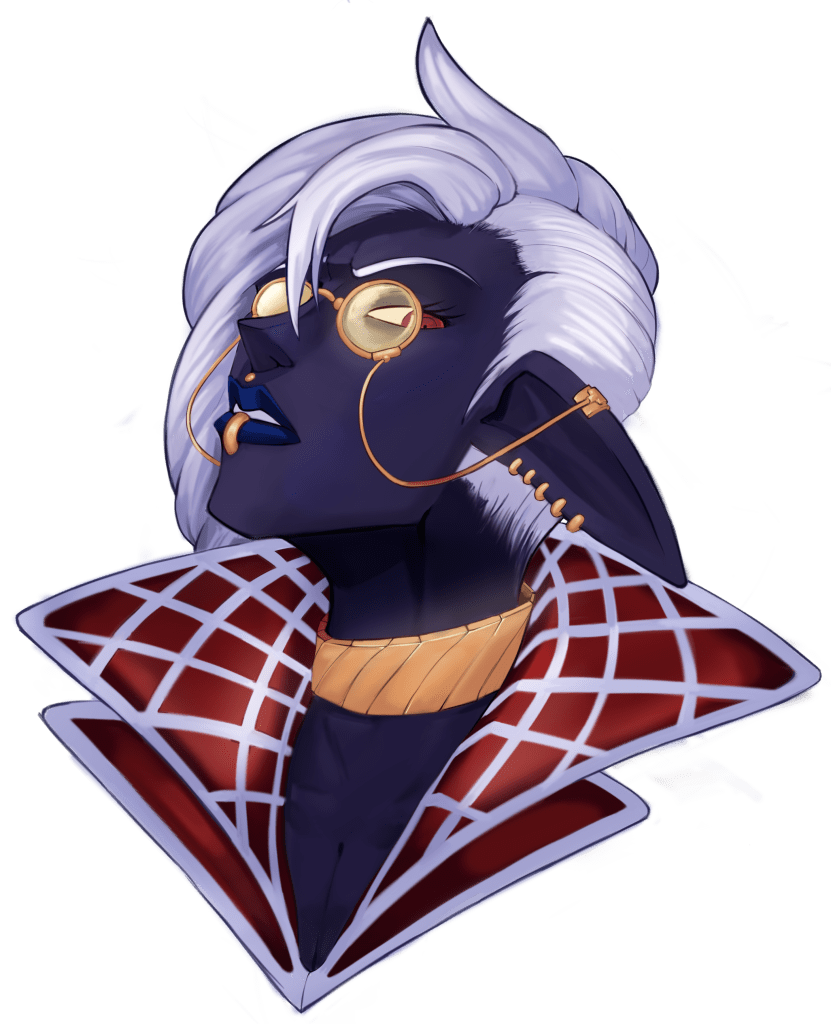
    A Drow Priestess wearing gold rimmed glasses chained to an ear piercing, with her head tilted back and looking down upon the viewer like she's offended that she's even in your presence.
    Illustration by Kazetier

    I’m going to use this generic name for the Drow Empire in the Underdark to avoid implication of canon, published source material. I also think, by writing this as a roughly generic “Evil Empire of the Dark Elves”, if any DM wishes to utilize the ideas and essays in the DezzyDark (my clever name for this corner of the multiverse).

    This distinction also serves another purpose related to my essay Half-Orcs, Half-Elves and Alignment . The Drow of the Empire of the Spider Queen are evil, and cruel and depraved because that is the society they have developed,a Theocracy that worships the Demon Queen of Spiders, a goddess of Chaos and Evil. Millennia of idolization have woven the Demon Queen of Spiders’ dogma into the very fabric of Imperial Society. But, the Drow are not cruel and evil from the womb.

    The Empire of the Spider Queen is a class society with Drow Priestesses of the Demon Queen of Spiders at the top and non Drow as second class and worse down to the enslaved at the bottom. This implies that the circumstances of a hybrid birth was not consensual.

    Half Drow Ancestries

    Imperial Society is hard on the Drow as a people. Being Elves, their natural birth rate is already low. Constant infighting among the different Households and Factions and Wars of Expansion is draining on the Imperial population. But, maybe due to some dark influence of the Demon Queen, Drow can successfully procreate with several different peoples within their Empire.

    When designing a character of mixed Ancestry, the following traits may be passed from the Drow parent. Some of these traits replace traits passed from the non-Drow parent, and in any case it is discouraged to add too many Drow traits to the resulting Half-Drow ancestry. The choice, as with most character choices, should be an agreement between the Player and Game Master.

    • Darkvision: 60 feet (18 meters) if the other ancestry does not have Darkvision, 120 feet (36 meters) if the other ancestry does have the Darkvision trait
    • Keen Senses: Proficiency with the Insight, Perception or Survival skill
    • Fey Ancestry: Saving Throws to avoid or end the Charmed condition are made with Advantage. Magic cannot force the character to sleep.
    • Drow Lineage: The following cantrip and spells are automatically known and are prepared. The spells may be cast once per day without expending a spell slot. Players must choose Intelligence, Wisdom, or Charisma as the spellcasting ability during character creation.
      • 1st Level: Dancing Lights cantrip
      • 3rd Level: Færie Fire spell
      • 5th Level: Darkness spell
    • Sunlight Sensitivity: A negative trait, when in direct sunlight, all Perception checks that involve sight are made at Disadvantage

    Half Drow/Human

    The most common hybrid ancestry in the Empire. Of all the enslaved people in the Empire of the Spider Queen, Humans are the most valued. Indeed, Drow will often raid the surface world for the purpose of abducting humans.

    • Type: Humanoid
    • Size: Medium
    • Speed: 30 feet (9 meters)
    • Traits
      • Darkvision: 60 feet (18 meters)
      • Resourceful: Gains Heroic Inspiration every time a Long Rest is finished.
      • Fey Ancestry
      • Versatile: Gain an Origin Feat of the player’s choice.
      • Sunlight Sensitivity

    Half Drow/Tiefling

    Another common hybrid ancestry. Abyssal Tieflings often find common cause with the Imperial Drow. Several families of Abyssal Tieflings have served Drow households for generations.

    • Type: Humanoid
    • Size: Medium (rarely Small)
    • Speed: 30 feet (9 meters)
    • Traits
      • Darkvision: 120 feet (36 meters)
      • Fey Ancestry
      • Resistant to Poison damage
      • Otherworldy Presence: Knows the Thaumaturgy cantrip.
      • During character creation, the player needs to choose between the Abyssal Legacy and Drow Lineage traits.

    Half Drow/Hobgoblin

    The Drow bear little respect for Hobgoblins, or any Goblinoid, considering them only useful for menial slaves. However, the shared connection to the Fae, allows for occasional hybrid offspring. Half Drow/Hobgoblin are used to command warbands of Goblinoids indentured to Imperial households. In Goblinoid Society, these hybrids often rise to positions of leadership, Cheiftains and Predarchs and Captains.

    • Type: Humanoid/ Goblinoid
    • Size: Medium
    • Speed: 30 feet (9 meters)
    • Traits
      • Darkvision: 120 feet (36 meters)
      • Fortune from the Many: On missing an attack roll, saving throw, or ability check, gain an immediate bonus equal to the number of allies visible within 30 feet (9 meters) to a maximum of +3. This ability can be used a number of times each day equal to the character’s Proficiency Bonus (refresh after finishing a Long Rest).
      • Fey Ancestry
      • Drow Lineage
      • Sunlight Sensitivity

    Half Drow/Orc

    An exceedingly rare hybrid, and many would say “cursed”. These unfortunate souls are not welcome anywhere, rejected by both the Imperial society of Drow and the Tribes of the Orcs. Both the Drow and Orcs consider one another less than people. Orc Tribes see Drow as another version of their cultural enemies, the Elves. Imperial Drow see Orcs as little more than beasts, unsuitable even for slavery.

    The Half Drow/Orc physical traits are not appealing when combined. They are misshapen, and considered ugly by the standards of either culture. Unlike other Drow Hybrids, the Half Drow/Orc are shunned and outcast. Living solitary, miserable, hidden lives in the deep tunnels and caverns.

    • Type: Humanoid
    • Size: Medium
    • Speed: 30 feet (9 meters)
    • Traits
      • Darkvision: 120 feet (36 meters)
      • Relentless Endurance: When reduced to zero hit points, but not killed outright, remain at one hit point. Can only be used once per day and refreshes after finishing a Long Rest
      • Menacing: Proficiency with Intimidation Skill
      • Savage Attacks: On scoring a critical hit with a weapon, roll one of the weapons dice an additional time and add the result to the damage total.
      • Fey Ancestry
      • Sunlight Sensitivity
      • Outcast: All non-intimidation social checks are made with Disadvantage

    Drow Cambion

    Cambion are not balanced with other character species options. Because of this, Cambion should be selected only with the agreement of the Game Master.

    In Imperial Drow society, the Cambion are the only hybrid Drow that are full citizens, but only those Cambion whose feindish parentage is enthralled to the Demon Queen of Spiders.

    • Spider Queen Cambion
    • Type: Humanoid, Fiend
    • Size: Medium
    • Speed: 30 feet (9 meters), Climb 30 feet (9 meters)
    • Traits
      • Darkvision: 120 feet (36 meters)
      • Tremorsense: 60 feet (18 meters)
      • Fey Ancestry
      • Keen Senses
      • Drow Lineage
      • Spider Climb: Can climb difficult surfaces, including upside-down on ceilings without needing an ability check.
      • Web Walker: Ignores movement restrictions caused by webs or webbing.
      • Fiendish Charm: Magically charm one humanoid hat can be seen within 30 feet (9 meters)for one day unless the victim can succeed with a Wisdom Saving throw against DC 8+ Proficiency Bonus+ Spellcasting Ability Modifier
      • Sunlight Sensitivity
      • Pull of the Pit: A cambion’s demonic ancestry creates a constant draw towards selfishness, cruelty, and evil. This creates a a Flaw Personality Trait that should the player choose to roleplay, and the consequences immediately and negatively affect the character or their companions, They gain Heroic Inspiration.
  • Diggy out the Hole

    Diggy out the Hole

    The Rise an fall of Klaarg Tordenzme

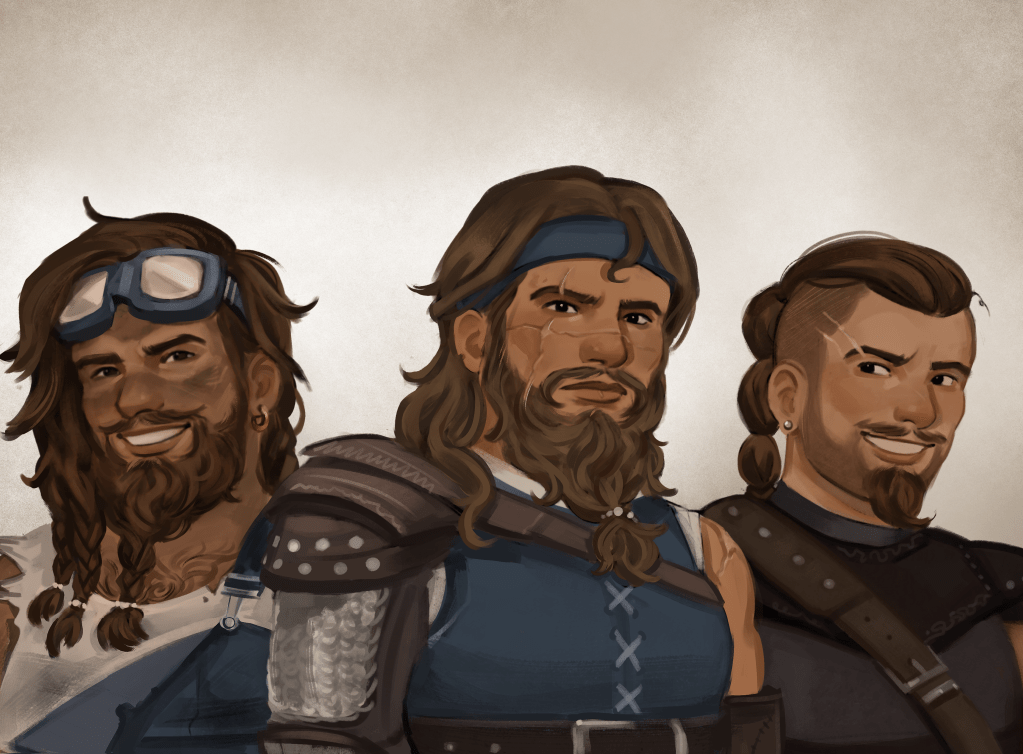
    Dwarves in fantasy roleplaying, especially in the modern sense, have become stereotypes. Loosely based on Gimli from Lord of the Rings, it’s a common shorthand, found in several fantasy settings beyond Middle Earth. Dwarves are short, bearded, stocky, gruff, capable of holding grudges across generations, masterful artisans and miners. Some sources describe Dwarven women as having beards, (like Xindi and Xandi on the masthead), others describe Dwarven women as lacking facial hair (like Disa from Rings of Power) and often Scottish coded. Part of this image is Dwarves living in extensive Clans.

    So widespread is this stereotype is that it’s common parlance. When the GM mentions a character is a Dwarf, the players will most often draw up powerful mental images of that character based on the previous description. While this “short”-hand is useful (see what I did there?), it can lead to confusion at the table as players make assumption about their Dwarven companions.

    Dwarves in the Dezzyverse

    In my campaigns I “reskin” dwarves just to shake up player assumptions. This is mostly just retitleing the names of dwarven things. I prefer to use the terms a people would use for themselves, as opposed to the terms that others would use for them. In the case of my campaigns, they call themselves Svakk as a people. (Indeed, calling them “Dwarf” might start a brawl) Though the Svakk refer to themselves most commonly by the name of their Klaarg (which is their word for “clan”). “Xandi of Klaarg Tordenzme” for example. The languages of the Svakk are collectively called Klaargspek, though like their cultural identities, most Svakk refer to their languages by the name of their Klaarg. “Tordenzme Klaargspek” or “Sohnrodt Klaargspek”.

    Even divided among dozens of distinct Klaarg, the Svakk people are tightly bound together, Klaargspek is understood even through different dialects spoken in different Klaarg. Klaargspek also shares a single runic alphabet, the Vaalbek.

    The Doom of Klaarg Tordenzme

    Once, Klaarg Tordenzme stood among the strongest and most wealthy Klaarg among the Svakk. Indeed, the grasp of Klaarg Tordenzme had stretched beyond the halls and citadels of the mountain realms, Tordenzme was a force within the kingdoms and empires throughout the lands, from sea to ocean. The heart of this mighty realm was their city of Dohrgraign. Deepest of the delves beneath the mountains, in this age, Dohrgraign was was the only city to make peaceful contact with the dark realms of the Underworld.

    Exotic and expensive trade passed through Dohrgraign, under the leadership of Theigns from Klaarg Tordenzme. Roads from the farthest realms stretched to the Grand Gate that led deep into the Underworld, a league-and-a-half below the surface world to the City of Dohrgraign. For centuries Klaarg Tordenzme stood among the greatest of these ancient empires.

    Then came the Doom of the Tordemzme, a prophecy delviered to Klarg Tordenzme that was defied, causing catastrophe. Over nine years of what the chronicles named “The Fall of Dohrgraign”, the city suffered endless misfortunes that resulted, finally in the gates being sealed from the outside world. Few detailed records survived the Fall and in the eight centuries after the Sealing, the city itself was lost to memory, fading into myth, a distant curse and reason to shun the descendants of Klaarg Tordenzme.

    Eight hundred years ago, during the reign of Theign Haaldbarg, a mysterious prophet known as the Black Vizier was recieved at court. The hooded and robed figure did not bow, nor show deference to Theign Halldbarg, speaking directly and openly their warning.

    “Trespass no further into the dark below the stone on which your thy city stands. Else the greed of Klaarg Tordenzme will become Dohrgraign’s downfall.”

    Insulted, Theign Haaldbarg ordered the Black Vizier thrown in chains. Yet, when the guards attempted to seize them, the Black Vizier vanished with a clap of thunder that felled all within two or three strides of the figure.

    Afterwards, the Black Vizier appeared again and again, and always delivering disaster where it stood. It is difficult to tell exactly when Theign Haaldbarg sealed the city, but there was one last evacuation towards the surface. History records that a foul miasma had arisen from the Wyrmansklovt and spread throughout the city, bringing horror and death. What few citizens of Dohrgraign still remained were commanded to flee to the surface.

    It was following this last escape from the Underworld that the tunnels connecting Dohrgraign to the surface collapsed. In the centuries which followed, the city that grew around the Grand Gate withered and fell into ruin and Dohrgraign was ultimately lost.

    The Doom of Klaarg Tordenzme was used by the klaargs for centuries as a warning against hubris. The few Tordenzme communities that survived the Doom have been marginalized by other klaargs as “cursed” based on this myth.

    The Year of Rage

    In the “current” year of my D&D campaign, it has been roughly ten years since the events detailed in the published adventure Out of the Abyss. With the incursion of demons, a small struggle between the Demon Prince of Undeath and the Patron Deity of Dohrgraign, the Keeper of Secrets Under the Mountain has caused lost passages to open once more as demons and the holy dead battled one another.

    The Year of Rage also corrupted the ambient magic of the Underworld. Mortals adventuring in the ruins of Dohrgraign risk Torment and corruption. The cursed city drew the Demon Prince to it. Dohrgraign had been a tomb for eight hundred years by the time the Year of Rage brought demons into the Underworld. The Keeper of Secrets Under the Mountain was not only the God of hidden treasures and secret knowledge but he is the Keeper of the Dead. Dohrgraign is one of his holy places under the mountain, and after eight centuries, it has become a secret as well.

    The Crossroads of the Underworld

    Dohrgraign was not a naturally occurring space. It was carved from the stone of the underworld by Klaarg Tordenzme over centuries. Following the seams and veins of ore, the Tordenzme miners uncovered the passages and caverns used by the civilizations below the surface. The closest of these caverns became the Gatehouse of Dohrgraign, another nearby cavern (a much larger cavern) would develop into the settlement known as Genzhymyl.

    In the present day, Genzhymyl has grown into a thriving trading center. It is independent from the competing realms in this region of the Underworld, The Empire of Llolth, the Azhgov Clan, and the various Goblinoid, Kuo-Toa, and Orcish communities that have settled in this area over the past several centuries. With the newly unblocked passages, Dohrgraign is once again able to be discovered.