Tag: Dungeons and Dragons

  • A Crossroads in the Deep

    A Crossroads in the Deep

    A Settlement on the Underworld Frontier

    Far below the surface world, a vast Empire rules a web of tunnels and caverns. The Empire of the Spider Queen is a dark mirror of the Elven realms that bathes in the golden light of the Sun. The founders of the Empire of the Spider Queen were the losers of a war against their Elven cousins ages past, and driven from the sunlit world into the lightles underworld. Over generations, they recovered from their grievous loss, adapted to their subterranean world and forged a dominion to rival their sunlit cousins.

    Genzhymyl

    Genzhymyl has changed greatly over the past ten years. Initially a trading post on the K’Kephredoc River and along the shore of the lake, Genzhymyl lasted for decades as little more than a permanent camp. The closest settlement was K’zeldremn, which was on the far side of the nearby causeway tunnel.

    Genzhymyl experienced rapid change following the Year of Rage. Every House in every colony of the Empire of Spider Queen, including K’zeldremn fell into anarchy as the Demon Princes raged through the Underworld. As demonically-feuled riots and chaos tore the cities apart, refugees from K’zeldremn fled to Genzhymyl, swelling its population and growing it into a proper town, independent of domination by the Empire.

    The town’s architecture is a chaotic mess of pavilions, temporary, and permanent structures. The oldest buildings, dating from the original Flayed Matron Manor and Kyrzhiim’s Mill are made of set stone and reflect styles from the nearby city of K’zeldremn. The Dzhuol Goblin Tribes and surface-influenced styles are common among the semi-permanent buildings that have been used since before the Year of Rage. Many of the newer permanent buildings are built by Klaarg Azhgov and are designed to be very efficient and sturdy, if not decorative. Finally over the ten years since the Rage of Demons, the refugees have begun to build out their tent encampment into semi-permanent buildings, owing to no architectural style other than what is the fastest and most convenient to build at that time.

    Genzhymyl’s independence is secure for the moment, the Empire and her dispersed colonies will be rebuilding for a long time to come. Although the Demon Princes have been banished back to the Pit, Demons still roam freely in the Underworld. And it is still not known when the Demon Queen of Spiders will once more establish her direct authority over her Empire.

    Rulership in Genzhymyl

    Genzhymyl is governed by a town council consisting of Vethric Ghaul – owner of the Flayed Matron Manor, Ztorv – Preadarch (Cheiftan) of the Dzhuol (the Goblinfolk tribe across the K’kephredoc), and Johayya (Viscount) Ivynna Kvarik of Klaarg (Clan) Azhgov. Vethric acts as head of the council with Ztorv representing the Dzhoul, and Ivyanna representing Azhgov interests in Genzhymyl.

    The government of Genzhymyl becomes informal below the town council, though there are some semi-official positions that have become permanent during the past ten years. Town Herald is one such post, answerable to the town council, which makes official pronouncements and proclamations public, and likewise hears any statements made by the citizens to bring to the council’s attention. The current Town Herald is “The Khabtyn Dhahabei” (the Gold Captain in his native tongue), Ehriegan Staav, a human from a great city on the surface who has prospered as a broker in Genzhymyl for twenty years. The Khabtyn Dhahabei employs a dozen “Town Criers” as deputies.

    In addition to Town Herald, there is the post of Magistrate, who mediates disputes among the population in the name of the town council. Though not exactly a Judge, since laws in Genzhymyl are not codified, the Magistrate, and their Adjudicators provide for settlements without need for violence. The current Magistrate is a Svirfneblin woman, Ynzylith, the oldest child of the owner of the town mill, Kyrzhiim

    The Master of Markets directs the shops and stalls of the Genzhymyl Bazzar, it is their duty to maintain order and peace within the Bazzar as well as collecting the taxes and fees from the merchants trading within the settlement. At present the office is held by a ruthless woman, a Drow by the name of Avzenthe Djerrn. The Mistress of Markets (as she styles herself), employs a small team of “Managers” and “Collectors” to enforce her authority.

    Locations of Note

    • The Flayed Matron Manor
      • The Flayed Matron Manor is owned by Vethric Ghaul and managed by Jeegan Thatz. Over the past 200 years, the Flayed Matron has served as a way-stop, a gambling den, a brothel, an inn, and a tavern. Currently it is all of those, and serves as the council chambers for government.
        • Jeegan (a Half Orc/Human) is Vethric Ghaul’s chief Lieutenant. She manages the day-to-day operations of the Flayed Matron Manor in Vethric’s place when he is away or otherwise occupied. Jeegan is a priestess of the Mistress of Whips and is a sadist. She has leveraged this trait into a profitable arrangement at the Flayed Matron Manor, serving a special clientele of powerful,influential people who have masochistic or submissive needs that need to be fulfilled with discretion.
    • Kyrzhiim’s Mill
      • A large water mill used by the town for processing all manner of seeds and grains for a small fee. The owner, Kyrzhiim is a Svirfneblin and one of the wealthiest people in Genzhymyl. He lives in an ostentatious mansion on the shore of Lake K’kephredoc.
    • The Grey Lantern Inn
      • The primary house for renting rooms. Since the Year of Rage, the owner, Ghazrahd Sablemane (a Duergar with rarely-seen black hair and beard) has expanded the grounds from a single building to a small campus with stabling, barracks, and suites for extended leasing.
    • “The Tent”
      • Before the Year of Rage, a goblin by the name of Gheez set up a huge pavilion on the then-edge of the Camp. “The Tent” as it came to be called, offered cheap, moderately secure space for patrons to sleep for a few hours. Since then, Gheez has died and “The Tent” has been rebuilt as a permanent structure (but remains a large, open building) operated under management of Klaarg Azhgov through Virdiloma Yth.
      • The “innkeeper”, Virdiloma keeps a shrewd eye out among her tenants for those in desperate circumstance. Individuals who don’t have family, money, or friends who wouldn’t be missed, escaped slaves, or known fugitives from one of the power centers in the region. These vulnerable people are targeted for abduction or capture by Klaarg Azhgov.
    • The Genzhymyl Bazzar
      • Along the road stretching from the Flayed Matron Manor at one end to The Tent at the other. The Bazzar is the central forum of Genzhymyl. The Market here never fully closes, with commerce being practiced at all hours. Nearly anything can be found here for sale, timbers from the Yyngvath Forest, fish from the nearby lakes, exotic wares from the Surface word as well as the Deeps. Also, of course, slaves being auctioned by Klaarg Azhgov.

    New Background: Enslaved

    • Ability Scores
      • Strength, Constitution, Widsom
    • Feat
      • Alert
    • Skill Proficiencies
      • Insight and Survival
    • Tool Proficiencies (choose one)
      • Cooks’ Tools, Leatherworkers’ Tools, Potters’ Tools, Tinkers’ Tools, Weavers’ Tools, Woodworkers’ Tools
    • Equipment (these items are either stolen, or the property of the character’s owner)
      • A toolkit that matches the proficiency chosen, An Explorers’ Pack, (Un)Holy Symbol, Manacles
      • or 10 gold coins
    • Disadvantage
      • The Enslaved bears a permanent mark of their bondage, a tattoo, scar, brand (or similar). This mark is easily recognized by most people. All Social Interactions with folk who are aware of this mark are made at Disadvantage.

    The character is or was a slave. Owned by another person, or household as property. They have either been granted their freedom, or escaped, but the marks of their bondage remain. If a fugitive, there is likely a bounty for their capture and return (GM’s discretion). The character’s time in servitude has taught them to remain aware of the people around them, reading their body language to divine their mood or to intuit their whims.

    Conclusion

    The caverns of Genzhymyl hold endless opportunities for adventures to explore the unknown along the periphery of the Empire of the Spider Queen. During the Year of Rage, earthquakes have changed the geography in the surrounding area, caving in and closing the tunnels that led to the surface, and revealing new passages. Secrets long hidden or lost in the Deeps have been revealed, waiting for the reckless, bold and curious to discover.

    The Township of Genzhymyl functions as a “home” for adventurers to return to when they need resupply, rest, or training. It’s independence and relative stability contribute to it’s reliability. Yet, since the catastrophe of the Year of Rage, Genzhymyl has become a new center of intrigue, as survivors and refugees jockey for power and influence. There is plenty of opportunity for “agents of fortune” to find good paying work and patrons in need.
  • Drow Hybrids in the Underdark

    Drow Hybrids in the Underdark

    Offspring of Dark Elves and their Thralls

    The 2024 revision of 5th ed D&D, retitled D&D 5.5, removed “half-” species from the game. While this choice was controversial (to say the least), there remains room for characters of mixed parentage. Especially in the Underdark, where the Drow rule over a vast Empire and Drow citizens have virtually unchecked privilege to indulge in their darkest impulses.

    The Empire of the Spider Queen

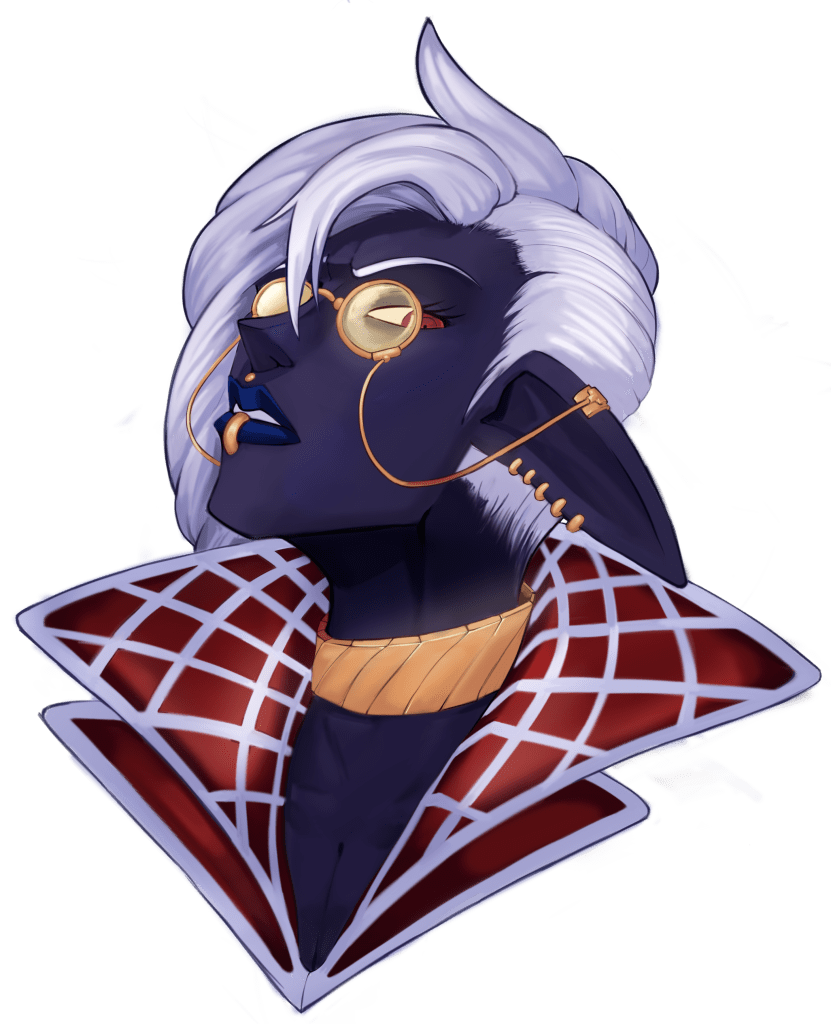
    A Drow Priestess wearing gold rimmed glasses chained to an ear piercing, with her head tilted back and looking down upon the viewer like she's offended that she's even in your presence.
    Illustration by Kazetier

    I’m going to use this generic name for the Drow Empire in the Underdark to avoid implication of canon, published source material. I also think, by writing this as a roughly generic “Evil Empire of the Dark Elves”, if any DM wishes to utilize the ideas and essays in the DezzyDark (my clever name for this corner of the multiverse).

    This distinction also serves another purpose related to my essay Half-Orcs, Half-Elves and Alignment . The Drow of the Empire of the Spider Queen are evil, and cruel and depraved because that is the society they have developed,a Theocracy that worships the Demon Queen of Spiders, a goddess of Chaos and Evil. Millennia of idolization have woven the Demon Queen of Spiders’ dogma into the very fabric of Imperial Society. But, the Drow are not cruel and evil from the womb.

    The Empire of the Spider Queen is a class society with Drow Priestesses of the Demon Queen of Spiders at the top and non Drow as second class and worse down to the enslaved at the bottom. This implies that the circumstances of a hybrid birth was not consensual.

    Half Drow Ancestries

    Imperial Society is hard on the Drow as a people. Being Elves, their natural birth rate is already low. Constant infighting among the different Households and Factions and Wars of Expansion is draining on the Imperial population. But, maybe due to some dark influence of the Demon Queen, Drow can successfully procreate with several different peoples within their Empire.

    When designing a character of mixed Ancestry, the following traits may be passed from the Drow parent. Some of these traits replace traits passed from the non-Drow parent, and in any case it is discouraged to add too many Drow traits to the resulting Half-Drow ancestry. The choice, as with most character choices, should be an agreement between the Player and Game Master.

    • Darkvision: 60 feet (18 meters) if the other ancestry does not have Darkvision, 120 feet (36 meters) if the other ancestry does have the Darkvision trait
    • Keen Senses: Proficiency with the Insight, Perception or Survival skill
    • Fey Ancestry: Saving Throws to avoid or end the Charmed condition are made with Advantage. Magic cannot force the character to sleep.
    • Drow Lineage: The following cantrip and spells are automatically known and are prepared. The spells may be cast once per day without expending a spell slot. Players must choose Intelligence, Wisdom, or Charisma as the spellcasting ability during character creation.
      • 1st Level: Dancing Lights cantrip
      • 3rd Level: Færie Fire spell
      • 5th Level: Darkness spell
    • Sunlight Sensitivity: A negative trait, when in direct sunlight, all Perception checks that involve sight are made at Disadvantage

    Half Drow/Human

    The most common hybrid ancestry in the Empire. Of all the enslaved people in the Empire of the Spider Queen, Humans are the most valued. Indeed, Drow will often raid the surface world for the purpose of abducting humans.

    • Type: Humanoid
    • Size: Medium
    • Speed: 30 feet (9 meters)
    • Traits
      • Darkvision: 60 feet (18 meters)
      • Resourceful: Gains Heroic Inspiration every time a Long Rest is finished.
      • Fey Ancestry
      • Versatile: Gain an Origin Feat of the player’s choice.
      • Sunlight Sensitivity

    Half Drow/Tiefling

    Another common hybrid ancestry. Abyssal Tieflings often find common cause with the Imperial Drow. Several families of Abyssal Tieflings have served Drow households for generations.

    • Type: Humanoid
    • Size: Medium (rarely Small)
    • Speed: 30 feet (9 meters)
    • Traits
      • Darkvision: 120 feet (36 meters)
      • Fey Ancestry
      • Resistant to Poison damage
      • Otherworldy Presence: Knows the Thaumaturgy cantrip.
      • During character creation, the player needs to choose between the Abyssal Legacy and Drow Lineage traits.

    Half Drow/Hobgoblin

    The Drow bear little respect for Hobgoblins, or any Goblinoid, considering them only useful for menial slaves. However, the shared connection to the Fae, allows for occasional hybrid offspring. Half Drow/Hobgoblin are used to command warbands of Goblinoids indentured to Imperial households. In Goblinoid Society, these hybrids often rise to positions of leadership, Cheiftains and Predarchs and Captains.

    • Type: Humanoid/ Goblinoid
    • Size: Medium
    • Speed: 30 feet (9 meters)
    • Traits
      • Darkvision: 120 feet (36 meters)
      • Fortune from the Many: On missing an attack roll, saving throw, or ability check, gain an immediate bonus equal to the number of allies visible within 30 feet (9 meters) to a maximum of +3. This ability can be used a number of times each day equal to the character’s Proficiency Bonus (refresh after finishing a Long Rest).
      • Fey Ancestry
      • Drow Lineage
      • Sunlight Sensitivity

    Half Drow/Orc

    An exceedingly rare hybrid, and many would say “cursed”. These unfortunate souls are not welcome anywhere, rejected by both the Imperial society of Drow and the Tribes of the Orcs. Both the Drow and Orcs consider one another less than people. Orc Tribes see Drow as another version of their cultural enemies, the Elves. Imperial Drow see Orcs as little more than beasts, unsuitable even for slavery.

    The Half Drow/Orc physical traits are not appealing when combined. They are misshapen, and considered ugly by the standards of either culture. Unlike other Drow Hybrids, the Half Drow/Orc are shunned and outcast. Living solitary, miserable, hidden lives in the deep tunnels and caverns.

    • Type: Humanoid
    • Size: Medium
    • Speed: 30 feet (9 meters)
    • Traits
      • Darkvision: 120 feet (36 meters)
      • Relentless Endurance: When reduced to zero hit points, but not killed outright, remain at one hit point. Can only be used once per day and refreshes after finishing a Long Rest
      • Menacing: Proficiency with Intimidation Skill
      • Savage Attacks: On scoring a critical hit with a weapon, roll one of the weapons dice an additional time and add the result to the damage total.
      • Fey Ancestry
      • Sunlight Sensitivity
      • Outcast: All non-intimidation social checks are made with Disadvantage

    Drow Cambion

    Cambion are not balanced with other character species options. Because of this, Cambion should be selected only with the agreement of the Game Master.

    In Imperial Drow society, the Cambion are the only hybrid Drow that are full citizens, but only those Cambion whose feindish parentage is enthralled to the Demon Queen of Spiders.

    • Spider Queen Cambion
    • Type: Humanoid, Fiend
    • Size: Medium
    • Speed: 30 feet (9 meters), Climb 30 feet (9 meters)
    • Traits
      • Darkvision: 120 feet (36 meters)
      • Tremorsense: 60 feet (18 meters)
      • Fey Ancestry
      • Keen Senses
      • Drow Lineage
      • Spider Climb: Can climb difficult surfaces, including upside-down on ceilings without needing an ability check.
      • Web Walker: Ignores movement restrictions caused by webs or webbing.
      • Fiendish Charm: Magically charm one humanoid hat can be seen within 30 feet (9 meters)for one day unless the victim can succeed with a Wisdom Saving throw against DC 8+ Proficiency Bonus+ Spellcasting Ability Modifier
      • Sunlight Sensitivity
      • Pull of the Pit: A cambion’s demonic ancestry creates a constant draw towards selfishness, cruelty, and evil. This creates a a Flaw Personality Trait that should the player choose to roleplay, and the consequences immediately and negatively affect the character or their companions, They gain Heroic Inspiration.
  • Diggy out the Hole

    Diggy out the Hole

    The Rise an fall of Klaarg Tordenzme

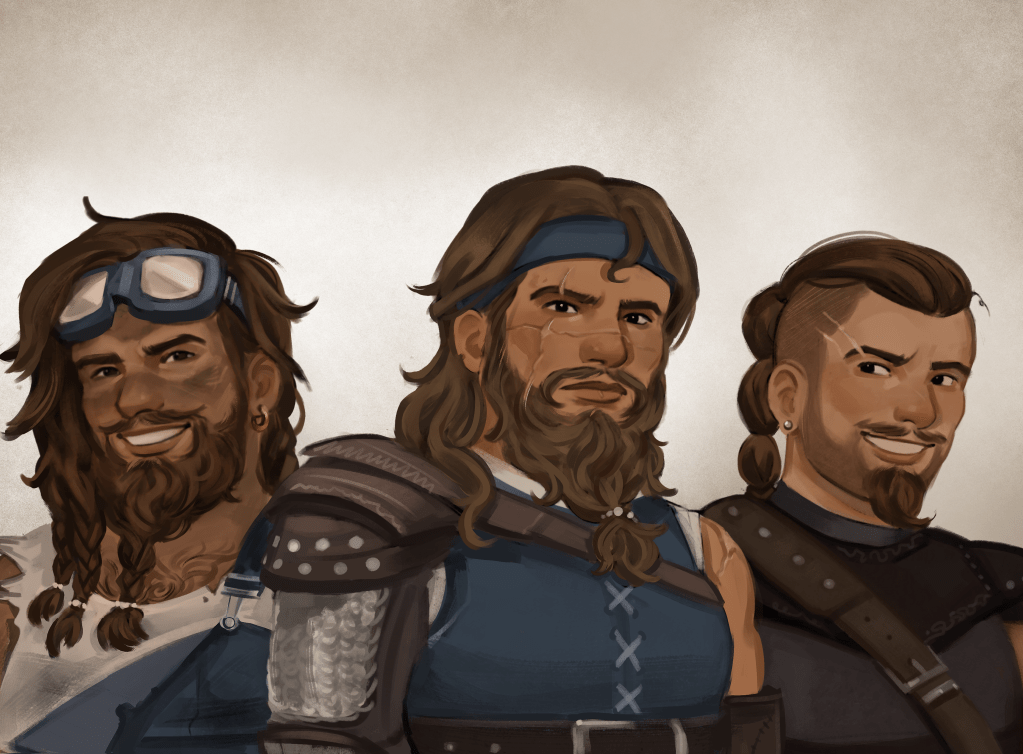
    Dwarves in fantasy roleplaying, especially in the modern sense, have become stereotypes. Loosely based on Gimli from Lord of the Rings, it’s a common shorthand, found in several fantasy settings beyond Middle Earth. Dwarves are short, bearded, stocky, gruff, capable of holding grudges across generations, masterful artisans and miners. Some sources describe Dwarven women as having beards, (like Xindi and Xandi on the masthead), others describe Dwarven women as lacking facial hair (like Disa from Rings of Power) and often Scottish coded. Part of this image is Dwarves living in extensive Clans.

    So widespread is this stereotype is that it’s common parlance. When the GM mentions a character is a Dwarf, the players will most often draw up powerful mental images of that character based on the previous description. While this “short”-hand is useful (see what I did there?), it can lead to confusion at the table as players make assumption about their Dwarven companions.

    Dwarves in the Dezzyverse

    In my campaigns I “reskin” dwarves just to shake up player assumptions. This is mostly just retitleing the names of dwarven things. I prefer to use the terms a people would use for themselves, as opposed to the terms that others would use for them. In the case of my campaigns, they call themselves Svakk as a people. (Indeed, calling them “Dwarf” might start a brawl) Though the Svakk refer to themselves most commonly by the name of their Klaarg (which is their word for “clan”). “Xandi of Klaarg Tordenzme” for example. The languages of the Svakk are collectively called Klaargspek, though like their cultural identities, most Svakk refer to their languages by the name of their Klaarg. “Tordenzme Klaargspek” or “Sohnrodt Klaargspek”.

    Even divided among dozens of distinct Klaarg, the Svakk people are tightly bound together, Klaargspek is understood even through different dialects spoken in different Klaarg. Klaargspek also shares a single runic alphabet, the Vaalbek.

    The Doom of Klaarg Tordenzme

    Once, Klaarg Tordenzme stood among the strongest and most wealthy Klaarg among the Svakk. Indeed, the grasp of Klaarg Tordenzme had stretched beyond the halls and citadels of the mountain realms, Tordenzme was a force within the kingdoms and empires throughout the lands, from sea to ocean. The heart of this mighty realm was their city of Dohrgraign. Deepest of the delves beneath the mountains, in this age, Dohrgraign was was the only city to make peaceful contact with the dark realms of the Underworld.

    Exotic and expensive trade passed through Dohrgraign, under the leadership of Theigns from Klaarg Tordenzme. Roads from the farthest realms stretched to the Grand Gate that led deep into the Underworld, a league-and-a-half below the surface world to the City of Dohrgraign. For centuries Klaarg Tordenzme stood among the greatest of these ancient empires.

    Then came the Doom of the Tordemzme, a prophecy delviered to Klarg Tordenzme that was defied, causing catastrophe. Over nine years of what the chronicles named “The Fall of Dohrgraign”, the city suffered endless misfortunes that resulted, finally in the gates being sealed from the outside world. Few detailed records survived the Fall and in the eight centuries after the Sealing, the city itself was lost to memory, fading into myth, a distant curse and reason to shun the descendants of Klaarg Tordenzme.

    Eight hundred years ago, during the reign of Theign Haaldbarg, a mysterious prophet known as the Black Vizier was recieved at court. The hooded and robed figure did not bow, nor show deference to Theign Halldbarg, speaking directly and openly their warning.

    “Trespass no further into the dark below the stone on which your thy city stands. Else the greed of Klaarg Tordenzme will become Dohrgraign’s downfall.”

    Insulted, Theign Haaldbarg ordered the Black Vizier thrown in chains. Yet, when the guards attempted to seize them, the Black Vizier vanished with a clap of thunder that felled all within two or three strides of the figure.

    Afterwards, the Black Vizier appeared again and again, and always delivering disaster where it stood. It is difficult to tell exactly when Theign Haaldbarg sealed the city, but there was one last evacuation towards the surface. History records that a foul miasma had arisen from the Wyrmansklovt and spread throughout the city, bringing horror and death. What few citizens of Dohrgraign still remained were commanded to flee to the surface.

    It was following this last escape from the Underworld that the tunnels connecting Dohrgraign to the surface collapsed. In the centuries which followed, the city that grew around the Grand Gate withered and fell into ruin and Dohrgraign was ultimately lost.

    The Doom of Klaarg Tordenzme was used by the klaargs for centuries as a warning against hubris. The few Tordenzme communities that survived the Doom have been marginalized by other klaargs as “cursed” based on this myth.

    The Year of Rage

    In the “current” year of my D&D campaign, it has been roughly ten years since the events detailed in the published adventure Out of the Abyss. With the incursion of demons, a small struggle between the Demon Prince of Undeath and the Patron Deity of Dohrgraign, the Keeper of Secrets Under the Mountain has caused lost passages to open once more as demons and the holy dead battled one another.

    The Year of Rage also corrupted the ambient magic of the Underworld. Mortals adventuring in the ruins of Dohrgraign risk Torment and corruption. The cursed city drew the Demon Prince to it. Dohrgraign had been a tomb for eight hundred years by the time the Year of Rage brought demons into the Underworld. The Keeper of Secrets Under the Mountain was not only the God of hidden treasures and secret knowledge but he is the Keeper of the Dead. Dohrgraign is one of his holy places under the mountain, and after eight centuries, it has become a secret as well.

    The Crossroads of the Underworld

    Dohrgraign was not a naturally occurring space. It was carved from the stone of the underworld by Klaarg Tordenzme over centuries. Following the seams and veins of ore, the Tordenzme miners uncovered the passages and caverns used by the civilizations below the surface. The closest of these caverns became the Gatehouse of Dohrgraign, another nearby cavern (a much larger cavern) would develop into the settlement known as Genzhymyl.

    In the present day, Genzhymyl has grown into a thriving trading center. It is independent from the competing realms in this region of the Underworld, The Empire of Llolth, the Azhgov Clan, and the various Goblinoid, Kuo-Toa, and Orcish communities that have settled in this area over the past several centuries. With the newly unblocked passages, Dohrgraign is once again able to be discovered.

  • Monsters with Clockwork Hearts

    Monsters with Clockwork Hearts

    The Mazynik of Arjenvís

    The most recent “species” to emerge in Arjenvís are the Mazynik. The Mazynik are a clockwork, machine people made possible through many of the engineering discoveries made by the scholars of the Ynstyuit Yazingyeijny college. They have been a part of the population of Arjenvís for generations at this point. Sadly, the Mazynik in all of their forms have been used as slave labor almost since their inception.

    There are seven primary variants of Mazynik

    • Type I – Tiny Mazynik designed for companionship. The type I are roughly the size of house cats or large rats and their differential brains have the cognitive abilities of a human child.
      • These Mazynik are often programmed for a variety of simple tasks for which their size and general design are suited. Fetching and retrieving small items, delivering small parcels and physical messages (like written notes), cleaning chores, vermin control, and simplistic minor patrolling. Their limbs end in small claws for grasping and gaining traction, and most Type I designs have a small dart launcher built into the body
      • Type I Mazynik can be found nearly anywhere in Arjenvís, including the rivers (for those models adapted for swimming). They are more common in the affluent Canton, like the Stare Miasto, and the Jyarmarck. But even in the slums of the Brzek Krreft, older Type I Mazynik, refurbished from spare parts can be found wandering the narrow alleys on errands or still carrying out instructions from owners who have long forgotten or simply lost them.
    • Type II – Small Mazynik designed as assistants and servants. The type II are the size of a medium to large dog and have the cognitive abilities of an average adult human.
      • These Mazynik are more capable than the smaller Type I models, and are designed to perform functions that demand greater strength and durability. The Type II models are often used to deliver small burdens, perform larger household chores (think “Roomba”), act as guards and sentries, and assist people with complex tasks by providing extra manipulative limbs.
      • Like the Type I, the Type II Mazynik can be found virtually anywhere in Arjenvís. From the estates of the Stare Miasto down to the ghettos of the Brzek Kreft. They are most common in the Jyarmarck, where they are set to delivering packages of purchased goods to destinations, and in the Zmiana, where they work towing barzos along the various canals or working the southern fields.
    • Type III – Human-sized Mazynik designed to be laborers. The type III are the size of an adult human, and have the cognitive abilities similar to the Type I.
      • The Type III Mazynik is a design intended for human-sized menial tasks. Whether household (minor repairs, cleaning, personal assistants) or industrial (labor, or dangerous/ strenuous activity). They are designed and programmed for obedience and servitude, behaving as loyal companions.
      • The Type III Mazynik can be found nearly anywhere in Arjenvís, but are most commonly found in the most wealthy cantons, the most wealthy households and industries, which can afford the expense of purchasing and maintaining the clockwork mechanisms that allow them to function
    • Type IV – Human-sized Mazynik designed for combat as guards or gladiators. The Type IV are also the size of an adult human and have the cognitive abilities similar to the Type II.
      • Type IV Mazynik are designed for heavier labor than the type III or for combat. They often resemble clockwork suits of armor, imposing and dangerous. They are in general human sized, but are larger than most average people.
      • The Type IV are less common than type I, II, or III Mazynik. Partially due to expense, and partially because of the much more narrow scope of their designed functionality. They are most commonly found near properties of the wealthiest citizens of Arjenvís, where they are used as sentries and guards or in the deepest depths of the Czarny Grzbiet Mine, where their immunity to the toxic gasses and their phenomenal physical prowess permit mining veins that would otherwise be impossible.
    • Type V – Large Mazynik the size of an ox or draft-horse. The Type V are designed to pull and carry large, heavy loads, or serve as mounts. They have cognitive abilities similar to the Type I.
      • The Type V Mazynik is very nearly a small vehicle. It’s designed as a six-limbed being, much like a centaur, a quadraped lower body and a humanoid torso. This frame allows for functions that permit the Type V to not only carry a passenger or two, or pull a burden but also manipulate objects with hands. There are Type V variants that are designed as bipedal forms that are nearly twice as large as a typical person, and other design variants that resemble large beasts.
      • Type Vs are much more rare and expensive than the more common Type I, II, or III but they can still be found in all Cantons in Arjenvís. The most common use are along the canals of the Zmiana, and the steep face of the Czarny Grzbiet and Nozca Stok cantons, pulling trolleys and barges.
    • Type VI – Large Mazynik roughly twice the size of an average adult human. The Type VI are designed to command and manage other Mazynik, their differential brains are the most advanced commonly available and they have cognitive abilities that, while still superior to humans as a whole, are within the human spectrum.
      • The Type VI Automat is a very sophisticated clockwork device. It’s nearly the size of a Type V, but has a much more advanced machine intelligence built into it’s design. The Type VI is designed for complex, independent tasks and can adapt to circumstances to an extent that they are still addressed by it’s programming.
      • Type VI are status symbols among the aristocracy of the canton and are seldomly encountered without cause in Arjenvís. They are often employed as automated stewards, chamberlains, or major-domo for households and estates. Many are in service of the Vlatza as supervisors of Type IV and V Automat which function as guards.
    • Type VII – Gargantuan Mazynik the size of buildings, designed to be “smart” buildings the type VII are expensive and rare in the extreme. Type VII can be used for a variety of purposes, from intelligent libraries to self-functioning factories and leisure residences. Type VII support between 1 and six differential brains that function in concert, depending on the Mazynik’s designed purpose. Each brain, taken by itself, have cognitive abilities which vary from that of a child to that of a mature human. When multiple brains are working in concert, the combined brains of a Type VII can perform cognitive feats of genius.
      • The Type VII Mazynik is a building sized clockwork artifact. It’s so big, in fact, that it functions like an actual building, with individuals living and existing within it’s rooms and halls. As such, the Type VII is seldom mobile, but unlike other Mazynik, the Type VII can direct it’s Actions and Abilities within itself as well as without.
      • The Type VII is rare in the extreme. There are but a handful in all of Arjenvís.

    History

    Mazynik were first developed in the manufactory of Kahlazst Vahn Ztiyer. A member of the Vahn Ztiyer household of III Canton, Kahlazst was an Artificer and a minister of the Ynstyuit Ynzingyeijny school in the Kolygiom Zyle Wednye.
    The first Mazynik designed would become the type I and type V, both of these first prototype models were meant to do work as a replacement for beasts and animals. Kahlazst designed what would become the type II as a mechanical assistant.
    These early Mazynik had primitive differential brains by current standards, but were capable of independent action with minimal supervision. As the usefulness of Kahlazst’s Mazynik became more apparent, the two core mechanisms, the differential brain and the corespring were refined and developed into ever more sophisticated iterations. Eventually the Automat was capable of matching most people in terms of intellect, but not creative thought. This made Mazynik very useful for menial labor, guard-work, and heavy labor. They could be programmed with base skills, and their difference brains would adapt them to the environment in which they were operating.

    Anatomy

    Individual Mazynik are designed to perform their directive purposes. They are generally built to resemble people and/or animals that are familiar to most people. The heart of most Mazynik (type I – VI) is the Corespring, which will allow for a day’s operation when fully wound. Type VII instead utilizes a steam engine to maintain a continual operation (so long as the engine remains fueled, that is).

    Genetics and Reproduction

    Mazynik do not reproduce biologically, they are built. They do have the ability, however to manufacture one another. Either with or without the involvement of people. Depending on the resources and facilities available, manufacturing an individual Mazynik will take periods dependent upon their complexity. This includes programming of their differential brains.

    • Type I6 to 12 weeks
    • Type II6 to 20 weeks
    • Type III12 to 28 weeks
    • Type IV 24 to 48 weeks
    • Type V18 to 36 weeks
    • Type VI30 to 50 weeks
    • Type VIIone to five years

    Mazynik designed by the same person, persons or factory will share a general resemblance to one another.

    Growth Rate & Stages

    Mazynik do not naturally grow. Their bodies can remain the same throughout their lives (for lack of a better term). However, their differential brains will experience a progression of development that reflects their accumulation of experience up to where their capacity of data storage is reached.
    Juvenile – This is the first stage of cognitive development. The Mazynik has it’s base cognitive routines and can communicate and perform the tasks for which it was designed, but not much outside of that scope.
    Prime – This is a long stage of development where the Mazynik cognitive abilities have expanded to a point where it can formulate and adapt it’s functionality based on learned experiences. Prime stage is recognized when a Mazynik can first adapt independently beyond it’s initial programming and lasts until it’s cognitive storage reaches capacity.
    Fading – This is the last stage of development where the Mazynik’s cognitive abilities have reached a point that to incorporate new experiences and new data, older experiences and older data must be eliminated. This tends to cause the development of eccentricities within the Mazynik’s persona as they begin to “forget” memories they once recalled flawlessly or skills they once had or experiences they once lived. Additionally, fading can also be brought on by damage or wear within the differential brain itself, leading to a diminished capacity.

    Ecology and Habitats

    Mazynik are curious in that they can exist in almost any environment even thrive if they are purpose-designed for those conditions. However, resources available in an urban, technologically sophisticated environment provide the most favorable conditions that Mazynik can function within.

    Dietary Needs and Habits

    Mazynik do not require sustenance in the way that biological species do. So long as their coresprings or engines remain wound or fueled, Mazynik will continue to function. However, Mazynik do require steady maintenance in the form of lubrication of moving parts, cleansing of components, care for and replacement of worn materials, etc.. Going without these essential will lead to malfunctions which can ultimately become critical enough to permanently disable the Mazynik.

    Domestication

    The Mazynik are completely domesticated as a species.  Though some advanced individuals (mostly Type VI and Type VII) can carry out self-directed “manumissions”, Mazynik are designed to follow the direct inclinations and command of those whom they serve.

    Uses, Products & Exploitation

    Mazynik are used in Arjenvís in all manner of menial, labor intensive, and dangerous tasks. They act as servants, laborers, companions, soldiers, even vehicles and homes.  To the powerful and wealthy of the city, they are merely clever tools, or toys to be used until their utility or novelty comes to an end, whereupon they are discarded.

    Naming Traditions

    Industrial, labor, and guard Mazynik are normally designated by a serial code, and recognize themselves when that code is referred to. More personalized Mazynik, those who serve as companions, assistants and servants are often given nicknames by their owners. Finally, there are some Mazynik (mostly type VI, but any sufficiently experienced Mazynik) who will name themselves

    Mazynik and Warforged

    Mazynik are not Warforged. Warforged are sentient beings with agency and free will. Mazynik are automata, and even if they have been given their manumission, they are only an imitation of sentience. Warforged are animated by magic and do not rely on wound clockwork.

    Mazynik are limited in their function. Though they are capable of great proficiency for the jobs they are designed for, they are abysmally incompetent when attempting tasks not related to their purpose. Warforged are as adaptable as any mortal person born and raised.

  • Seers, Tramps and Thieves

    Seers, Tramps and Thieves

    The Caravanserai Who Camp in the City of Miseries

    Not everyone in Arjenvís are monsters, prey, or prisoners. There are one people who know secrets, who travel out beyond the walls of the city to other lands. Despite Arjenvís deepest wishes for no one to escape once locked behind her walls, against the monumental, terrible will of the city who will not let go of the souls in her iron grip. The Caravanserai continue to slip in and out with seeming impunity, bringing rumors of lands beyond the horizon, as well as trading in exotic wares from foreign artisans.

    The Caravanserai camp away from the estates of the aristocracy, setting up in hidden places among the poor neighborhoods or abandoned buildings. Though they can be found in most of the Canton, somewhere, excepting I Canton, the Kziazekyr. Their camps are able to be taken down and moved in a single night.

    Cartomancy

    Of all the various forms of divination, the Caravanserai prefer, excel at cartomancy. The decks used vary from Caravan to Caravan, but the pattern is the same. The Caravanserai Diviner uses the Vaghanesqa Ròdho to read the fortunes of those who search them out.

    Vaghanesqa Ròdho

    The dealer separates the High Deck from the Lesser Deck and shuffles both separately. They place the High Deck to their left and the Lesser Deck to their right. The dealer then deals cards from the High Deck.

    • I. This is the Mandĭn (Fortune) card. It represents what the seeker (the person the reading is for) will become at the end of their journey.
      • this card is dealt face down, perpendicular to the dealer
      • the top of the card (for determining if the card is inverted or not) is the short edge facing to the dealer’s left
    • II. This is the Ègo (Self) card. it represents the seeker as they are at present.
      • This card is dealt face up and crosses the first card
      • the top of the card is the short edge of the card that faces away from the dealer
    • Deal four cards from the High Deck face up starting on the far side of the Self cards and passing clockwise.
      • each card is dealt perpendicular to the last with one short edge facing the cross of the first cards dealt, is the top of the card.
    • III. The Mashkar e Jivendesko (Midwinter) card.
      • dealt to the wheel at twelve o’clock
      • this card represents where the seeker is departing from, and returning to.
    • IV. The Prago e Primaverako (Spring Threshold) card
      • dealt to the wheel at three o’clock
      • this card represents the first leg of the seeker’s journey
    • V. The Mashkar o Milaj (Midsummer) card
      • dealt to the wheel at six o’clock, opposite Mashkar e Jivendesko
      • this card represents the farthest away the seeker journeys from home.
    • VI. The Prago e ćhonesko (Autumn Threshold) card
      • dealt to the wheel at nine o’clock, opposite Prago e Primaverako
      • this card represents the final leg of the seeker’s journey
    • Deal 8 cards from the lesser deck in pairs around the wheel
    • VII. The O vudar (Doorstep) card
      • dealt to the wheel at one o’clock.
      • this card represents that which is sending the seeker on their journey
    • VIII. The Obstàkulo (Obstacle) card
      • dealt to the wheel at two o’clock.
      • this card represents the first challenge to the seeker, holding them back from the Prago e Primaverako and must be overcome before the seeker can cross the Spring Threshold
    • IX. The Amala (Comrades) card
      • dealt to the wheel at four o’clock.
      • this card represents the friend or ally that will help the seeker following the Prago e Primaverako
    • X. The Corripen (Setback) card
      • dealt to the wheel at five o’clock.
      • this card represents a problem or defeat that the seeker must endure before they can move forward to the Mashkar o Milaj
    • XI. The Pauza (Respite) card
      • dealt to the wheel at seven o’clock
      • this card represents the restoration of the seeker following the Mashkar o Milaj
    • XII. The Bibaht (Misfortune) card
      • dealt to the wheel at eight o’clock
      • this card represents unexpected adversity before the seeker can begin their final part of their journey
    • XIII. The Gardeno (Warden) card
      • dealt to the wheel at ten o’clock
      • this card represents the fearsome guardian of the prize the seeker hopes to attain.
    • XIV. The Prèmio (Prize) card
      • dealt to the wheel at eleven o’clock
      • this card represents the reward the seeker earns and brings back to their start at Mashkar e Jivendesko

    After the Prèmio is dealt, the dealer reveals the seeker’s Mandĭn card.

    The Journey

    The reading of the cards is framed as the seeker journeying to discover their fortune. The seeker asks the diviner (dealer) what fortune they want to know. The diviner, as they read the cards, describe what each card means in context of it’s position. Since the four Thresholds (Mashkar e Jivendesko, Prago e Primaverako, Mashkar o Milaj, and Prago e ćhonesko) are dealt before the remainder of the wheel, the reading can only be made after all the cards are dealt.

    Following the Prèmio card being dealt to the wheel, the diviner leads the seeker through the journey of the wheel. The diviner reads the wheel, starting with the Maskar e Jivendesco and Ègo and progressing clockwise.

    The beginning of the journey, represented by the O vudar, Obstàkulo, and the Prago e Primaverako cards are read together as a “Spring Season” of the Journey. Prago e Primaverako translates to “Spring Threshold”. The Spring Season represents the conditions of the journey’s start (the O vudar) and the first real obstacle before arriving at the Spring Threshold (the Obstàkulo). The Spring Threshold card reveals the first turning point of the journey, showing a place or person that will point the seeker forward. It is the reward for taking on the journey.

    The next part of the journey, represented by the Amala, Corripen, and the Mashkar o Milaj cards are read together as a “Summer Season” of the Journey. Mashkar o Milaj is Midsummer and is the midpoint of the journey, The Summer Season is the first half of the pilgrimage through the wilderness towards their fortune. In Summer, allies and comrades are found, setbacks are endured and Midsummer is the threshold to the deepest, and most dangerous part of the journey.

    The deepest part of the journey, represented by Pauza, Bibaht and the Prago e ćhonesko are read together as the “Autumn Season” of the Journey. The Prago e ćhonesko, the Autumn Threshold, is the place where the Self is killed and reborn. The Autumn Season starts with a short rest, but quickly descends into misfortune until the seeker confronts the parts of themselves that they must change before they can complete the journey. These three cards unveil the form that the events take.

    Passing through the deepest shadow of the Autumn Threshold the end of the journey is represented by Gardeno, Prèmio, and the Mashkar e Jivendesko cards. Read together, these cards are the “Winter Season” and when the Mashkar e Jivendesko is read, signifying the return of the seeker to where they started, the Mandĭn is revealed showing the seeker what their fortune makes them into.

    Storytelling with Divination

    Divination like cartomancy can be effective in helping Game Masters and Players tell stories at the table. Beyond the scene where the fortune-teller lays cards out on their velvet table, the fortunes themselves become the seed of new stories. This can be utilized to develop bespoke adventures that are tailored to the characters.

    When developing story in this manner, the reading should be for the entire group as a whole, instead of individuals. While personal, individual readings can motivate the subject directly, it does focus a lot of the burden on that character and the other members of the party can start to feel like sidekicks. Even in a focused reading, as GM, make sure to include the other characters in the interpretation.

    An option, likely the simplest, but still, the most challenging to design around is to use the reading as a form of emergent storytelling. Neither the GM, nor the players know what the cards are going to tell them, and when the reading is complete, there is an outline for a story arc. Everyone involved should make notes about the reading, because those notes will maintain a level of consistency and fate to the adventure as it progresses. As a GM, consult with the players as to what they want the fortune to mean for their characters. The point here is to follow the player’s choices and interpret their fortune, not to build a railroad that forces them onto the predetermined route to the end.

    A second option, which requires a little more work, but will be easier to design around is to stack the deck prior to the reading. Again, with the players’ input, figure out what they want the fortune to mean. The GM then can select cards and place them in an order that will conform to the players’ intentions. Again, everyone should take notes regarding the reading, and the point remains to follow these designs to guide the characters to their fortune, and avoid railroading them to a destination.

    A third option is to use the divination as a Red Herring. This is not to suggest that the divination is false, but that interpretations vary and can mislead. As with the previous options, it’s up to the Game Master and Players to discuss as to what the fortune means. However, the GM should re-interpret the reading to subvert the players’ intentions towards their characters.

    The Vaghanesqa Ròdho is designed to resemble the Hero’s Journey to make the design of a narrative easier. The four thresholds serve as turning points in the story with the lesser cards acting as story elements. Other reading layouts can be adapted with a little thought and effort. Divinations are ways of telling the story of the future regardless of the means used to tell fortunes.

    .

  • Religion in the City of Miseries

    Religion in the City of Miseries

    The Doctrine of the Vyara Zabor Church and the Faith of Cults

    Within Arjenvís, there is but one recognized religious institution, the Vyara Zabor Church. The Church provides a structure and stability to the lives of Arjenvís’ citizens which the Vlatza or the Boyars of the Canton cannot. The Priesthood comforts, the Biurokratyzm manages, and the Inquisition enforces Church Doctrine. The divine mysteries of the Vyara Zabor Church are reserved for these institutions, the faithful need not know anything more than service to Arjenvís in this life will be rewarded with joy everlasting in the next.

    While the Vyara Zabor Church is the sole legal religion in Arjenvís, there remain several underground cults operating in secret and offering a personal connection with the subject of worship. All are outlawed by law and each cult cell is under constant threat of being attacked by the Inquisition and it’s congregation condemned to torture and execution.

    The Vyara Zabor Church

    The Vyara Zabor Church predates Arjenvís, being but one of many faiths in the region. When the city was founded, Xiezer Dzynis had brought his personal Praladt, Sorzhya Judtzhrenka and she gave the blessings of the Sun-Father over the founding of the settlement. When the first canton were established, Praladt Sorzhya established a temple to the deities of the Vyara Zabor Church and invited priests to serve as faculty within the new temple.


    The Vyara Zabor Church grew along with Arjenvís, enjoying support from the Vlatza of the Kziazekyr (I Canton) and the Boyars of the others. As the city grew larger and larger, the Biurokratyzm also became more deeply rooted in the byzantine administration of Church and City. Prelate Sorzhya’s successor, Aandton became Starszy Praladt, an office which evolved into the modern Arzykapwan.


    A little more than five hundred years before the present day, the magical prowess of the priesthood began to wane. As priests lost the ability to work divine magic over the decades, the Arzykapwan Carythni declared the age of miracles to have ended, and Church doctrine branded the practice of divine magic to be heretical and the work of fiendish spirits. The order of the Inquisition was established to enforce this doctrine throughout Arjenvís.

    Today, the Vyara Zabor Church no longer worships the deities that Praladt Sorzhya brought to the founding of the city so many years ago. The stories surrounding those deities are dismissed as mythology, and used as metaphorical lessons to teach the young lessons in morality, rather than introducing them to the power and majesty of the pantheon.

    The Vyara Zabor Church defends and perpetuates the class distinctions within Arjenvís.  It is through the doctrine of the Church that the lot of the poor classes remain in servitude to the aristocracy.  All social traditions, childbirth, prayer, marriage, work and service are dictated by the Church and in some cases (mostly revolving around work and marriage) enforced by the Boyars.

    The object of worship of the Vyara Zabor Church in Arjenvís is the city itself.  Arjenvís is presented as mother and father both, and the people as children of the city itself.  To this end, the Vyara Zabor Church prohibits worship of any competing Deity or Faith.

    The Vyara Zabor Church is a hierarchical organization with their head in the office of the Arzykapwan (ar-zee-KAP-van). They preside over the council of Praladt who in turn preside over the church Priesthood.

    The Biurokratyzm, however is far more politically powerful, being the church administrators. Often it is the Zarzad (the Administrative Directorate) which selects the members of the Paladt when the seats need filled. It falls to the clerks within the Biurokratyzm to maintain the records and collect the tithings.

    The Inquisition enforces the orthodoxy of the Church, investigating heresy and punishing those who stray beyond the doctrine. The Inquisition operates outside of the hierarchy of the Vyara Zabor Church, answerable to the Praladt council and the Arzykawan. Individual Inquisitors have broad authority to pursue their investigations into heresy throughout Arjenvís acting as judge, jury and executioner. The Wylki Inkvizyor (weel-KEE ink-VEEZ-eeor) or “Grand Inquisitor” sits in supreme judgment of Church Dogma, subject only to the authority of the Arzykapwan.

    The Vyara Zabor Church is very rigid in it’s traditions and insistence on being the sole legal Church in Arjenvís. Priests minister to their congregations, reinforcing Zaborisc doctrine and dogma through sermons and acting as the authority between the Church and the people.

    When someone joins the Priesthood or the Biurokratyzm, they leave their families behind, swearing their first allegiance to the Church itself in the person of the Arzykapwan. Marriages are encouraged to remain internal to this subculture, with children born of these unions dedicated to the church in the same manner as their parents.

    If anyone within the Church hierarchy wishes to marry outside it, they are required to expunge themselves from their duty and position before doing so. Such people must acquire dispensation from the Biurokratyzm, and though the process is legal, it is strongly discouraged. Those who do expunge themselves in this manner find themselves (and their spouses and children) forsaken by both Church and shunned by the citizenry.

    Outlaw Cults and Heresy

    Even after the Arzykapwan Crythni wrote the Proclaimation of Orthodoxy and declared the worship of deities heresy, some people within Arjenvís clung to faith in their old Gods. Relics and artifacts were hidden, shrines were moved to secret, hidden places. Clerics, especially those blessed by their gods with power over the undead were forced to keep their magic hidden lest they be dragged before the Inquisition and judged.

    The Sun-Father was the original patron deity of Arjenvís. Some of the evidence of faith continues to live on within the Vyara Zabor Church in runes and symbols. But ever since the Morning of the Black Dawn, the Sun-Father’s connection to Arjenvís has weakened almost to nothing. Still, there are very small cults throughout the city that look to the sky during Midsummer and pray that the Sun-Father returns and delivers Arjenvís from the monsters and misery

    The Suffering Martyr is a deity that is widespread among the lower classes. The deity is an exemplar of resilience and endurance in the face of horrible adversity. The Suffering Martyr is a deity of hope and mercy. Within the Brzek Kreft there is a miracle, a well, the Zdnuthia Issekah provides clean, fresh water. It has resisted all attempts to tear it down (it is back on the following morning) or befoul the waters (the poisons and pollutants are purified the moment they contact the water in the well) or even prevent people from visiting the well (there are ruins surrounding the plaza where the well rests that stand testament to all the times the Vyara Zabor Church or the Boyars (except for the Mysv) tried to wall the location off). It is a divine miracle in the face of denial. The Inquisition maintains a watch over the location and tries to discover the identities of people who come to the well and draw water.

    Of course there are multiple Feindish cults in Arjenvís, even among the Aristocracy, promising power, wealth, luxury, anything the mortal heart desires. Representatives of most of the Demon Lords and Archdevils can be found as the guides and objects of devotion of one cult or another. Still, the authorities of Arjenvís and the Inquisition zealously hunt these cults down and crush them. For Arjenvís holds a monopoly on inflicting misery, and jealously guards her domain.

    Monsters in Priestly Vestments

    Like all who are in positions of authority within Arjenvís, the leadership of the Vyara Zabor Church are all monsters. Primarily, they are predatory intelligent undead (vampires, ghouls, liches and so forth). This is one of many reasons that Divine magic and Clerical abilities are outlawed in Arjenvís, after all, it wouldn’t do for the undead masters of the Church to turn themselves.

    But, there is an additional layer of monstrosity within the Vyara Zabor Church. Even though the undead in leadership often possessed near-miraculous abilities (or at least abilities that could be presented as “miraculous”, there are both undead and mortal clergyfolk that are sworn to Arjenvís as Warlocks.

    The City of Miseries as a Warlok Patron The Undying (from the Sword Coast Adventurers Guide supplement). This patron should not be generally be available to player characters, since the theme of most campaigns in Arjenvís is the struggle to escape and survive the city. The abilities of the Undying patron Warlock, like the powers of the undead mentioned above are often passed as miracles and blessings from Arjenvís. The Warloks also serve to undermine the power of Divine Magic in the city, presenting the façade that the Vyara Zabor Church bestows power and blessings on it’s faithful too, through the priesthood of course.

    Conclusion

    The City of Miseries does not abide a challenge to it’s control over the suffering of it’s people. She jealously guards her possession of the people who live within her walls and obsesses over the mortals she steals from other worlds and cities. The comfort and hope that the Gods can bring to the people of Arjenvís is not tolerated. Mercy is not a luxury that can be found here, even by the wealthiest, and most powerful denizens. The Vyara Zabor Church sees to that.

  • Rats in the Slums

    Rats in the Slums

    The Wererats of Arjenvís

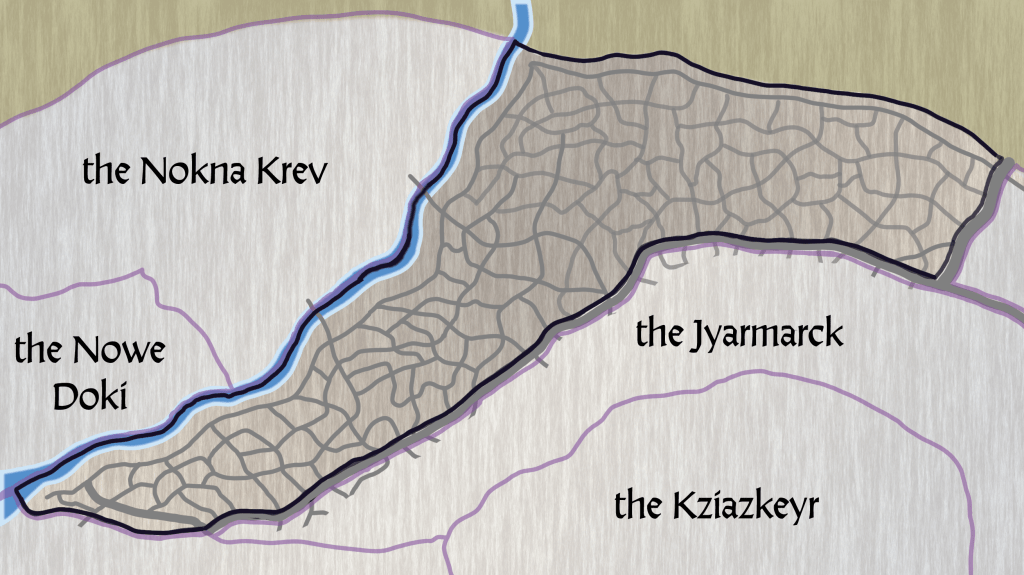
    VIII Canton, the Brzek Kreft (“verge of blood”), is home to the least and lowest of the inhabitants of Arjenvís. It stretches along the Southeastern bank of the Nozca Kreft river below the Jyarmarck (VII Canton), East of the Nozca Stok (III Canton), and wraps along the Linia Rynkowa road (the “Market Line” the border between the Jyarmarck and the Brezk Kreft) all the way East to the bottom of the Prohodt (“processional”), the road that leads from the great gates of Arjenvis to the seat of Arjenvís power, the Kziazekyr.


    The Brzek Kreft, is a warren of tight alleys, ramshackle buildings and workhouses. For the first 60 years of Arjenvís, the Brzek Kreft was a semi-permanent shantytown that grew outside the walls of the founding Cantons. Homeless and undesirable people denied a place to live within the walls of the city congregated here.


    The laborers in the Black Ridge Mines crowd the workhouses of the Trzy Makti (the “Three Mothers”) and are daily marched through the Wohz Wohlu Gate into the Norzca Stok canton. On the far side of VIII Canton, The Dommzey Tzlote workhouse provides laborers to the industrial fisheries on the Norzca Kreft river.

    The maze of alleys and narrow streets that form the VIII Canton

    The Lords of the Lowest

    Unlike the other canton which climb the slopes of the Judoas Kraigas, the river bottom of Brzek Kreft is ruled by a complex network of cartels that control competing territories throughout the slum.

    The leadership of the cartels are the nearest monsters to humanity in all of Arjenvís. Wererats. The wererat curse affects most mortal people. Humans, Halflings, Dwarves, even Orcs and Goblinkind can be brought into a nest of wererats.

    The head of the largest cartel in the Brzek Kreft, the Svenzy sits on the council of Boyars for all of Arjenvís. Called “The Myzj”, this lord of wererats may not be the strongest, or the most powerful wizard or priest of the city, but they have the tightest control over VIII Canton. Every rat from the banks of the Nozca Kreft river to the walls surrounding the First Canton, the Kziazkeyr are their spies. Even the mighty Striogi Boyars and the Vlatza himself cannot fully control the legions of rats as effectively as the Myzj.

    Wererats, even the wererats of the Brzek Kreft live in symbiotic community with both the people and the rats of the cities they inhabit. They remain monstrous, their curse pushing them to acts of violence and depravity, the spreading of urban entropy throughout their domains. At the same time, they need mortals to live amongst. Unlike more predatory monsters like Vampires, Ghouls and Werewolves, wererats cohabitate rather than dominate.

    Ironically, the mortals of the Brzek Kreft are, as a rule, happier than the residents of the more prosperous canton in Arjenvís. The wererats of the cartels, while preventing Brzek Kreft from developing beyond the poor slum that it has been since it grew out of the shantytown along the shore of the Nozca Kreft don’t visit horrors among their mortals. The least of the citizens of Arjenvís are thereby shielded from the nightly predations of the nobility.

    A Slum of Ghettos

    The Brzek Kreft is divided into several Ghettos.  Some, like the Ratzveny ghetto is centered around an institution, in this case the Szvenzy Cartel and the Myzj. Other ghettos are ethnic enclaves, like Hravzton, where Goblins, Halflings and Gnomes have built a community scaled to accommodate their stature, or the Klaarg, where the Szef of the Kuznia presides over his clan of Dwarves.  Still others are defined by their architecture or location like the Zdunthia Issekah or the Obuz.  In all cases a ghetto is governed by its own cartel. Those cartels, much like the ghettos themselves are constantly changing as their fortunes rise and fall.

    The Brzek Kreft has little in the way of formal infrastructure.  Its streets are not uniformly wide, nor uniformly paved (if they’re paved at all).  The sewers are a chaotic tangle of warren-like tunnels which are barely adequate for the purpose of draining rainfall from the streets, and wholly inadequate for keeping the place free of filth.  Brzek Kreft began as a shantytown, and in the decades since has only grown.

    The two primary industries in the Brzek Kreft are the workhouses which provide cheap labor to the factories and mines throughout Arjenvís, and the fisheries along the Nozca Kreft river which process the cheapest catches and unsold fish from the markets at the end of the day.

    It deserves mentioning that prostitution, or similar sex-work is not considered illicit, nor confined to the Brzek Kreft. While the cartels certainly use the profession as a means to generate revenue and provide services to the population, a prostitute, courtesan, or exotic dancer is no more or less specialized than a dockworker or a tradesman. Even in a City of Miseries, sex work remains work.

    Factions Within the Brzek Kreft

    The largest and most powerful organization within the Brzek Kreft is the Szvenzy Cartel. The Szvenzy receive tribute and fealty from all the other cartels eventually, whether directly as a “tax”, or indirectly when smaller cartels pay their tribute to the cartels over them.

    There are several major cartels that rival the Szvenzy, but are as yet unable to challenge them.

    1. The Lukzen Klaarg is an extended clan of people from an underground ancestry, Dwarves, Goblins,some Orcs and some Humans. The Lukzen both run the sewers beneath the Brzek Kreft and the miners who work the Czarny Grzbiet mine. All cartels of course operate in all facets of life within the Brzek Kreft, but the Lukzen are very successful as smugglers, avoiding the city’s more oppressive taxes and supplying various forms of contraband.
    2. The Ezka Cartel operate along the banks of the Nozca Kreft river along both banks, they jealously guard this lucrative terriroty. Only the Szvenzy are permitted to operate in the Ezka territory freely, and only then because the Ezka are unable to stop them.
    3. The Sheroty Cartel work near and within the Jyarmarck markets. They run protection, and petty theft there as well as extortion, blackmail, and secrets. The Sheroty adopt young, often orphaned or otherwise neglected children to become a part of their cartel, and as these children grow into adults, they are free to join other cartels in the Brzek Kreft or remain as recruiters or lieutenants of the Sheroty.
    4. The Toleria Cartel run most of the gambling houses and games in the Brzek Kreft. They loan money, regulate the houses and arrange events for their customers to wager on. While not as refined as the high stakes games that the more affluent cantons offer, these events do draw aristocratic patronage in the form of “slumming”.
    5. The Pralnia Cartel fence stolen goods throughout the Brzek Kreft. They also sanction and regulate many of the larger robberies of Noble households, and launder the more recognizable loot. The Pralnia Cartel also adjudicates and administers contract theft for clients
    6. The Zrebne Cartel is the only cartel in Brzek Kreft that engages in only one activity. The Zrebne are assassins and contract killers. They do not engage in other rackets that other cartels do. They are also not the exclusive cartel that engages in contract murder. They are the premier organization that can be employed for contract killings, and the Zrebne Cartel collect contracts throughout Arjenvís.
    7. The Vyara Zabor Church aggressively maintains a presence in the Brzek Kreft. The Priesthood is most prominent here. Since there is very little political influence Brzek Kreft has within Arjenvís itself, the Biurokratyzm are much less interested in the slum. Indeed, administrative assignment to the Ozmye Skron temple is considered a “punishment posting” among the ambitious clerics. The Inquisition is very active in Brzek Kreft as the crowded, lawless slum and it’s ghettos teeming with the desperate poor is ever rife with heresy. Most of the Inquisitorial order within the church begin their careers here, since opportunity to exercise their authority is abundant and oversight is lax.

    It’s October, and spooky season, so for this month I’ll be exploring my Fantasy Horror setting of Arjenvís, originally introduced in this blog here. Happy Halloween if you celebrate, or Samhain, or Dia de los Muertos. Stay safe, have fun, and brave your fears.

  • The Guild Empire

    The Guild Empire

    ..and Eldritch Suns

    Years ago just after the third Pirates of the Carribean movie, I was inspired to design a Spelljammer setting. I called it “Eldritch Suns” and it used a lot of the worldbuilding from Disney’s Treasure Planet. Solar sails, magic cannon, wheellock pistols and cutlasses. Like Treasure Planet, the setting would take 75% age of Sail, Age of exploration and 25% Space Fantasy. The Eldritch Suns have never been far from my mind.

    The Astral Sea and the Frontier

    The Astral Sea is the void between systems. It is the places on the maps of the cosmos where “Here be DRAGONS” is inscribed as a warning. The Astral Sea needs to be crossed in order for ships to cross from one system to the next.

    Systems in the Astral Sea are termed wells, bubbles of matter which function like the star systems we are familiar with. They have a central point where all bodies revolve. Since this is a space-fantasy setting, those central points aren’t stars as we understand them, they are geysers of Æther that flood out, and return in a chaotic network of currents. These wells are distinct from one another, each varying in how time passes and drift among one another like corks floating in a barrel of water.

    When two or more wells begin to experience regular travel between them, for trade, or immigration, they will establish a route through the Astral Sea, these are termed “Mains” and they will slowly synchronize how the wells relate to one another. Calendars will slowly begin to synchronize, their relative positions within the Astral Sea will start stabilizing, even the languages of their peoples will become more familiar in respects to one another. In general, the more mains, connecting wells for longer periods of time will accelerate the process of synchronization. An example of a mature result of this process are the seven core wells of the Guild Empire.

    The Antagonist; The Guild Empire

    The Guild Empire was loosely based on the East India Company from Pirates 3. A mercantile empire that dominated the setting with the resources to launch fleets and armies. It was focused on seven core wells;

    1. Roidahç; (ROH-ih-dosh)
    2. Elgen Trencz; (EL-gen TRENZ)
    3. Jharigo; (JER-ih-go)
    4. Kazzaq: (kaz-AK)
    5. Fauchaq: (fow-SHAK)
    6. Ausaq: (aw-SAK)
    7. Rhiannon: (REE-ann-on)

    These wells have a dense and very old network of mains with each other, and as a result, are fully synchronized. They share a single Imperial Calendar which passes at the same rate among the worlds of all seven wells. They have a single Imperial Language (uncreatively named “Imperial”) which is common to all seven wells (though local dialects still proliferate, making for distinctions between provinces and cultures.)

    The Guild Empire has grown more powerful than any realm in this region of the Astral Sea. It is aggressive, expansive, and greedy. Its fleets and armies are comprised of people from all seven core wells as well as the Empire’s colonies. Most enlisted people serving as crew or troops are poor volunteers, recruited on the promise of pay and adventure. Others are virtual slaves, victims of impressment. The Officers are from aristocratic families who have purchased their commissions from the Imperial Guild Directorate. Throughout the setting there are Guild Governors, Directors, Assayers, Brokers and an extensive bureaucracy that exists primrily to extract wealth from the colonies and trading mains of the frontier to return to the Core.

    Anatomy of a Well

    The heart of a well is the Ætheric Geyser. These are holes in the Astral Sea which connect to the Elemental Plane of Æther (often referred to as the “Etherial Plane”. The flood of Æther flows out from the geyser until the draw of the Elemental Plane of Æther becomes great enough to pull the flood back to the geyser. In systems with no other bodies, this stabalizes into currents flowing in and out.

    When material bodies move through these currents they disturb these stable currents, diverting them into endless bends and eddies and stagnant pools, making navigation a specialist job. The currents of Æther can be harnessed with sails and rigging, which allow for vessels to move through the Æther.

    Every body in the well blocks the radiant energy shining from the geyser over a limited region behind the hemisphere facing out. These become shadows of the Negative Material Plane, umbral bays where the energies of death replace the spirit power of life.

    The Stuff of Worlds

    The term “world” refers to planets, moons, asteroids and other material bodies orbiting one another within a well. To varying degrees, each such body is composed of a combination of Air, Earth, Fire and Water, though not all elements need to be present for a world-body to exist. The closer these elements are to balance, the more recognizable the denizens of the world are to the common mortal peoples of the Astral Sea; Humans, Elves, Dwarves, Gnomes, Orcs, etc…

    In general, these bodies all orbit the geyser at the heart of the Well, though exceptions, while uncommon can be found. Different ratios of these four elements will exhibit different characteristics that most Astral-faring sages have recorded in catalogues.

    The influence of the Guild Empire likewise affects the variance of worlds within it’s dominion. The most extreme combinations of elements are increasingly rare, and the amount of balanced bodies are growing more and more common. Even the orbits of the worlds within the core wells have grown more ordered and regulated.

    Out on the Frontier is where the weird extremes can still be found. Worlds permanently in the umbral bay of enormous planets of Air and Water. Systems with two (or more) geysers feeding Æther into the well. Wandering orbits. Rogue worlds drifting through the Astral Sea. This is where the setting focuses it’s attention, far from the rigid structure of the core of the Guild Empire.

    Suns Beyond Counting

    The Astral Sea stretches on forever. The Frontier is the region closest to the Imperial colonies. Out there, there are few realms that can launch a fleet of ships into the Æther and the Astral Sea and no multi-well empires. Free Traders, Pirates, Adventurers and Explorers travel between wells out here and create faint mains to connect them.

    On the Frontier, legendary hordes of treasure can be found, fantastic beings and fabulous locations can be discovered. Campaigns among the Eldritch Suns should focus on near-constant voyages, following the mains, or forging new ones from well to well in search of fame and fortune. No one world should be heavily detailed. Only the adventure locale, and maybe the port needs any attention. Adventurers arrive at port, follow their nose into an adventure and return. Maybe uncovering rumors to their next destination. They fill their hold with supplies and hire some crew and venture forth again.

    This brings up the subject of a crew. The vessels that cross between wells, even the smaller ones, require dozens, if not hundreds of people to crew. Most tabletop roleplaying campaigns have only six adventurers or less, which leaves a lot of NPCs. The crew of a vessel can be used as replacements for fallen adventurers, sources of new adventurers for new players joining the campaign. Henchmen, hirelings and prize crew are also excellent uses of extra crew members.

    Finally the crew are a source of adventure in and of themselves. After all, a mutiny is always possible on the high Astral Sea.

  • Hand Grenades and Fireballs

    Hand Grenades and Fireballs

    When your friends are close enough to get singed

    From it’s wargaming roots, D&D has allowed Area of Effect attacks to split fighters in melee with one another. The phrase “I cast the fireball to hit the monster but not my friends” has been around since the beginning. Precisely measuring out squares or inches on a battle-mat to include the monsters and not the characters is a refined skill for grid-tacticians everywhere.

    I’ve always hated it. It slows combat to a crawl as players agonize over where the center of their Fireball, or their Cone of Cold, or Entangle Spell should be to get the most enemies and no party members.

    For me, this also breaks immersion. The splitting of combattants in melee assumes that two fighters stand still until they move to a new position. Bashing away at one another like a pair of Rock-em Sock-em Robots, anchored to the spot. This is not how fighting happens. Look at MMA fights, or boxing matches, wrestling (both intramural and pro), or even a football play or rugby scrum. Ain’t no one standing still long enough to precisely drop a 20 foot radius ball of fire so one guy gets burned ant the other doesn’t. All fighters in a melee are in constant motion, often grappling or piled up on the ground.

    I use the following House Rule in my games with regards to what happens when a spellcaster tries to put the edge of an AoE spell between two fighters in melee with one another.

    Area of Effect Attacks into Melee

    • Anyone who is in melee combat is affected by any AoE that would affect any combatant in that combat in that round. i.e – a spellcaster is not able to position an AoE effect in such a way that one combatant in a melee is affected while others are not. It’s either everyone in the combat or no one in the combat.
    • There is a “fringe zone” around the edge of an AoE that extends outside the limit of the AoE. Anyone within the fringe (a 5 foot (1.5 meter) border) who is also in melee combat with someone in the AoE is still affected, but in the instance of where a Saving Throw is necessary, the targets in this fringe zone have Advantage to that Saving Throw.

    Example: We have three potential targets of a fireball.
    Target 1 is the intended target of the spell and is within the AOE. Target 1 is affected as normal and makes a Saving Throw as per the rules.
    Target 2 is in the fringe zone and is in melee with Target 1. Target 2 is affected, but has Advantage to their Saving Throw.
    Target 3 is in the fringe zone and is not in melee with either Target 1 or Target 2. They are not affected by the spell.

    • If all combatants are in the fringe zone of an AoE, but none are in the AoE itself, no one in the combat is affected by the spell.
    • If a target is in the fringe zone but is attacking with a weapon that has the reach quality (like a Halberd), then the target is not affected by the AoE.

    Example #2: Same three potential targets of the fireballThe circumstances are the same, except Target 3 is outside the fringe zone, but is in melee combat with Target 2. In this case, Target 3is considered in the fringe zone.

    Example #3: as the previous example but with the inclusion of Target 4who is outside the fringe zone. If Target 4is in melee combat with Target 3, Target 4is considered outsidethe fringe zone. If an AoE spell has no Saving Throw (like SLEEP) then anyone affected by the spell is affected normally, whether or not they are in the finge zone. If an AoE has a Magic Attack Roll, and not a Saving Throw anyone affected by the fringe zone has a +5 Bonus to their Armor Class.

  • Failing Forward

    Failing Forward

    Making Failure less Frustrating

    There are nights when the dice just hate everyone at the table. Except the DM. Players can’t roll above a 6 and their characters can’t accomplish even the simplest task. Nothing happens and the characters are stuck. The only door blocking their path can’t be opened, the speed-bump combat becomes a slog of swing-and-a-miss, the stream, easily crossed, ends up washing the whole party away. The first time these things happen, it’s kinda funny, “Remember that goblin that no one could hit and we had to just run away?”. But over the course of a game session it looses it’s charm, “Failed AGAIN? I have a plus 12 to the roll and I can’t roll higher than 3! @&#! this dungeon!

    Failing forward helps with this. The basic principle is this. Your character succeeds in their roll, but if they fail to score higher than the Target Number, the character suffers a consequence. The classic example of this is “you force the door open, but make such a racket that anyone within a hundred feet hears your entry.” Or, “You knife the guard, but, as he falls, he slaps the panic button at their station” characters can progress, but there’s an added challenge.

    Let the Player Choose

    Often when a character fails forward, it helps engagement to ask the player what the consequence should be. This helps give the player a hand in the fate of their character, and gives the Game Master a clue as to what the player is expecting from the adventure. The player should express their character’s consequence as briefly as they can. The consequence should be proportional to the degree of failure, and the consequence should never be more effective than success.

    The Game Master could alternatively let the player group choose. This helps to avoid putting a player, who might not be comfortable improvising like this, on the spot. The final decision on consequence needs to have the consent of the character’s player, and approved by the Game Master. This encourages everyone at the table to remain engaged with the game as it’s being played.

    Keep it Proportional

    As mentioned, failing forward should never be a better result than success. Failing forward progresses the adventure at a cost. If the failure is slight, or the task relatively minor, failing forward should apply slight consequences. If the failure is great, or the task critical, failing forward should extract a much greater price.

    The goal here is to allow a path forward with a cost. Some of the build up of narrative drama grows from dwindling resources. Dropping your character’s rations down a crevasse or breaking your lantern can be just as tense as loosing 2d10 hit points.

    A Brief Word About Combat

    I’m not a big fan of brushing off damage as a fail forward. Just having a minimum rolled damage, or half-damage result tends to throw off the balance of monster stats in Dungeons and Dragons. Furthermore, it is not any less frustrating and it doesn’t change anything except to continue to whittle down the adversaries’ hit points. Again I’d fail forward, allowing say a hit on the target, but the character hurts themselves for minimum damage, or they loose some ammunition. Or they don’t do damage but gain a cumulative +1 bonus to hit each time they miss until they do hit. Maybe they do damage, but the GM gets to move their character 5 feet (roughly 1.5 meters) maybe placing the character in a less advantageous position.

    My point here is that combat, whether you employ failing forward or not, should be dynamic, even if you’re not playing on a battlemap. Very little is less exciting than endlessly whittling away hit points from one another’s pile. But, that is a whole ‘nother essay.

    Things That Should Not Fail Forward

    Failing forward is not appropriate for all situations. Saving Throws, Death Saves, All-or-Nohing tasks are but a few. With these situations, one either succeeds, or fails and suffers the consequences. Also, NPCs and adversaries should never fail forward. The GM shouldn’t ever be frustrated by the Players’ Characters’ success in the adventure. TTRPGs aren’t adversarially competitive games (even Call of Cthulhu!). Or at least they aren’t any more.

    Remember, the Game Master’s job is to provide challenges to the players who resolve them through their characters. TTRPGs have evolved a long way from it’s wargaming roots. Even if you’re not “telling a story” with your adventure, you are engaging in drama. The purpose, is to have fun, not slog away under a series of cold dice rolls.