Tag: dnd

  • A Crossroads in the Deep

    A Crossroads in the Deep

    A Settlement on the Underworld Frontier

    Far below the surface world, a vast Empire rules a web of tunnels and caverns. The Empire of the Spider Queen is a dark mirror of the Elven realms that bathes in the golden light of the Sun. The founders of the Empire of the Spider Queen were the losers of a war against their Elven cousins ages past, and driven from the sunlit world into the lightles underworld. Over generations, they recovered from their grievous loss, adapted to their subterranean world and forged a dominion to rival their sunlit cousins.

    Genzhymyl

    Genzhymyl has changed greatly over the past ten years. Initially a trading post on the K’Kephredoc River and along the shore of the lake, Genzhymyl lasted for decades as little more than a permanent camp. The closest settlement was K’zeldremn, which was on the far side of the nearby causeway tunnel.

    Genzhymyl experienced rapid change following the Year of Rage. Every House in every colony of the Empire of Spider Queen, including K’zeldremn fell into anarchy as the Demon Princes raged through the Underworld. As demonically-feuled riots and chaos tore the cities apart, refugees from K’zeldremn fled to Genzhymyl, swelling its population and growing it into a proper town, independent of domination by the Empire.

    The town’s architecture is a chaotic mess of pavilions, temporary, and permanent structures. The oldest buildings, dating from the original Flayed Matron Manor and Kyrzhiim’s Mill are made of set stone and reflect styles from the nearby city of K’zeldremn. The Dzhuol Goblin Tribes and surface-influenced styles are common among the semi-permanent buildings that have been used since before the Year of Rage. Many of the newer permanent buildings are built by Klaarg Azhgov and are designed to be very efficient and sturdy, if not decorative. Finally over the ten years since the Rage of Demons, the refugees have begun to build out their tent encampment into semi-permanent buildings, owing to no architectural style other than what is the fastest and most convenient to build at that time.

    Genzhymyl’s independence is secure for the moment, the Empire and her dispersed colonies will be rebuilding for a long time to come. Although the Demon Princes have been banished back to the Pit, Demons still roam freely in the Underworld. And it is still not known when the Demon Queen of Spiders will once more establish her direct authority over her Empire.

    Rulership in Genzhymyl

    Genzhymyl is governed by a town council consisting of Vethric Ghaul – owner of the Flayed Matron Manor, Ztorv – Preadarch (Cheiftan) of the Dzhuol (the Goblinfolk tribe across the K’kephredoc), and Johayya (Viscount) Ivynna Kvarik of Klaarg (Clan) Azhgov. Vethric acts as head of the council with Ztorv representing the Dzhoul, and Ivyanna representing Azhgov interests in Genzhymyl.

    The government of Genzhymyl becomes informal below the town council, though there are some semi-official positions that have become permanent during the past ten years. Town Herald is one such post, answerable to the town council, which makes official pronouncements and proclamations public, and likewise hears any statements made by the citizens to bring to the council’s attention. The current Town Herald is “The Khabtyn Dhahabei” (the Gold Captain in his native tongue), Ehriegan Staav, a human from a great city on the surface who has prospered as a broker in Genzhymyl for twenty years. The Khabtyn Dhahabei employs a dozen “Town Criers” as deputies.

    In addition to Town Herald, there is the post of Magistrate, who mediates disputes among the population in the name of the town council. Though not exactly a Judge, since laws in Genzhymyl are not codified, the Magistrate, and their Adjudicators provide for settlements without need for violence. The current Magistrate is a Svirfneblin woman, Ynzylith, the oldest child of the owner of the town mill, Kyrzhiim

    The Master of Markets directs the shops and stalls of the Genzhymyl Bazzar, it is their duty to maintain order and peace within the Bazzar as well as collecting the taxes and fees from the merchants trading within the settlement. At present the office is held by a ruthless woman, a Drow by the name of Avzenthe Djerrn. The Mistress of Markets (as she styles herself), employs a small team of “Managers” and “Collectors” to enforce her authority.

    Locations of Note

    • The Flayed Matron Manor
      • The Flayed Matron Manor is owned by Vethric Ghaul and managed by Jeegan Thatz. Over the past 200 years, the Flayed Matron has served as a way-stop, a gambling den, a brothel, an inn, and a tavern. Currently it is all of those, and serves as the council chambers for government.
        • Jeegan (a Half Orc/Human) is Vethric Ghaul’s chief Lieutenant. She manages the day-to-day operations of the Flayed Matron Manor in Vethric’s place when he is away or otherwise occupied. Jeegan is a priestess of the Mistress of Whips and is a sadist. She has leveraged this trait into a profitable arrangement at the Flayed Matron Manor, serving a special clientele of powerful,influential people who have masochistic or submissive needs that need to be fulfilled with discretion.
    • Kyrzhiim’s Mill
      • A large water mill used by the town for processing all manner of seeds and grains for a small fee. The owner, Kyrzhiim is a Svirfneblin and one of the wealthiest people in Genzhymyl. He lives in an ostentatious mansion on the shore of Lake K’kephredoc.
    • The Grey Lantern Inn
      • The primary house for renting rooms. Since the Year of Rage, the owner, Ghazrahd Sablemane (a Duergar with rarely-seen black hair and beard) has expanded the grounds from a single building to a small campus with stabling, barracks, and suites for extended leasing.
    • “The Tent”
      • Before the Year of Rage, a goblin by the name of Gheez set up a huge pavilion on the then-edge of the Camp. “The Tent” as it came to be called, offered cheap, moderately secure space for patrons to sleep for a few hours. Since then, Gheez has died and “The Tent” has been rebuilt as a permanent structure (but remains a large, open building) operated under management of Klaarg Azhgov through Virdiloma Yth.
      • The “innkeeper”, Virdiloma keeps a shrewd eye out among her tenants for those in desperate circumstance. Individuals who don’t have family, money, or friends who wouldn’t be missed, escaped slaves, or known fugitives from one of the power centers in the region. These vulnerable people are targeted for abduction or capture by Klaarg Azhgov.
    • The Genzhymyl Bazzar
      • Along the road stretching from the Flayed Matron Manor at one end to The Tent at the other. The Bazzar is the central forum of Genzhymyl. The Market here never fully closes, with commerce being practiced at all hours. Nearly anything can be found here for sale, timbers from the Yyngvath Forest, fish from the nearby lakes, exotic wares from the Surface word as well as the Deeps. Also, of course, slaves being auctioned by Klaarg Azhgov.

    New Background: Enslaved

    • Ability Scores
      • Strength, Constitution, Widsom
    • Feat
      • Alert
    • Skill Proficiencies
      • Insight and Survival
    • Tool Proficiencies (choose one)
      • Cooks’ Tools, Leatherworkers’ Tools, Potters’ Tools, Tinkers’ Tools, Weavers’ Tools, Woodworkers’ Tools
    • Equipment (these items are either stolen, or the property of the character’s owner)
      • A toolkit that matches the proficiency chosen, An Explorers’ Pack, (Un)Holy Symbol, Manacles
      • or 10 gold coins
    • Disadvantage
      • The Enslaved bears a permanent mark of their bondage, a tattoo, scar, brand (or similar). This mark is easily recognized by most people. All Social Interactions with folk who are aware of this mark are made at Disadvantage.

    The character is or was a slave. Owned by another person, or household as property. They have either been granted their freedom, or escaped, but the marks of their bondage remain. If a fugitive, there is likely a bounty for their capture and return (GM’s discretion). The character’s time in servitude has taught them to remain aware of the people around them, reading their body language to divine their mood or to intuit their whims.

    Conclusion

    The caverns of Genzhymyl hold endless opportunities for adventures to explore the unknown along the periphery of the Empire of the Spider Queen. During the Year of Rage, earthquakes have changed the geography in the surrounding area, caving in and closing the tunnels that led to the surface, and revealing new passages. Secrets long hidden or lost in the Deeps have been revealed, waiting for the reckless, bold and curious to discover.

    The Township of Genzhymyl functions as a “home” for adventurers to return to when they need resupply, rest, or training. It’s independence and relative stability contribute to it’s reliability. Yet, since the catastrophe of the Year of Rage, Genzhymyl has become a new center of intrigue, as survivors and refugees jockey for power and influence. There is plenty of opportunity for “agents of fortune” to find good paying work and patrons in need.

  • Diggy out the Hole

    Diggy out the Hole

    The Rise an fall of Klaarg Tordenzme

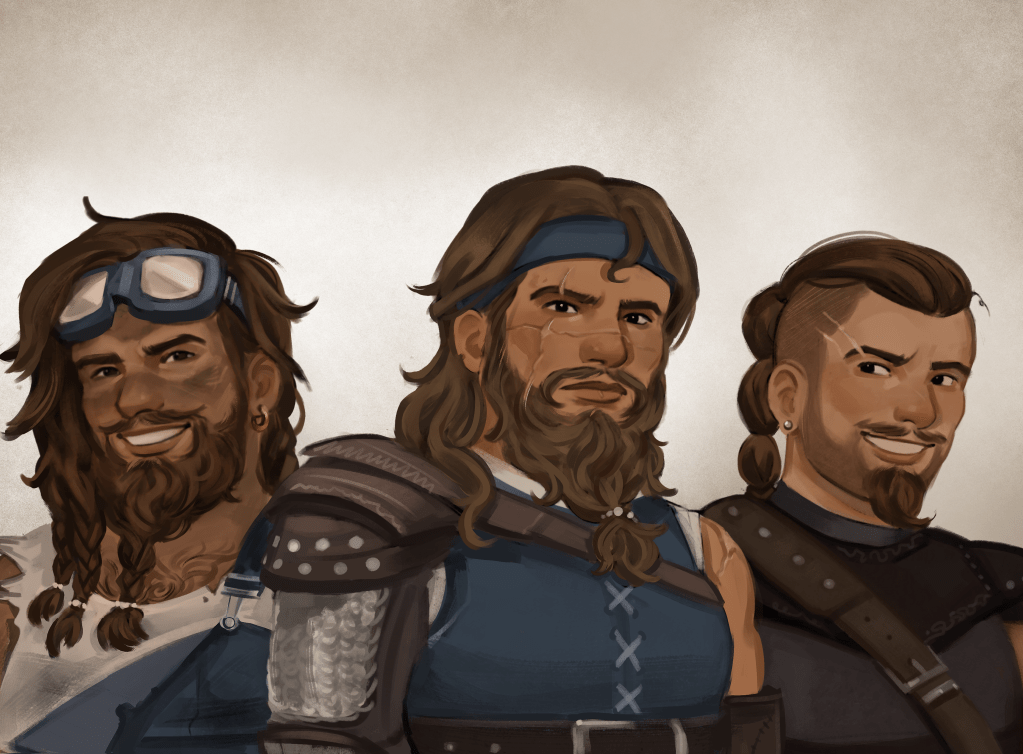
    Dwarves in fantasy roleplaying, especially in the modern sense, have become stereotypes. Loosely based on Gimli from Lord of the Rings, it’s a common shorthand, found in several fantasy settings beyond Middle Earth. Dwarves are short, bearded, stocky, gruff, capable of holding grudges across generations, masterful artisans and miners. Some sources describe Dwarven women as having beards, (like Xindi and Xandi on the masthead), others describe Dwarven women as lacking facial hair (like Disa from Rings of Power) and often Scottish coded. Part of this image is Dwarves living in extensive Clans.

    So widespread is this stereotype is that it’s common parlance. When the GM mentions a character is a Dwarf, the players will most often draw up powerful mental images of that character based on the previous description. While this “short”-hand is useful (see what I did there?), it can lead to confusion at the table as players make assumption about their Dwarven companions.

    Dwarves in the Dezzyverse

    In my campaigns I “reskin” dwarves just to shake up player assumptions. This is mostly just retitleing the names of dwarven things. I prefer to use the terms a people would use for themselves, as opposed to the terms that others would use for them. In the case of my campaigns, they call themselves Svakk as a people. (Indeed, calling them “Dwarf” might start a brawl) Though the Svakk refer to themselves most commonly by the name of their Klaarg (which is their word for “clan”). “Xandi of Klaarg Tordenzme” for example. The languages of the Svakk are collectively called Klaargspek, though like their cultural identities, most Svakk refer to their languages by the name of their Klaarg. “Tordenzme Klaargspek” or “Sohnrodt Klaargspek”.

    Even divided among dozens of distinct Klaarg, the Svakk people are tightly bound together, Klaargspek is understood even through different dialects spoken in different Klaarg. Klaargspek also shares a single runic alphabet, the Vaalbek.

    The Doom of Klaarg Tordenzme

    Once, Klaarg Tordenzme stood among the strongest and most wealthy Klaarg among the Svakk. Indeed, the grasp of Klaarg Tordenzme had stretched beyond the halls and citadels of the mountain realms, Tordenzme was a force within the kingdoms and empires throughout the lands, from sea to ocean. The heart of this mighty realm was their city of Dohrgraign. Deepest of the delves beneath the mountains, in this age, Dohrgraign was was the only city to make peaceful contact with the dark realms of the Underworld.

    Exotic and expensive trade passed through Dohrgraign, under the leadership of Theigns from Klaarg Tordenzme. Roads from the farthest realms stretched to the Grand Gate that led deep into the Underworld, a league-and-a-half below the surface world to the City of Dohrgraign. For centuries Klaarg Tordenzme stood among the greatest of these ancient empires.

    Then came the Doom of the Tordemzme, a prophecy delviered to Klarg Tordenzme that was defied, causing catastrophe. Over nine years of what the chronicles named “The Fall of Dohrgraign”, the city suffered endless misfortunes that resulted, finally in the gates being sealed from the outside world. Few detailed records survived the Fall and in the eight centuries after the Sealing, the city itself was lost to memory, fading into myth, a distant curse and reason to shun the descendants of Klaarg Tordenzme.

    Eight hundred years ago, during the reign of Theign Haaldbarg, a mysterious prophet known as the Black Vizier was recieved at court. The hooded and robed figure did not bow, nor show deference to Theign Halldbarg, speaking directly and openly their warning.

    “Trespass no further into the dark below the stone on which your thy city stands. Else the greed of Klaarg Tordenzme will become Dohrgraign’s downfall.”

    Insulted, Theign Haaldbarg ordered the Black Vizier thrown in chains. Yet, when the guards attempted to seize them, the Black Vizier vanished with a clap of thunder that felled all within two or three strides of the figure.

    Afterwards, the Black Vizier appeared again and again, and always delivering disaster where it stood. It is difficult to tell exactly when Theign Haaldbarg sealed the city, but there was one last evacuation towards the surface. History records that a foul miasma had arisen from the Wyrmansklovt and spread throughout the city, bringing horror and death. What few citizens of Dohrgraign still remained were commanded to flee to the surface.

    It was following this last escape from the Underworld that the tunnels connecting Dohrgraign to the surface collapsed. In the centuries which followed, the city that grew around the Grand Gate withered and fell into ruin and Dohrgraign was ultimately lost.

    The Doom of Klaarg Tordenzme was used by the klaargs for centuries as a warning against hubris. The few Tordenzme communities that survived the Doom have been marginalized by other klaargs as “cursed” based on this myth.

    The Year of Rage

    In the “current” year of my D&D campaign, it has been roughly ten years since the events detailed in the published adventure Out of the Abyss. With the incursion of demons, a small struggle between the Demon Prince of Undeath and the Patron Deity of Dohrgraign, the Keeper of Secrets Under the Mountain has caused lost passages to open once more as demons and the holy dead battled one another.

    The Year of Rage also corrupted the ambient magic of the Underworld. Mortals adventuring in the ruins of Dohrgraign risk Torment and corruption. The cursed city drew the Demon Prince to it. Dohrgraign had been a tomb for eight hundred years by the time the Year of Rage brought demons into the Underworld. The Keeper of Secrets Under the Mountain was not only the God of hidden treasures and secret knowledge but he is the Keeper of the Dead. Dohrgraign is one of his holy places under the mountain, and after eight centuries, it has become a secret as well.

    The Crossroads of the Underworld

    Dohrgraign was not a naturally occurring space. It was carved from the stone of the underworld by Klaarg Tordenzme over centuries. Following the seams and veins of ore, the Tordenzme miners uncovered the passages and caverns used by the civilizations below the surface. The closest of these caverns became the Gatehouse of Dohrgraign, another nearby cavern (a much larger cavern) would develop into the settlement known as Genzhymyl.

    In the present day, Genzhymyl has grown into a thriving trading center. It is independent from the competing realms in this region of the Underworld, The Empire of Llolth, the Azhgov Clan, and the various Goblinoid, Kuo-Toa, and Orcish communities that have settled in this area over the past several centuries. With the newly unblocked passages, Dohrgraign is once again able to be discovered.

  • Monsters with Clockwork Hearts

    Monsters with Clockwork Hearts

    The Mazynik of Arjenvís

    The most recent “species” to emerge in Arjenvís are the Mazynik. The Mazynik are a clockwork, machine people made possible through many of the engineering discoveries made by the scholars of the Ynstyuit Yazingyeijny college. They have been a part of the population of Arjenvís for generations at this point. Sadly, the Mazynik in all of their forms have been used as slave labor almost since their inception.

    There are seven primary variants of Mazynik

    • Type I – Tiny Mazynik designed for companionship. The type I are roughly the size of house cats or large rats and their differential brains have the cognitive abilities of a human child.
      • These Mazynik are often programmed for a variety of simple tasks for which their size and general design are suited. Fetching and retrieving small items, delivering small parcels and physical messages (like written notes), cleaning chores, vermin control, and simplistic minor patrolling. Their limbs end in small claws for grasping and gaining traction, and most Type I designs have a small dart launcher built into the body
      • Type I Mazynik can be found nearly anywhere in Arjenvís, including the rivers (for those models adapted for swimming). They are more common in the affluent Canton, like the Stare Miasto, and the Jyarmarck. But even in the slums of the Brzek Krreft, older Type I Mazynik, refurbished from spare parts can be found wandering the narrow alleys on errands or still carrying out instructions from owners who have long forgotten or simply lost them.
    • Type II – Small Mazynik designed as assistants and servants. The type II are the size of a medium to large dog and have the cognitive abilities of an average adult human.
      • These Mazynik are more capable than the smaller Type I models, and are designed to perform functions that demand greater strength and durability. The Type II models are often used to deliver small burdens, perform larger household chores (think “Roomba”), act as guards and sentries, and assist people with complex tasks by providing extra manipulative limbs.
      • Like the Type I, the Type II Mazynik can be found virtually anywhere in Arjenvís. From the estates of the Stare Miasto down to the ghettos of the Brzek Kreft. They are most common in the Jyarmarck, where they are set to delivering packages of purchased goods to destinations, and in the Zmiana, where they work towing barzos along the various canals or working the southern fields.
    • Type III – Human-sized Mazynik designed to be laborers. The type III are the size of an adult human, and have the cognitive abilities similar to the Type I.
      • The Type III Mazynik is a design intended for human-sized menial tasks. Whether household (minor repairs, cleaning, personal assistants) or industrial (labor, or dangerous/ strenuous activity). They are designed and programmed for obedience and servitude, behaving as loyal companions.
      • The Type III Mazynik can be found nearly anywhere in Arjenvís, but are most commonly found in the most wealthy cantons, the most wealthy households and industries, which can afford the expense of purchasing and maintaining the clockwork mechanisms that allow them to function
    • Type IV – Human-sized Mazynik designed for combat as guards or gladiators. The Type IV are also the size of an adult human and have the cognitive abilities similar to the Type II.
      • Type IV Mazynik are designed for heavier labor than the type III or for combat. They often resemble clockwork suits of armor, imposing and dangerous. They are in general human sized, but are larger than most average people.
      • The Type IV are less common than type I, II, or III Mazynik. Partially due to expense, and partially because of the much more narrow scope of their designed functionality. They are most commonly found near properties of the wealthiest citizens of Arjenvís, where they are used as sentries and guards or in the deepest depths of the Czarny Grzbiet Mine, where their immunity to the toxic gasses and their phenomenal physical prowess permit mining veins that would otherwise be impossible.
    • Type V – Large Mazynik the size of an ox or draft-horse. The Type V are designed to pull and carry large, heavy loads, or serve as mounts. They have cognitive abilities similar to the Type I.
      • The Type V Mazynik is very nearly a small vehicle. It’s designed as a six-limbed being, much like a centaur, a quadraped lower body and a humanoid torso. This frame allows for functions that permit the Type V to not only carry a passenger or two, or pull a burden but also manipulate objects with hands. There are Type V variants that are designed as bipedal forms that are nearly twice as large as a typical person, and other design variants that resemble large beasts.
      • Type Vs are much more rare and expensive than the more common Type I, II, or III but they can still be found in all Cantons in Arjenvís. The most common use are along the canals of the Zmiana, and the steep face of the Czarny Grzbiet and Nozca Stok cantons, pulling trolleys and barges.
    • Type VI – Large Mazynik roughly twice the size of an average adult human. The Type VI are designed to command and manage other Mazynik, their differential brains are the most advanced commonly available and they have cognitive abilities that, while still superior to humans as a whole, are within the human spectrum.
      • The Type VI Automat is a very sophisticated clockwork device. It’s nearly the size of a Type V, but has a much more advanced machine intelligence built into it’s design. The Type VI is designed for complex, independent tasks and can adapt to circumstances to an extent that they are still addressed by it’s programming.
      • Type VI are status symbols among the aristocracy of the canton and are seldomly encountered without cause in Arjenvís. They are often employed as automated stewards, chamberlains, or major-domo for households and estates. Many are in service of the Vlatza as supervisors of Type IV and V Automat which function as guards.
    • Type VII – Gargantuan Mazynik the size of buildings, designed to be “smart” buildings the type VII are expensive and rare in the extreme. Type VII can be used for a variety of purposes, from intelligent libraries to self-functioning factories and leisure residences. Type VII support between 1 and six differential brains that function in concert, depending on the Mazynik’s designed purpose. Each brain, taken by itself, have cognitive abilities which vary from that of a child to that of a mature human. When multiple brains are working in concert, the combined brains of a Type VII can perform cognitive feats of genius.
      • The Type VII Mazynik is a building sized clockwork artifact. It’s so big, in fact, that it functions like an actual building, with individuals living and existing within it’s rooms and halls. As such, the Type VII is seldom mobile, but unlike other Mazynik, the Type VII can direct it’s Actions and Abilities within itself as well as without.
      • The Type VII is rare in the extreme. There are but a handful in all of Arjenvís.

    History

    Mazynik were first developed in the manufactory of Kahlazst Vahn Ztiyer. A member of the Vahn Ztiyer household of III Canton, Kahlazst was an Artificer and a minister of the Ynstyuit Ynzingyeijny school in the Kolygiom Zyle Wednye.
    The first Mazynik designed would become the type I and type V, both of these first prototype models were meant to do work as a replacement for beasts and animals. Kahlazst designed what would become the type II as a mechanical assistant.
    These early Mazynik had primitive differential brains by current standards, but were capable of independent action with minimal supervision. As the usefulness of Kahlazst’s Mazynik became more apparent, the two core mechanisms, the differential brain and the corespring were refined and developed into ever more sophisticated iterations. Eventually the Automat was capable of matching most people in terms of intellect, but not creative thought. This made Mazynik very useful for menial labor, guard-work, and heavy labor. They could be programmed with base skills, and their difference brains would adapt them to the environment in which they were operating.

    Anatomy

    Individual Mazynik are designed to perform their directive purposes. They are generally built to resemble people and/or animals that are familiar to most people. The heart of most Mazynik (type I – VI) is the Corespring, which will allow for a day’s operation when fully wound. Type VII instead utilizes a steam engine to maintain a continual operation (so long as the engine remains fueled, that is).

    Genetics and Reproduction

    Mazynik do not reproduce biologically, they are built. They do have the ability, however to manufacture one another. Either with or without the involvement of people. Depending on the resources and facilities available, manufacturing an individual Mazynik will take periods dependent upon their complexity. This includes programming of their differential brains.

    • Type I6 to 12 weeks
    • Type II6 to 20 weeks
    • Type III12 to 28 weeks
    • Type IV 24 to 48 weeks
    • Type V18 to 36 weeks
    • Type VI30 to 50 weeks
    • Type VIIone to five years

    Mazynik designed by the same person, persons or factory will share a general resemblance to one another.

    Growth Rate & Stages

    Mazynik do not naturally grow. Their bodies can remain the same throughout their lives (for lack of a better term). However, their differential brains will experience a progression of development that reflects their accumulation of experience up to where their capacity of data storage is reached.
    Juvenile – This is the first stage of cognitive development. The Mazynik has it’s base cognitive routines and can communicate and perform the tasks for which it was designed, but not much outside of that scope.
    Prime – This is a long stage of development where the Mazynik cognitive abilities have expanded to a point where it can formulate and adapt it’s functionality based on learned experiences. Prime stage is recognized when a Mazynik can first adapt independently beyond it’s initial programming and lasts until it’s cognitive storage reaches capacity.
    Fading – This is the last stage of development where the Mazynik’s cognitive abilities have reached a point that to incorporate new experiences and new data, older experiences and older data must be eliminated. This tends to cause the development of eccentricities within the Mazynik’s persona as they begin to “forget” memories they once recalled flawlessly or skills they once had or experiences they once lived. Additionally, fading can also be brought on by damage or wear within the differential brain itself, leading to a diminished capacity.

    Ecology and Habitats

    Mazynik are curious in that they can exist in almost any environment even thrive if they are purpose-designed for those conditions. However, resources available in an urban, technologically sophisticated environment provide the most favorable conditions that Mazynik can function within.

    Dietary Needs and Habits

    Mazynik do not require sustenance in the way that biological species do. So long as their coresprings or engines remain wound or fueled, Mazynik will continue to function. However, Mazynik do require steady maintenance in the form of lubrication of moving parts, cleansing of components, care for and replacement of worn materials, etc.. Going without these essential will lead to malfunctions which can ultimately become critical enough to permanently disable the Mazynik.

    Domestication

    The Mazynik are completely domesticated as a species.  Though some advanced individuals (mostly Type VI and Type VII) can carry out self-directed “manumissions”, Mazynik are designed to follow the direct inclinations and command of those whom they serve.

    Uses, Products & Exploitation

    Mazynik are used in Arjenvís in all manner of menial, labor intensive, and dangerous tasks. They act as servants, laborers, companions, soldiers, even vehicles and homes.  To the powerful and wealthy of the city, they are merely clever tools, or toys to be used until their utility or novelty comes to an end, whereupon they are discarded.

    Naming Traditions

    Industrial, labor, and guard Mazynik are normally designated by a serial code, and recognize themselves when that code is referred to. More personalized Mazynik, those who serve as companions, assistants and servants are often given nicknames by their owners. Finally, there are some Mazynik (mostly type VI, but any sufficiently experienced Mazynik) who will name themselves

    Mazynik and Warforged

    Mazynik are not Warforged. Warforged are sentient beings with agency and free will. Mazynik are automata, and even if they have been given their manumission, they are only an imitation of sentience. Warforged are animated by magic and do not rely on wound clockwork.

    Mazynik are limited in their function. Though they are capable of great proficiency for the jobs they are designed for, they are abysmally incompetent when attempting tasks not related to their purpose. Warforged are as adaptable as any mortal person born and raised.

  • Seers, Tramps and Thieves

    Seers, Tramps and Thieves

    The Caravanserai Who Camp in the City of Miseries

    Not everyone in Arjenvís are monsters, prey, or prisoners. There are one people who know secrets, who travel out beyond the walls of the city to other lands. Despite Arjenvís deepest wishes for no one to escape once locked behind her walls, against the monumental, terrible will of the city who will not let go of the souls in her iron grip. The Caravanserai continue to slip in and out with seeming impunity, bringing rumors of lands beyond the horizon, as well as trading in exotic wares from foreign artisans.

    The Caravanserai camp away from the estates of the aristocracy, setting up in hidden places among the poor neighborhoods or abandoned buildings. Though they can be found in most of the Canton, somewhere, excepting I Canton, the Kziazekyr. Their camps are able to be taken down and moved in a single night.

    Cartomancy

    Of all the various forms of divination, the Caravanserai prefer, excel at cartomancy. The decks used vary from Caravan to Caravan, but the pattern is the same. The Caravanserai Diviner uses the Vaghanesqa Ròdho to read the fortunes of those who search them out.

    Vaghanesqa Ròdho

    The dealer separates the High Deck from the Lesser Deck and shuffles both separately. They place the High Deck to their left and the Lesser Deck to their right. The dealer then deals cards from the High Deck.

    • I. This is the Mandĭn (Fortune) card. It represents what the seeker (the person the reading is for) will become at the end of their journey.
      • this card is dealt face down, perpendicular to the dealer
      • the top of the card (for determining if the card is inverted or not) is the short edge facing to the dealer’s left
    • II. This is the Ègo (Self) card. it represents the seeker as they are at present.
      • This card is dealt face up and crosses the first card
      • the top of the card is the short edge of the card that faces away from the dealer
    • Deal four cards from the High Deck face up starting on the far side of the Self cards and passing clockwise.
      • each card is dealt perpendicular to the last with one short edge facing the cross of the first cards dealt, is the top of the card.
    • III. The Mashkar e Jivendesko (Midwinter) card.
      • dealt to the wheel at twelve o’clock
      • this card represents where the seeker is departing from, and returning to.
    • IV. The Prago e Primaverako (Spring Threshold) card
      • dealt to the wheel at three o’clock
      • this card represents the first leg of the seeker’s journey
    • V. The Mashkar o Milaj (Midsummer) card
      • dealt to the wheel at six o’clock, opposite Mashkar e Jivendesko
      • this card represents the farthest away the seeker journeys from home.
    • VI. The Prago e ćhonesko (Autumn Threshold) card
      • dealt to the wheel at nine o’clock, opposite Prago e Primaverako
      • this card represents the final leg of the seeker’s journey
    • Deal 8 cards from the lesser deck in pairs around the wheel
    • VII. The O vudar (Doorstep) card
      • dealt to the wheel at one o’clock.
      • this card represents that which is sending the seeker on their journey
    • VIII. The Obstàkulo (Obstacle) card
      • dealt to the wheel at two o’clock.
      • this card represents the first challenge to the seeker, holding them back from the Prago e Primaverako and must be overcome before the seeker can cross the Spring Threshold
    • IX. The Amala (Comrades) card
      • dealt to the wheel at four o’clock.
      • this card represents the friend or ally that will help the seeker following the Prago e Primaverako
    • X. The Corripen (Setback) card
      • dealt to the wheel at five o’clock.
      • this card represents a problem or defeat that the seeker must endure before they can move forward to the Mashkar o Milaj
    • XI. The Pauza (Respite) card
      • dealt to the wheel at seven o’clock
      • this card represents the restoration of the seeker following the Mashkar o Milaj
    • XII. The Bibaht (Misfortune) card
      • dealt to the wheel at eight o’clock
      • this card represents unexpected adversity before the seeker can begin their final part of their journey
    • XIII. The Gardeno (Warden) card
      • dealt to the wheel at ten o’clock
      • this card represents the fearsome guardian of the prize the seeker hopes to attain.
    • XIV. The Prèmio (Prize) card
      • dealt to the wheel at eleven o’clock
      • this card represents the reward the seeker earns and brings back to their start at Mashkar e Jivendesko

    After the Prèmio is dealt, the dealer reveals the seeker’s Mandĭn card.

    The Journey

    The reading of the cards is framed as the seeker journeying to discover their fortune. The seeker asks the diviner (dealer) what fortune they want to know. The diviner, as they read the cards, describe what each card means in context of it’s position. Since the four Thresholds (Mashkar e Jivendesko, Prago e Primaverako, Mashkar o Milaj, and Prago e ćhonesko) are dealt before the remainder of the wheel, the reading can only be made after all the cards are dealt.

    Following the Prèmio card being dealt to the wheel, the diviner leads the seeker through the journey of the wheel. The diviner reads the wheel, starting with the Maskar e Jivendesco and Ègo and progressing clockwise.

    The beginning of the journey, represented by the O vudar, Obstàkulo, and the Prago e Primaverako cards are read together as a “Spring Season” of the Journey. Prago e Primaverako translates to “Spring Threshold”. The Spring Season represents the conditions of the journey’s start (the O vudar) and the first real obstacle before arriving at the Spring Threshold (the Obstàkulo). The Spring Threshold card reveals the first turning point of the journey, showing a place or person that will point the seeker forward. It is the reward for taking on the journey.

    The next part of the journey, represented by the Amala, Corripen, and the Mashkar o Milaj cards are read together as a “Summer Season” of the Journey. Mashkar o Milaj is Midsummer and is the midpoint of the journey, The Summer Season is the first half of the pilgrimage through the wilderness towards their fortune. In Summer, allies and comrades are found, setbacks are endured and Midsummer is the threshold to the deepest, and most dangerous part of the journey.

    The deepest part of the journey, represented by Pauza, Bibaht and the Prago e ćhonesko are read together as the “Autumn Season” of the Journey. The Prago e ćhonesko, the Autumn Threshold, is the place where the Self is killed and reborn. The Autumn Season starts with a short rest, but quickly descends into misfortune until the seeker confronts the parts of themselves that they must change before they can complete the journey. These three cards unveil the form that the events take.

    Passing through the deepest shadow of the Autumn Threshold the end of the journey is represented by Gardeno, Prèmio, and the Mashkar e Jivendesko cards. Read together, these cards are the “Winter Season” and when the Mashkar e Jivendesko is read, signifying the return of the seeker to where they started, the Mandĭn is revealed showing the seeker what their fortune makes them into.

    Storytelling with Divination

    Divination like cartomancy can be effective in helping Game Masters and Players tell stories at the table. Beyond the scene where the fortune-teller lays cards out on their velvet table, the fortunes themselves become the seed of new stories. This can be utilized to develop bespoke adventures that are tailored to the characters.

    When developing story in this manner, the reading should be for the entire group as a whole, instead of individuals. While personal, individual readings can motivate the subject directly, it does focus a lot of the burden on that character and the other members of the party can start to feel like sidekicks. Even in a focused reading, as GM, make sure to include the other characters in the interpretation.

    An option, likely the simplest, but still, the most challenging to design around is to use the reading as a form of emergent storytelling. Neither the GM, nor the players know what the cards are going to tell them, and when the reading is complete, there is an outline for a story arc. Everyone involved should make notes about the reading, because those notes will maintain a level of consistency and fate to the adventure as it progresses. As a GM, consult with the players as to what they want the fortune to mean for their characters. The point here is to follow the player’s choices and interpret their fortune, not to build a railroad that forces them onto the predetermined route to the end.

    A second option, which requires a little more work, but will be easier to design around is to stack the deck prior to the reading. Again, with the players’ input, figure out what they want the fortune to mean. The GM then can select cards and place them in an order that will conform to the players’ intentions. Again, everyone should take notes regarding the reading, and the point remains to follow these designs to guide the characters to their fortune, and avoid railroading them to a destination.

    A third option is to use the divination as a Red Herring. This is not to suggest that the divination is false, but that interpretations vary and can mislead. As with the previous options, it’s up to the Game Master and Players to discuss as to what the fortune means. However, the GM should re-interpret the reading to subvert the players’ intentions towards their characters.

    The Vaghanesqa Ròdho is designed to resemble the Hero’s Journey to make the design of a narrative easier. The four thresholds serve as turning points in the story with the lesser cards acting as story elements. Other reading layouts can be adapted with a little thought and effort. Divinations are ways of telling the story of the future regardless of the means used to tell fortunes.

    .

  • Religion in the City of Miseries

    Religion in the City of Miseries

    The Doctrine of the Vyara Zabor Church and the Faith of Cults

    Within Arjenvís, there is but one recognized religious institution, the Vyara Zabor Church. The Church provides a structure and stability to the lives of Arjenvís’ citizens which the Vlatza or the Boyars of the Canton cannot. The Priesthood comforts, the Biurokratyzm manages, and the Inquisition enforces Church Doctrine. The divine mysteries of the Vyara Zabor Church are reserved for these institutions, the faithful need not know anything more than service to Arjenvís in this life will be rewarded with joy everlasting in the next.

    While the Vyara Zabor Church is the sole legal religion in Arjenvís, there remain several underground cults operating in secret and offering a personal connection with the subject of worship. All are outlawed by law and each cult cell is under constant threat of being attacked by the Inquisition and it’s congregation condemned to torture and execution.

    The Vyara Zabor Church

    The Vyara Zabor Church predates Arjenvís, being but one of many faiths in the region. When the city was founded, Xiezer Dzynis had brought his personal Praladt, Sorzhya Judtzhrenka and she gave the blessings of the Sun-Father over the founding of the settlement. When the first canton were established, Praladt Sorzhya established a temple to the deities of the Vyara Zabor Church and invited priests to serve as faculty within the new temple.


    The Vyara Zabor Church grew along with Arjenvís, enjoying support from the Vlatza of the Kziazekyr (I Canton) and the Boyars of the others. As the city grew larger and larger, the Biurokratyzm also became more deeply rooted in the byzantine administration of Church and City. Prelate Sorzhya’s successor, Aandton became Starszy Praladt, an office which evolved into the modern Arzykapwan.


    A little more than five hundred years before the present day, the magical prowess of the priesthood began to wane. As priests lost the ability to work divine magic over the decades, the Arzykapwan Carythni declared the age of miracles to have ended, and Church doctrine branded the practice of divine magic to be heretical and the work of fiendish spirits. The order of the Inquisition was established to enforce this doctrine throughout Arjenvís.

    Today, the Vyara Zabor Church no longer worships the deities that Praladt Sorzhya brought to the founding of the city so many years ago. The stories surrounding those deities are dismissed as mythology, and used as metaphorical lessons to teach the young lessons in morality, rather than introducing them to the power and majesty of the pantheon.

    The Vyara Zabor Church defends and perpetuates the class distinctions within Arjenvís.  It is through the doctrine of the Church that the lot of the poor classes remain in servitude to the aristocracy.  All social traditions, childbirth, prayer, marriage, work and service are dictated by the Church and in some cases (mostly revolving around work and marriage) enforced by the Boyars.

    The object of worship of the Vyara Zabor Church in Arjenvís is the city itself.  Arjenvís is presented as mother and father both, and the people as children of the city itself.  To this end, the Vyara Zabor Church prohibits worship of any competing Deity or Faith.

    The Vyara Zabor Church is a hierarchical organization with their head in the office of the Arzykapwan (ar-zee-KAP-van). They preside over the council of Praladt who in turn preside over the church Priesthood.

    The Biurokratyzm, however is far more politically powerful, being the church administrators. Often it is the Zarzad (the Administrative Directorate) which selects the members of the Paladt when the seats need filled. It falls to the clerks within the Biurokratyzm to maintain the records and collect the tithings.

    The Inquisition enforces the orthodoxy of the Church, investigating heresy and punishing those who stray beyond the doctrine. The Inquisition operates outside of the hierarchy of the Vyara Zabor Church, answerable to the Praladt council and the Arzykawan. Individual Inquisitors have broad authority to pursue their investigations into heresy throughout Arjenvís acting as judge, jury and executioner. The Wylki Inkvizyor (weel-KEE ink-VEEZ-eeor) or “Grand Inquisitor” sits in supreme judgment of Church Dogma, subject only to the authority of the Arzykapwan.

    The Vyara Zabor Church is very rigid in it’s traditions and insistence on being the sole legal Church in Arjenvís. Priests minister to their congregations, reinforcing Zaborisc doctrine and dogma through sermons and acting as the authority between the Church and the people.

    When someone joins the Priesthood or the Biurokratyzm, they leave their families behind, swearing their first allegiance to the Church itself in the person of the Arzykapwan. Marriages are encouraged to remain internal to this subculture, with children born of these unions dedicated to the church in the same manner as their parents.

    If anyone within the Church hierarchy wishes to marry outside it, they are required to expunge themselves from their duty and position before doing so. Such people must acquire dispensation from the Biurokratyzm, and though the process is legal, it is strongly discouraged. Those who do expunge themselves in this manner find themselves (and their spouses and children) forsaken by both Church and shunned by the citizenry.

    Outlaw Cults and Heresy

    Even after the Arzykapwan Crythni wrote the Proclaimation of Orthodoxy and declared the worship of deities heresy, some people within Arjenvís clung to faith in their old Gods. Relics and artifacts were hidden, shrines were moved to secret, hidden places. Clerics, especially those blessed by their gods with power over the undead were forced to keep their magic hidden lest they be dragged before the Inquisition and judged.

    The Sun-Father was the original patron deity of Arjenvís. Some of the evidence of faith continues to live on within the Vyara Zabor Church in runes and symbols. But ever since the Morning of the Black Dawn, the Sun-Father’s connection to Arjenvís has weakened almost to nothing. Still, there are very small cults throughout the city that look to the sky during Midsummer and pray that the Sun-Father returns and delivers Arjenvís from the monsters and misery

    The Suffering Martyr is a deity that is widespread among the lower classes. The deity is an exemplar of resilience and endurance in the face of horrible adversity. The Suffering Martyr is a deity of hope and mercy. Within the Brzek Kreft there is a miracle, a well, the Zdnuthia Issekah provides clean, fresh water. It has resisted all attempts to tear it down (it is back on the following morning) or befoul the waters (the poisons and pollutants are purified the moment they contact the water in the well) or even prevent people from visiting the well (there are ruins surrounding the plaza where the well rests that stand testament to all the times the Vyara Zabor Church or the Boyars (except for the Mysv) tried to wall the location off). It is a divine miracle in the face of denial. The Inquisition maintains a watch over the location and tries to discover the identities of people who come to the well and draw water.

    Of course there are multiple Feindish cults in Arjenvís, even among the Aristocracy, promising power, wealth, luxury, anything the mortal heart desires. Representatives of most of the Demon Lords and Archdevils can be found as the guides and objects of devotion of one cult or another. Still, the authorities of Arjenvís and the Inquisition zealously hunt these cults down and crush them. For Arjenvís holds a monopoly on inflicting misery, and jealously guards her domain.

    Monsters in Priestly Vestments

    Like all who are in positions of authority within Arjenvís, the leadership of the Vyara Zabor Church are all monsters. Primarily, they are predatory intelligent undead (vampires, ghouls, liches and so forth). This is one of many reasons that Divine magic and Clerical abilities are outlawed in Arjenvís, after all, it wouldn’t do for the undead masters of the Church to turn themselves.

    But, there is an additional layer of monstrosity within the Vyara Zabor Church. Even though the undead in leadership often possessed near-miraculous abilities (or at least abilities that could be presented as “miraculous”, there are both undead and mortal clergyfolk that are sworn to Arjenvís as Warlocks.

    The City of Miseries as a Warlok Patron The Undying (from the Sword Coast Adventurers Guide supplement). This patron should not be generally be available to player characters, since the theme of most campaigns in Arjenvís is the struggle to escape and survive the city. The abilities of the Undying patron Warlock, like the powers of the undead mentioned above are often passed as miracles and blessings from Arjenvís. The Warloks also serve to undermine the power of Divine Magic in the city, presenting the façade that the Vyara Zabor Church bestows power and blessings on it’s faithful too, through the priesthood of course.

    Conclusion

    The City of Miseries does not abide a challenge to it’s control over the suffering of it’s people. She jealously guards her possession of the people who live within her walls and obsesses over the mortals she steals from other worlds and cities. The comfort and hope that the Gods can bring to the people of Arjenvís is not tolerated. Mercy is not a luxury that can be found here, even by the wealthiest, and most powerful denizens. The Vyara Zabor Church sees to that.

  • Hand Grenades and Fireballs

    Hand Grenades and Fireballs

    When your friends are close enough to get singed

    From it’s wargaming roots, D&D has allowed Area of Effect attacks to split fighters in melee with one another. The phrase “I cast the fireball to hit the monster but not my friends” has been around since the beginning. Precisely measuring out squares or inches on a battle-mat to include the monsters and not the characters is a refined skill for grid-tacticians everywhere.

    I’ve always hated it. It slows combat to a crawl as players agonize over where the center of their Fireball, or their Cone of Cold, or Entangle Spell should be to get the most enemies and no party members.

    For me, this also breaks immersion. The splitting of combattants in melee assumes that two fighters stand still until they move to a new position. Bashing away at one another like a pair of Rock-em Sock-em Robots, anchored to the spot. This is not how fighting happens. Look at MMA fights, or boxing matches, wrestling (both intramural and pro), or even a football play or rugby scrum. Ain’t no one standing still long enough to precisely drop a 20 foot radius ball of fire so one guy gets burned ant the other doesn’t. All fighters in a melee are in constant motion, often grappling or piled up on the ground.

    I use the following House Rule in my games with regards to what happens when a spellcaster tries to put the edge of an AoE spell between two fighters in melee with one another.

    Area of Effect Attacks into Melee

    • Anyone who is in melee combat is affected by any AoE that would affect any combatant in that combat in that round. i.e – a spellcaster is not able to position an AoE effect in such a way that one combatant in a melee is affected while others are not. It’s either everyone in the combat or no one in the combat.
    • There is a “fringe zone” around the edge of an AoE that extends outside the limit of the AoE. Anyone within the fringe (a 5 foot (1.5 meter) border) who is also in melee combat with someone in the AoE is still affected, but in the instance of where a Saving Throw is necessary, the targets in this fringe zone have Advantage to that Saving Throw.

    Example: We have three potential targets of a fireball.
    Target 1 is the intended target of the spell and is within the AOE. Target 1 is affected as normal and makes a Saving Throw as per the rules.
    Target 2 is in the fringe zone and is in melee with Target 1. Target 2 is affected, but has Advantage to their Saving Throw.
    Target 3 is in the fringe zone and is not in melee with either Target 1 or Target 2. They are not affected by the spell.

    • If all combatants are in the fringe zone of an AoE, but none are in the AoE itself, no one in the combat is affected by the spell.
    • If a target is in the fringe zone but is attacking with a weapon that has the reach quality (like a Halberd), then the target is not affected by the AoE.

    Example #2: Same three potential targets of the fireballThe circumstances are the same, except Target 3 is outside the fringe zone, but is in melee combat with Target 2. In this case, Target 3is considered in the fringe zone.

    Example #3: as the previous example but with the inclusion of Target 4who is outside the fringe zone. If Target 4is in melee combat with Target 3, Target 4is considered outsidethe fringe zone. If an AoE spell has no Saving Throw (like SLEEP) then anyone affected by the spell is affected normally, whether or not they are in the finge zone. If an AoE has a Magic Attack Roll, and not a Saving Throw anyone affected by the fringe zone has a +5 Bonus to their Armor Class.

  • Slavery in Swords & Sorcery

    Slavery in Swords & Sorcery

    Veiling our crimes behind a smiling historical mask

    I’m designing an Underdark adventure. It’s deep below the surface of the world, closer to the wicked empires of Dark Elves, Grey Dwarves, Mind Flayers and Kuo-Toa. In the setting for this adventure, there is a settlement. A small semi-permanent collection of structures and tents that’s grown up at a crossroads next to an underground lake.

    And it has a slave market.

    The institution in the Underdark

    Within the adventure location there are bands of escaped slaves and posses of slave hunters playing cat-and-mouse in the lightless tunnels. There’s a party of death-worshiping drow more than willing to sacrifice anyone they capture to the Demon Prince of Undeath. Bad people making bad choices and doing bad things. It’s one of the dangers of the adventure that the characters need to overcome.

    Slavery and the trafficking of people remain an evil. Simulating this evil in game doesn’t make it better. Worse, making the institution of slavery a part of a role-playing game can trivialize the impact of it.

    It’s true that whole ethnicities of people were owned throughout history. The struggle for them to win their freedom is both centuries long and ongoing even today. Just because there’s no antebellum aristocrat in a smart white suit sipping bourbon on the front porch of his plantation, doesn’t mean that slavery remains very real, and remains an ethnically motivated practice.

    As a middle-aged, masc presenting white person, it is cruel to pretend that slavery, even in game, is normalized. Especially if I have players at my table whose families may well have been enslaved in the not-to distant past. It is likewise cruel to place a player in the position of being a slave owner, appeaser of slavery as an institution or have their character be a slave without the player’s active consent.

    Gaming and Consent

    Since I mentioned consent, I should expound. Tabletop Role Playing is a communal experience. At least two people interacting to tell an improvised story about the Game Master’s adventure and the Player’s Original Character. Because of that, the players and Game Master need mutual, and active consent when playing.

    This extends to most interactions in game. But where it runs into the question of humanity, that interaction is critical. If any party at the table doesn’t want to be confronted with dark or transgressive subject matter, those wishes need to be respected. This includes enslavement and institutional slavery.

    Real World Institutions vs In-World Lore

    For as long as I’ve been gaming, there has always been this loud, obnoxious, background noise advocating for more “Historical Realism” in Tabletop role-playing. Everything from disparaging Hit Points, to weapon space, and for the modern and future settings, the minutae of guns. I’ve seen hundreds of systems and house-rules. Most of them bogging down the game as the table comes to a screeching halt as we figure out what body-part just got hit by which attack.

    The other historical rabbit-hole is environmental realism. Great Lords ruled over peasants, the aristocracy were allowed to do whatever they wanted because they were the rulers. Gods, after Braveheart roared through the community like so many screaming extras, the term Prima Noctis started cropping up everywhere. Of course, enslavement of every historical stripe has long been a yardstick by which “immersion” was measured. Lawful and Good alignments were construed to support the institution. It was deemed, “ok” and “natural” and because it was imaginary roleplay, wasn’t really real. Like I mentioned up in the consent section, if that’s what the table agrees to, then enjoy your game. I’m not trying to police your table.

    But, when you hear my game in the FLGS, or play at my table at convention, don’t expect to go to the market and buy yourself a slave. I don’t have fun being a GM who plays the slaver, or the enslaved. I don’t care for “historical realism”. At best it’s whitewashed History, at worst it’s a power fantasy about owning people.

    What about those Slavers hanging out in the Underdark?

    I started this essay with the adventure and setting I’m designing. By having slavery as an institution in the background, I’m hoping to allow the tables who utilize my adventure some freedom to adjust it’s impact to suit their taste. There’s a group of escaped slaves and there’s a band of hunters chasing them, it’s up to the players and their characters to react to that set of encounters. It’s up to the Game Master to determine it’s importance. Slavers have made great antagonists in fiction for a very long time. One of the first series of adventures published for AD&D was the A-Series of modules, collectively known as “Against the Slave Lords”. One of the classic cues that there is something “bad” about a given realm is the presence or absence of legal slavery. I’m not saying “don’t use slavery at all in D&D”, I’m asking to put some thought into whether or not it contributes to the story that’s being made at your table.

    And, for the Seven Heavens, don’t justify it behind the excuse of “slavery was common in 3rd Century Rome (or 16th century France, or choose your historical era here)”. Tabletop roleplaying isn’t about historical accuracy, it’s about having fun with your friends, and making new ones.

  • Money Makes the World Go ‘Round

    Money Makes the World Go ‘Round

    The difference between Treasure and Money

    Your characters have done it! You’ve journeyed deep into the earth below the ruined castle. Overcame traps and foes alike, solved ancient puzzles, and killed the Great Beast in it’s lair. Your characters gaze over the accumulated wealth of centuries, jewels and coin and gemstones. Your hirelings start scooping treasure into heavy sacks to carry to the surface, and then home. Everybody is rich!

    Except you’re not, not yet.

    Currency and taxation

    This is getting a bit into the weeds with regards to worldbuilding. Where the adventurers find treasure can be important. Finding a centuries-old cache of coins leads to a problem,the realms that minted those coins may no longer exist. This leads to an issue when the characters try spending the coin back in town.

    One reason currency is minted is to attest to its purity. Gold in particular is more valuable the more pure it is. 100% pure (24 karat) gold is worth more than 75% pure (18 karat) or 50% pure (12 karat) gold. When a realm stamps their mark on a coin it’s a guarantee of purity in the metal. Everyone who trades in the coin of the realm can be confident that the gold is of a minimum purity (usually 75% or 50%, depending on the wealth of the realm minting the coin). Coins from elsewhere don’t enjoy that confidence. Especially old coinage. Instead of valuing the coin based on it’s declared value, coins are valued on the weight and purity of the metal in the coin.

    If the adventurers have their treasure appraised, they can either pay a fee (usually 10% of the value of coins appraised) to a Jeweler to value the coins based on the metal they contain. If the adventurers have access too and proficiency with Jeweler’s tools they may appraise their own treasure by making a Intelligence check with proficiency against a Difficulty class set by the Game Master. Adventurers who know the appraised value of their treasure have Advantage on Charisma checks when negotiating a sale of the coin.

    Ancient coins from realms lost to history, can also be valued as historical or collectors’ pieces. To the right buyer, a box of 3,000 year old coin from an extinct empire might be worth far more than either the value of metal, or the declared value stamped on the coin. This can add detail and steps to cashing in on your treasure hoard that players may not be interested in. Not every player of Dungeons and Dragons enjoys haggling with money-changers over the relative value of copper. To keep things simple, and to minimize accounting, it’s recommended that the Game Master simply assign a percentage that treasure is worth in currency (usually between 50 and 80% .

    The coins can be melted down and sold by weight. The price for precious metals will always be less than the currency value of the coin that can be minted or the jewelry that can be made from it and depends on the purity of the metal. Appraising the precious metal will give the adventurers Advantage on Charisma check when negotiating a sale.

    Using Treasure to Pay for Goods and Services.

    Sometimes, it’s unavoidable, treasure is the only resource that is available to pay for a room and meals at the roadside inn, or when purchasing a mule and cart from a local homestead. Or maybe the characters want to avoid entanglements with the local government. In this case, the characters need to persuade the merchant or inkeep to accept their coin. After all, gold is gold, even if it doesn’t carry the stamp of the ruling sovereign. This would be a Charisma (Persuasion) check against the NPC’s Intelligence (or Charisma, depending on the scene) bonus plus 10. Give Advantage if the characters know the value of what they’re trading (having someone appraise their treasure qualifies). Or Disadvantage if the source of the treasure has a bad reputation. No one wants to take cursed silver from the haunted halls.

    At best, the treasure shouldn’t be worth more than their declared value, even on a natural 20. Otherwise, a successful Persuasion gives the characters their asking value, and a failed Persuasion gives them only half that. A natural 1 throws other complications into the transaction.

    But bartering treasure isn’t like shopping at Ye Olde K-Marte. If a patron isn’t taking legitimate coin, they aren’t too keen on giving exact change in coin of the realm. Accepting illegitimate currency is a crime in most settled areas. At best, it’s just a minor crime and a fine will reconcile the legal issue. At worst, it’s counterfeiting, or espionage, and the characters face imprisonment, or the headsman’s axe.

    Money as a Motivator

    In the early days of D&D, characters earned experience points, in fact, most of their experience points from the gold piece value of the treasure they brought out of a dungeon. One gold piece = one experience point. Fighting monsters and ad hoc experience was at best one quarter or one third of your character’s experience total.

    As Matt Colville once said, “how a game rewards it’s players is what the game is about.” In the case of early D&D, that meant getting treasure. Your characters advanced based on how much treasure they “won” or earned or stole. This led to players to scouring every inch of the adventure for every single coin or item of value. Later editions abandoned this experience point method, which is overall a good thing. Getting better at adventuring because you’re rich, or the instances where novice adventurers become superheroes because they found a treasure hoard worth more than a kingdom was kind of silly.

    Still, moving the experience motivation away from treasure had a drawback. D&D rewarded encounters and combat, so that’s what players focused on, and that became rather boring. It also cut off one of the classic reasons that people take up adventuring in the first place. Finding treasure.

    TANSTAAFL

    Players should be motivated by something more than experience points. We’re in the year 2025, computer gaming can scratch that itch just fine if all the player wants is to level up their characters over and over.

    During Session 0 of a campaign, the Game Master ant the Players should set expectations and define the role of treasure in the story. During this stage, you can establish the importance of money in the setting and in the campaign. There is a big difference between a band of dirt-poor adventurers doing everything necessary to scrape enough coin together to buy their next night at an inn and a court romance of aristocratic adventurers for whom money isn’t an issue, but treasure can buy prestige and power.

    Once established, the role of money and treasure should be used. Don’t handwave the important expenses for the campaign. In the campaign where the characters are scraping for coins, charge the characters for every round of drink, and every transaction, no matter how trivial. The characters are struggling, and their players should be always aware of that fact. In the campaign of noble adventurers seeking status or glory, the minor costs, like buying a round for the house in the tavern to loosen tongues, or flipping the minstrel a couple of gold to (quite literally) sing their praises doesn’t need to be tracked. However, the value of treasure is of critical importance as well as the conspicuous consumption. Keeping up a Aristocratic Lifestyle, paying for an entourage, keeping up with courtly fashion (no one wants to be seen at this season’s ball wearing last years fashions!) the accounting may be different, but the fundamental is the same, Treasure is important, and will affect the characters’ advancements.

    Money Is Money

    Players sometimes only care about gold pieces, or platinum pieces. Silver, copper or electrum are simply not valuable enough to be bothered with. Just remember, most large amounts of treasure is not going to be neatly divided by coin. It takes time to sort through hundreds of coin to pick out all the gold or platinum, which are much rarer than copper or silver. Also, platinum and silver are pretty similar in color, and with the really poor lighting in dungeons separating the platinum from the silver would be s-l-o-w. In dungeon lighting conditions (such as those defined as “bright light” in the 5e rules, it will take 1 hour to sort through 500 coins. In dim light, that time doubles.

    In a similar manner to the current change problem as described earlier, tossing around gold for every purchase is going to cause problems. Most communities smaller than cities don’t have enough coin to break gold and platinum down to lower value coin. When the tavern’s house ale cost 5 copper pieces for a pint, slapping a gold piece down, even for a round for the house is twenty pints. Consider this, if the local tavernkeep is selling fare for copper pieces, they’re not going to have an abundance of coin to make change.

    But it’s Not All Taxes and Crime

    Don’t go overboard with relieving the adventurers of their hard-won treasure. Part of the fun of finding mounds of treasure is spending it. Let the adventurers commission magic items, specialized armor, purchase noble title or church ranks. Large purchases like a stronghold, or ship can be planned and enhanced. Wizards need sanctuaries, Priests need temples, Warriors need fortresses and Thieves need hideouts.

  • Are You Afraid of the Dark?

    Are You Afraid of the Dark?

    Darkvision, Infravision, and Light in the Dungeon

    I’ve been playing D&D since the 80s. And I gotta confess. I never really liked how Darkvision (or Infravision, or Ultravision… etc) worked, either rules as written, or as played. Rules as written (5th ed, 2024), Darkvision allows your character to see in darkness as if it were dim light, and in dim light as if it were bright light out to the defined range. Such vision is monochromatic. Infravision from 1st ed is much the same, except that with infravision, the character sees sources of heat. Which allowed for all sorts of “creative” interpretations by Dungeon Masters and Players alike.

    The problem with the rules as written is, it’s just a flashlight from your vision that only your character can see. The rules imply that, except for being colorblind, the character’s vision is otherwise unimpaired. If a note, for example, is written on the wall with enough contrast, the character can read it without difficulty. Things lurking around in the dark are visible, and can be identified. They are rules designed to be simple to interpret, remember, and apply. Infravision is much the same, except instead of a flashlight, it’s IR Nightvision goggles.

    Rules as played, Darkvision and Infravision make being in the dark an inconvenience rather than a mystery. The difference between “dim light” and “bright light” are applied only mechanically, and even then, most penalties can be mitigated with class abilities or feats. There’s even the spell, Darkvision that confers the ability to a willing subject for 8 hours. Because the effects of being in the dark are so trivial, it’s often forgotten about. Exploring a dungeon is about as disorienting as a poorly-lit hallway. Descriptions include details that would likely be concealed, and when the dark is mentioned, it’s an uncommon enough detail that it becomes a hint that the adventure designers are concealing something.

    Let me tell you a story about a TPK

    Years ago, I ran a D&D campaign, and in the very first adventure, half the characters were humans, while the other half had Infravision. The characters went to the dungeon location a few miles from town and climbed down to brave danger and gather treasure. I asked how everyone was going to see down in the dark, and the players of the characters with Infravision announced they could see in the dark. Then everyone checked their character sheets. No one had brought torches, lanterns, lamps, no light sources. No one chose to go all the way back to town to get some light sources. everyone just strung rope between one another and the characters who could see in the dark led the unsighted deeper into the underground maze.

    The party ran into trouble after angering the troglodytes who lived in the caverns, and most of the party fell in combat. Except for two characters who fled when the battle was going poorly. Two human characters. And in the dark, with no light, they stumbled about until the troglodytes hunted them down. It was exciting, memorable, and some of those players tell the story about that TPK even after more than 25 years.

    The Dark is a tool for the Dungeon Master

    Part of tabletop roleplaying is the shared imagination at the table. Dungeon Masters can set the mood, pace the tension, bring the players into their characters’ experience. The dark forces the DM to describe the dungeon with senses other than sight. Sounds echo, unknown smells linger. the air can be suddenly cold, or warm, dry, or wet. Darkness closes in, and the characters’ world grows very small indeed.

    The dark also encourages the characters to stick together. One of the few comforts in these situations is simply knowing where your friends and allies are. Characters who head off into the dark by themselves often find trouble quick, fast, and in a hurry. Coming to the rescue becomes a terrifying race. Or worse, the stray character is never found, just the odd, broken piece of equipment marking their desperate fight for survival.

    The dark also grounds the environment in the players’ imagination. We expect it to be dark in deep caverns or abandoned mines. Reminding the players of the dark keeps them thinking like explorers instead of tourists. This way, when the characters enter a location even with dim light, the presence of light alone becomes a clue to the mysteries of the dungeon.

    Bring a Torch

    In current iterations of D&D there is a trend towards offering the “Standard Pack” of gear to begin their adventuring career. These packs often include critical, if often overlooked, items and among them are torches.

    Torches last one hour and cast bright light out to 20 feet and dim light an additional 20 feet. They throw shadows, and illuminate differences in color. At the DM’s discretion, a lit torch may be reflected from further still.

    I like to use torches (or candles, or lamp oil) as treasure at times. Since torches add 1 pound of encumbrance each, scrounging torches from the dungeon itself allows the group to extend their time underground. Light, even among populations that naturally possess darkvision, remains valuable. If for no other reason, no one really wants to fumble around in bad lighting, even if they can see through the darkness.

    Darkvision House Rules

    At my table, I define Darkvision as being able to perceive the magical energies that the world radiates. Perceiving these energies reveal them to be a constantly changing blend of all colors at once. In practical application, this still comes across as monochromatic, but I think it helps sell “the world is a magical place” theme.

    This also means that the environment when seen through Darkvision casts different shadows than the environment when seen by a light source. Clever people make use of this feature to aid in concealment. For example, perhaps a secret or concealed passage is present that when seen in Darkvision is concealed, but when a light source shines on it, the cast shadows reveal it’s presence without the need for a Wisdom (Perception) roll (or vice-versa). Messages written in a color of the same shade as the surrounding area would be all but invisible to Darkvision, but stand out clearly under direct light.

    Conclusion

    Tabletop Roleplaying is an exercise in immersion. The deep places of the world should feel dangerous, frightening. Denizens of the underworld have every advantage, after all, this is their native environment. The civilizations that have grown far from the open skies of the surface, use the dark of the underworld to their advantage. Natural hazards, cave-ins, deadfalls, areas of poisoned air, All of these are enhanced when presented from behind the curtain of the dark. Explorers need to be cautious, if not careful or they will find themselves lost in the dark.