Category: Fahr Ryasc

Articles related to the Fahr Ryasc Campaign Setting

  • The Síoraí

    The Síoraí

    Tribes of the North Part 3

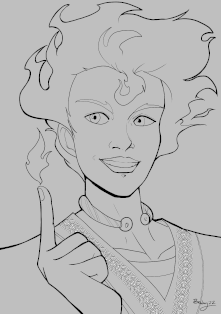
    The Síoraí (pronounced “see-or-EYE”) were born from mortal people whose spirit had been displaced by a spirit from the Fæ realms. Though their bodies remain mortal, albeit with extended lifespans, their Færie spirits reincarnate into newborn bodies after their former body expires. Since time in the Fæ realms passes differently than it does in Fahr Ryasc, a given Síoraí’s Færie spirit may reincarnate quickly, or ages will pass before the spirit sees the world through mortal eyes again.

    Over the centuries as the Síoraí developed as a people, the influnce of the Færie spirits has become more pronounced. The Síoraí have grown more distinctive among themselves, assuming a physical form more pleasing to the Færie who live within their mortal vessels. While, in some regards, this continued metamorphosis of the moral bodies are considered beautiful by other mortal peoples, they have grown inceasingly inhuman by contrast.

    The Færie spirits inhabiting the Síoraí have long memories, sometimes being able to recall events from past incarnations. However, their time as spirits within the Færie realms is hidden from them, and they can only remember the fullness of their many lives when existing as spirits there.

    Basic Information

    Anatomy

    Síoraí are humanoid in appearance, though they are taller and thinner on average. Síoraí have two sexes and reproduce heterosexually. Their physical bodies go through puberty before reaching maturity and women experience menopause during middle-age.

    Síoraí also have two folk, which derive from the Fæ courts their spirits belong to. The Deasíoraí are connected to the Deadí Færie court of Long Days. The Bansíoraí are connected to the Banyte court of Long Nights. The Fæ are ruled by the Deadí from the Spring Equinox through the Autumnal Equinox and the Banyte from the Autumnal Equinox through the Spring Equinox.

    While the Deasíoraí and Bansíoraí are the same people, they each vary in complexion and hair color. Deasíoraí tend towards deeper brown and ruddy complexions coupled with fair red and yellow hair and light eyes of green and blue. Bansíoraí tend towards pale skin coupled with black hair and dark eyes.

    Genetics and Reproduction

    Síoraí reproduce sexually, most often births are singular, but dual and multiple births are not unheard of. Infants are not yet possessed of Færie spirit at birth, but by the time the child reaches it’s second anniversary, about the time they begin to learn how stand and take their first steps, their Færie spirit fills the mortal vessel and they develop into Deasíoraí and Bansíoraí as appropriate.

    Growth Rate & Stages

    Síoraí grow similarly to other mortal peoples, reaching maturity in 18 to 20 years. Once reaching adulthood, they age half as fast due to their Færie nature. Thus, Síoraí reach Middle Age by 60, and old age by 100. They survive for another 50 years, with a natural lifespan of 150 years.

    Behavior

    Síoraí often seem indifferent to others, and self-centered. They have an unusual perspective on events and relationships due to their multiple incarnations through out ages. Even though the mortal body they inhabit may be only decades or a century old, their spirit, being of the Færie, can recall memories from multiple lifetimes. The Síoraí have difficulty relating to the here and now, or to people who will inevitably become only distant memories of past lives.

    There is an exception in other Síoraí. Síoraí recognize and can empathize with other Síoraí in ways that are simply not possible with other mortal people. Síoraí are among the very few people in Fahr Ryasc who have the shared history of experiencing multiple lifetimes over the course of ages, and can form tight bonds with the inherent promise of those bonds renewing in future incarnations. Síoraí are able to share with one another first-hand experiences of events that no other living mortal could have been through.

    This also makes Síoraí rather archaic as a people. They derive a certain comfort from the familiar, being grounded in habits and environments of their previous lives. They tend to speak with outmoded diction, being accustomed to the language they have been conditioned to speak over dozens or hundreds of lifetimes.

    Additional Information

    Social Structure

    The Síoraí develop their societies as a mirror of their courtly civilizations within the Fæ Realms. They Organize based on their Færie nature as Deadí and Banyte Fæ and their positions within those courts, whether Noble or Small (or Common) Fæ. However, other mortals who live among the Síoraí are appointed into social positions, but are always treated as lesser, since their mortal contributions are perceived by the Síoraí as “temporary by nature”.

    Síoraí who live among the other mortal realms of Fahr Ryasc, often live so apart from the established social structures. Their multiple lives and sense of mortal impermanence extend even to the great empires of Fahr Ryasc. They can’t help but see the achievements of other mortal people, even nations, as fleeting. The Síoraí find “progress” distasteful, especially the rapid progress of mortal people, unless, of course, that progress compliments themselves or their aesthetic concerns.

    Physical characteristics

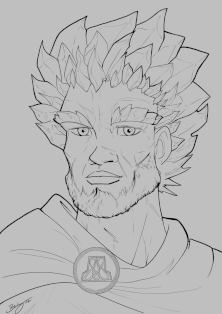
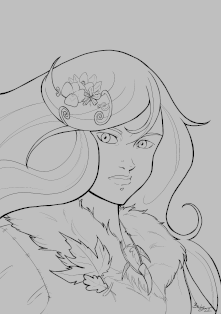
    There is a definite sense of the otherworldly about the Síoraí. They are at once beautiful and distrubing to behold, especially as they mature, their mortal bodies exaggerating the mortal form, growing tall, willowy and deft with long, delicate fingers and toes.

    A Síoraí’s face is long and oval, with sharply angled almond-shaped eyes, high cheekbones, a sharp blade of a nose, long tapered ears and a narrow mouth. There are further distinctions between the Deasíoraí and Bansíoraí. Síoraí men can grow facial hair, but it’s normally thin, fine and short, matching the hair covering their head and it usually comes in after middle-age. Síoraí women do not normally grow such facial hair. Both sexes grow sharp angled eyebrows, and tend towards high foreheads. Neither sex develops wrinkles or sagging until very late in life, 130 years or older.

    Síoraí hair remains a consistent color throughout their lives, seldom going grey or white with age.

    Geographic Origin and Distribution

    The Síoraí can be found nearly everywhere in Fahr Ryasc, but are most common in their realms located in the Tanglewild forest in the South, the Elderwild forest in the North, and beneath the Auborobua mountains.

    Average Intelligence

    The Síoraí possess typical mortal intelligence. However their Færie spirits provide them access to knowledge from their past lives and a perspective that is more supernatural than the average mortal experience. This gives the perception that Síoraí are more knowledgeable than most people (also are eternally irritating to sagacious professions that deal in secretive information as a Síoraí, after an evening of meditation can recall some bit of esoterica which takes others days or weeks of research in archives).

    Perception and Sensory Capabilities

    Síoraí, being born from mortals, have senses of smell, taste and touch that are similarly sensitive as their cousins throughout Fahr Ryasc. However, their Fæ ancestry makes their senses of sight and hearing almost supernaturally sharp.

    Civilization and Culture

    Major Language Groups and Dialects

    Lazáqo is the primary language spoken in the Síoraí’s homeland of Záqu, hidden deep in the Tanglewild forest. The Elderwilde forest is home to the northern realm of Taur Ymagar, speaks a dialect of Lazáqo named Vakláno. The Síoraí realm of Berízal deep below the Auborobua Mountains speaks a dialect of Lazáqo known as Berxáno, which is the most widespread common language of the underworld civilizations beneath Fahr Ryasc
  • Gyldport

    Gyldport

    Sea Cities of the Marakhor Part 2

    Gyldport was a growing Free City and her merchant fleets are threatening to surpass the mighty trading fleets of the Old Xjinn Empire. Of the Sea Cities, she is the only city state that was never part of the Old Xjinn Empire. Rising from relative insignificance to fill the void in commerce left as the Old Xjinn Empire withdrew into itself.

    Gyldport was founded on the Vokojupiv, a small, mist-shrouded island between the mouth of the Naargik Straits and the Domain of the Reef King. Initially, the island, hidden beneath almost perpetual fog from the cold waters of the strait meeting the warm water of the Marakhor Sea, and it’s treacherous approaches from the reefs, was a pirates’ haven. Dozens of small ports, harbors, and anchorages were spread across Vokojupiv, and it’s nearby islands. During the centuries that the Old Xjinn Empire had retreated from it’s place of dominance on the Marakhor, the pirates of these small ports grew prosperous. Soon, they were able to unite as a league, with their capital founded at Gold Harbor, later renamed Gyldport.

    Gyldport has spread over a great deal of the island, growing up as it reached the extents of the island’s available land. The buildings, made of stone quarried from the mainland are five stories high, sometimes more. The architecture of Gyldport has advanced beyond the static designs of the other Sea Cities, engineering structures to be strong without crushing themselves beneath their own weight. Flying buttresses criss-cross the city from one building to it’s neighbor in a web of mutual support. Several of these have been built out into causeways that allow folk to walk from one building to the next above the street.

    Of the Sea Cities of the Marakhor, Gyldport has the most diverse population. People from every ethnicity in Fahr Ryasc, from the Bryndlands of the north to the Old Xjinn Empire, and the Sea Cities along the eastern shores of the Marakhor Sea. Bryndffolk, Tralfolk, Xjinn, Ra’akhen, Hsaahn, they all can be found here. Ethnically homogeneous neighborhoods, exist across the street from communities of mixed heritage. Gyldport is a chaotic swirl of languages and cultures, often bordering on anarchic and lawless at times. As would befit it’s piratical history.

    Gyldport’s navy rivals the Imperial Xjinn Navy, although the Imperial Navy has a large advantage in shipbuilding. The navy of Gyldport is divided into several semi-independent fleets and flotillas, each under a Lord Admiral. The navy has evolved from being a collection of pirates to merchants, pursuing valid trade with the other Sea Cities and the tribes of the North.

    Gyldport’s civil administration is heavily factionalized. The city-state is governed by a council, representing the most powerful guilds and fleets. These factions maintain control over their territory, fleets, and docks including keeping the peace and collection of taxes. This makes Gyldport a patchwork territory where some boroughs are little more than gang turfs where protection is purchased through extortion and press-gangs prowl the streets at night and others are gentrified communities with municipal services and civic institutions.

    The council itself varies in its membership, though it is seldom less than a score of councilors or more than thirty. The council conducts diplomacy with the other realms of Fahr Ryasc, collects taxation from the various districts, or duties from the various fleets. There are several offices independent of the council which facilitate the bureaucratic functioning of the government.

    The following is a partial list of council-worthy factions in Gyldport

    • Ærakh’s Lovers (merchant fleet)

    • The Sorcerer’s Guild

    • The Friends’ Guild (a Thieves’ Guild)

    • The Docksmen’s Guild

    • The Windblown Fools (merchant fleet)

    • Temple of the Sea King

    • Judoas Kraigas (one of the wealthy boroughs)

    • Vagstrum (another wealthy borough)

    • Athanye’s Point (a large, but poor borough)

  • The Bryndffolk

    The Bryndffolk

    Tribes of the North Part 2

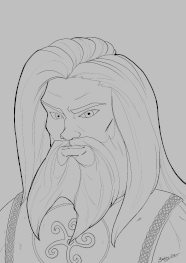
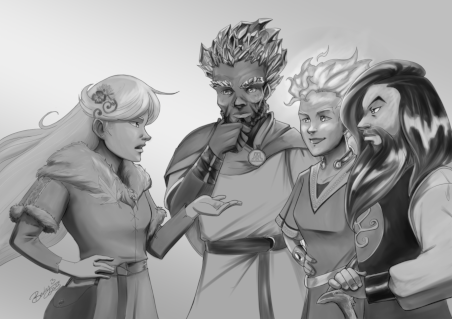
    The Bryndffolk are a human people who live among the Kælish Highlands, Kymrau Mountains and the Kharian Basin. As a species, the Bryndffolk are born with characteristics of the elements. These characteristics are used commonly as social distinctions within Bryndffolk culture, more so than their gender expression. They have a primal, elemental bond with the land of Fahr Ryasc. They divide themselves among three tribes and those subdivide themselves among Clans. They have a strong cultural pride on having never been conquered, and remain fiercely independent.

    There are four elemental bonds among the Bryndffolk, they are spiritual (even soulful if you prefer) and established at birth. There is no known or understood connection between parentage and elemental bond. A child can be born with any elemental bond, even twins or larger multiple births can have differing elemental bonds. The Druí believe this bonding is made by the Elemental Sovereigns through their own inscrutable wills and agreements.

    The Karrak Brynd

    Bryndffolk with a bond to the element of Stone, the Karrak are often larger and stronger than thier other Bryndffolk cousins. They are stoic and unyeilding (some would say stubborn) like the mountains they are related to. Unsurprisingly, they have skin, hair and eye colors that tend towards earthy tones.

    The Ganigan Brynd

    Bryndffolk with a bond to the element of wind, the Ganigan are free and unbound, They tend to be slender when compared to their Bryndffolk cousins and have light complexions similar to those colors found in the sky. They are mercurial in nature, but possess a keen insight into the nature of others. They are swift and fleet of foot as their elemental bond woul suggest.

    The Fflam Brynd

    Bound to the element of fire, Fflam Brynd are passionate and excitable. They are lithe, often athletic, and can be very graceful when compared to their Bryndffolk cousins. The Fflam Brynd are exceptional acrobats and dancers, combining their inherant agility with their passionate nature to express themselves superbly when moving.

    The Tonna Brynd

    Tonna Brynd are bound to the element of water. They have strength that can rival the Karrak, and an agility which can rival the Fflam. However, despite these extremes, the Tonna Brynd are the most centered and balanced of the Bryndffolk. The Tonna Brynd have cool complexions in their skin, hair and eye colors.

    Nations of the Bryndffolk

    The Bryndffolk are numerous in the North, as common as the Tralfolk. They have organized into three nations based on their geography. Within each nation there are several Ræmse (Bryndspek for “kingdom”) that rule themselves independently, sending representatives to a Kings’ Council called a Rhæag. Within each Ræmse, the Bryndffolk further form clannish communities that are semi-autonomous.

    Just like Bryndffolk families can be found amongst the Tralfolk realms, the nations of the Bryndffolk hold citizens from all the peoples that can be found in the North.

    Kymrou

    The Kymric Brynd consider themselves the first of the Bryndffolk. When the ancient, sorcerous realm of Vakra sank into what would be the Kharian Basin, the ancestors of the Kymrou escaped to the only lands they could find that were safe from the catastrophe, the Kymrou Mountains. There, they established communities free from the domination of Vakra. Kymric legend maintains that this is when the Bards and Druids mark the beginning of the Bryndffolk. High up the face of the Kymrou Mountains, they await the return of the Aírdrígh, and the reunification fo all the Bryndffolk.

    Kælish Highlands

    The Kælic Brynd are Bryndffolk from the Kælish Highlands of the North of Fahr Ryasc. The Highlands are a rough region of steep hills and deep valleys, called “Kæls”, where the Kælic clans thrive. Each clan claims a single Kæl as it’s territory. Within the Kæls, the Clan’s Taisech (Chief) serves as liege. The bond of the Taisech to the land, their Talav-Nasc, impacts its abundance as much as its people do.

    Kharia

    The cataclysm that sank the land that became the Kharian Basin both blessed and cursed the Bryndffolk who live there. The swamps of the Kharian Basin are rich in magic and resources, but they are also home to aggressive and hostile flora and fauna. The Kharian Brynd have adapted to this bountiful and dangerous environment. They are among the finest mariners in Fahr Ryasc and are masters of navigating the dense network of marshes, shallow lakes and connecting rivers of the Kharian Basin.

    The Druí Roth Mohr

    The Druí Roth Mohr is both a faith that worships the natural deities of Fahr Ryasc, named the Circle of the Cycle and the college of Druid – Priests called Druí. The Druí hold a cultural place of privelige in Bryndffolk society. In their role as keepers of Rites, Advisors and mediators among the Bryndffolk, the Druí Roth Mohr are permitted freedom of travel throughout the Bryndlands.

    One of the most important rites the Druí Roth Mohr perform is the investure of the Land Binding, or “Talav-Nasc” upon the Taisech of communities within the Bryndlands. The Land Binding ties the prosperity of the land and it’s people to the rulership of the Taisech. A strong Taisech who rules in accordance with the will of the Circle of the Cycle will, through the Talav-Nasc, cause the land to flourish. Whereas a weak Taisech tho violates the will of the Circle of the Cycle, or a person who usurps the role of Taisech without being given the Talav-Nasc, cause the land, and their people to suffer and blight.

  • Mapping Fahr Ryasc

    Mapping Fahr Ryasc

    Settings, Maps and Stories

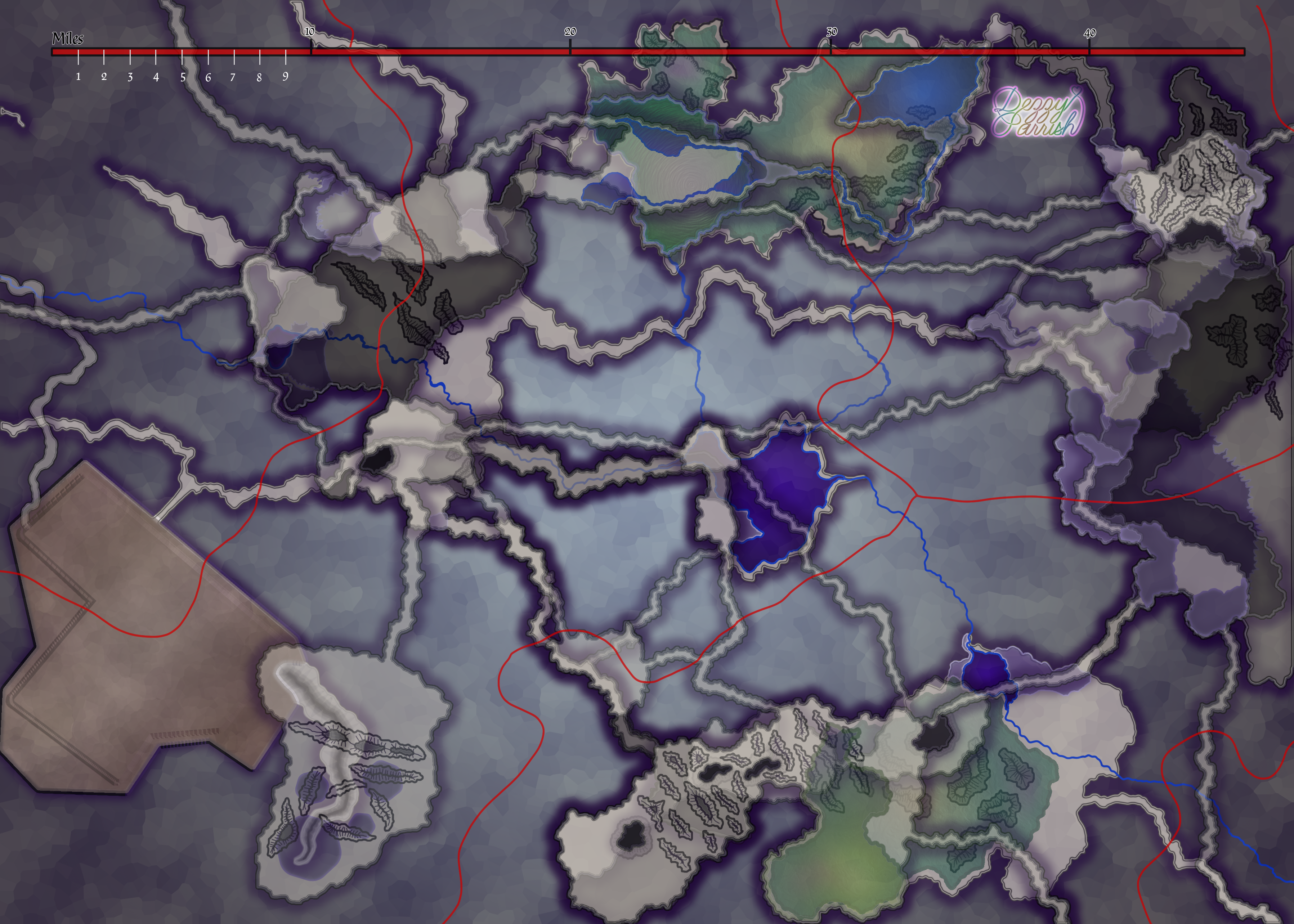
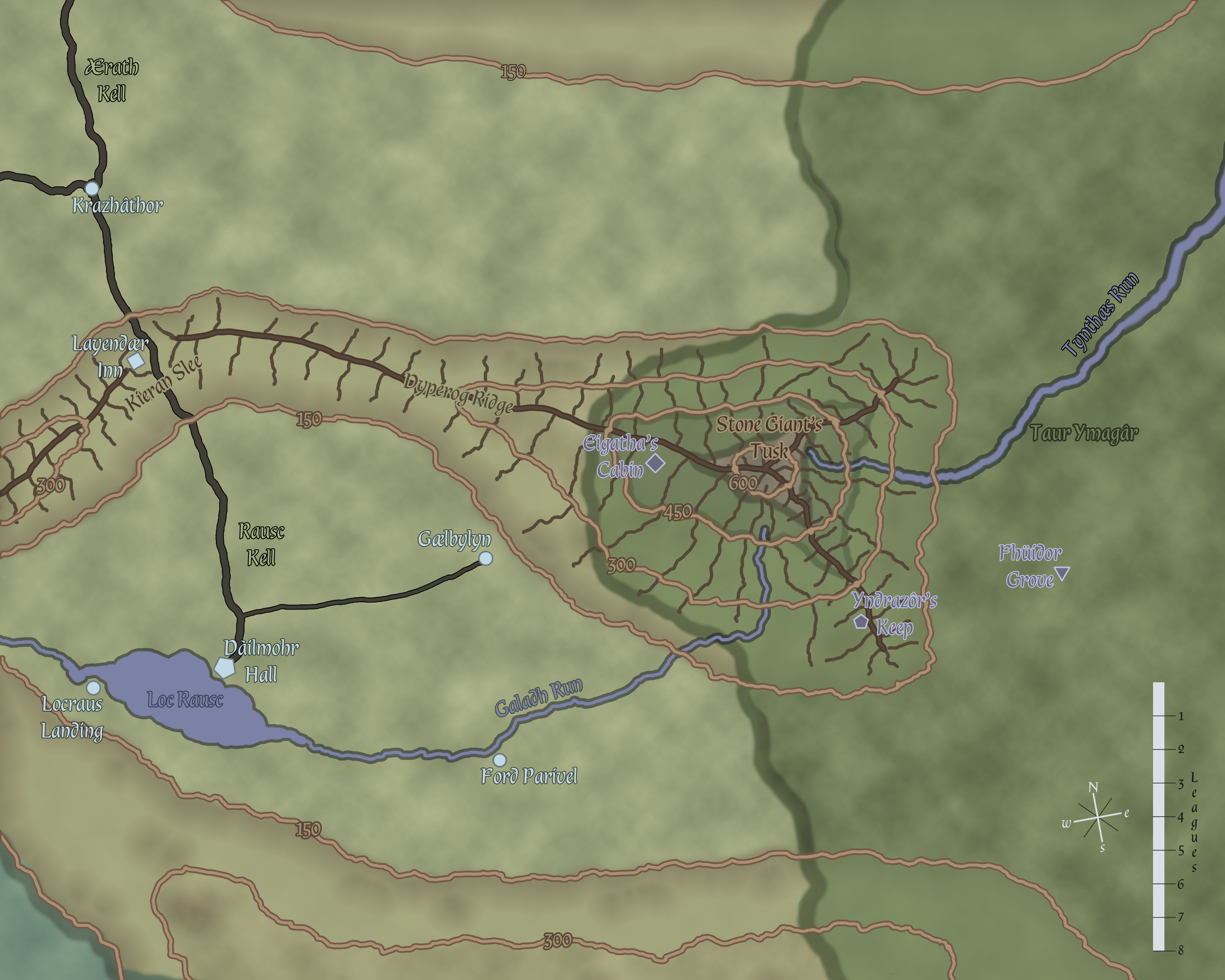
    This is the subcontinent of Fahr Ryasc during the End Times. I just completed the latest revision of this map on the week of publication. For you, dear reader, I redrew and redesigned the entire subcontinent. You’re welcome.

    Okay, it was also time to give this map another pass. I have iterations of this map going back to 2013 (which, by the way, is two years before I started work on “Fahr Ryasc” as a setting. I’m kinda always making maps and then finding settings that fit them best. My other big project, Genzhymyl has a multilayered underground map. I still have the piece of hot press cardstock I drew the orignal location on.

    And that turned into this with a little graphic computer mojo..

    This is Version 13 of that original map. I really like dreaming up these worlds and imagining the people who live here. Genzhymyl is in Fahr Ryasc, somewhere under the Auborobua mountains. It’s in the Forgotten Realms too, somewhere in the “North”.

    These two settings maps are the widest scope of a “bullseye” technique that I learned from the early days of D&D. The danger here is the temptation to fill in every last detail. I used to design settings on the world level, where all of the landmasses and oceans were drawn out at a planetary scale. I don’t recommend starting off at that scale. There is just too much that your players will never ever see, and if they do, they’ll never get the opportunity to appreciate it all. Even on the continental level, the setting can be too big to detail.

    Let’s look at Middle-Earth. Professor Tolkien designed a third or half a continent. You can look at that map and see everything from the Grey Havens to Rhûn. But, even the Professor’s extensive lifetime of writing leaves most of this massive creation unexplored. After all, what stories take place in Rhûn? Or the wilds of Cardolan in old Arnor? All of that space sits fallow in the Legendarium. My lesson here is “don’t start too big”.

    “It’s a dangerous business, Frodo, going out your door. You step onto the road, and if you don’t keep your feet, there’s no knowing where you might be swept off to.”
    – Bilbo’s advice to his nephew.

    There is a temptation, once you’ve drawn this big, beautiful map, with evocative names for locations and this epic scale, to share it with your players during a Session Zero, or even Pre-Session Zero. It’s natural, you’ve spent hours and maybe weeks or years creating a work of art and you want to share it with your friends. In the context of starting a campaign and buiding characters, this isn’t the best strategy.

    Referring to Lord of the Rings again, the main characters, especially the Hobbits had never left the Shire before starting out for Bree. Even with Bilbo’s maps, they don’t have clue about the scale of the journey they’re taking. The characters in your campaign should be similar. They’re familiar with their homes, whether it is their village ,their farm or their neighborhood in the city they grew up in, and they might, if they’re well travelled have knowledge of their neighboring settlements and the terrain in between.

    So, instead of rolling out the grand map of the Realm during character creation, draw up a simple small scale map that features the local area the characters will be starting in. Work from this map as you introduce your players to the setting. For an example, I’ll share with you the Kieran Slee in the Kælic Highlands

    .This area is much more manageable, and believable for characters to be familiar with from the start. Everyone will know landmarks like the Stone Giant’s Tusk, the Kieran Slee with the Layender Inn. Beyond this little area, you can tell the players about what their characters have heard. Like the marshes to the South, the Great Hall of the Rígh (king) to the North, and the Great Stone Circles of the Druids somewhere off to the West.

    As their characters travel beyond this small little provence and into the wider world, instead of providing a perfectly drawn map, instead, tell the players about the terrain and the time it takes to travel. Going from Layender Inn to the Kell beyond Ærath follows a road and it takes three days travel by foot. Encourage them to make their own map. It won’t be perfect, but after a few game sessions, it will be accurate and it will reflect the story the players are making with you.

    A small confession…

    As you might have guessed, this week’s blog was mostly an excuse to show off my map making talents, and chat a bit about my philosophies with regards to world-building. I don’t really have a design for this article. I just wanted to share the pretty picture, and maybe work in that quote from Lord of the Rings. I’ll be adding some more lore to the blog next week. Pinky Swear!

  • The City of Vohrkohz

    The City of Vohrkohz

    Sea Cities of the Marakhor; Part 1

    Vohrkohz was founded on at a hill inside a sharp bend on the Tyrqohz river almost 500 years ago. The settlement was fortunate in it’s position between the mouth where the Tyrqohz emptied into the Marakhor Sea and the rich ore-fields on the face of Mount Ghaul. The flood plain on the low bank of the river bend offered exceptionally rich soil for crops, the river herself was bountiful and her lower branch was wide and easily navigable to the sea. Vohrkohz was well suited to grow and support her people.

    For most of it’s history Vohrkohz grew from a town on the riverbank to a modest city-state renowned for it’s artisans. They crafted beautiful and precious objects using the aurixom ore mined from the face of Mount Ghaul. When Vohrkohz joined the early Xjinn Empire, the fortunes of the city grew exceptionally fast. The markets of the expanding empire for luxury made Vohrkohz very wealthy. After the Old Xjinn Empire declined and Vohrkohz claimed its independence as a city-state and joined the Sea Cities league, their reputation and markets had been long established, and their wealth continued to grow. This was Vohrkohz’ golden age.

    However, every golden age comes to an end. Vohrkohz began her decline as the Aruixom mines began to demand more and more destructive techniques to yeild enough ore to satisfy demand. The fisheries pulled more fish from the sea and the Tyrqohz became polluted with the industrial mining and forging industries.

    Then, the Old Xjinn Empire, under the guidance of the Nea’Archi Doctrine religion, began to reclaim all it’s former lands. Vohrkhoz was reabsorbed into the Empire twelve years ago. The returned Empire was different than the one that Vohrkohz was first a part of. This Empire was martial, expansive, authoritarian. The Nea’Archi Doctrine was a strict and agressive religion, spreading the worship of Lords of the Higher Worlds, a pantheon of deities aligned with Cosmic Law. While in the dozen years of imperial rule have not purged the variety of faiths practiced in the city. Still, the Nea’Archi Doctrine did grow among the ranks of Vohrkohz’ aristocracy.

    The Old Xjinn Empire has rejected sorcery and adopted the rational disciplines of industry and science. This influence had affected Vohrkohz with the discovered industrial properties of aurixom. The forges of Vohrkohz had long known of how aurixom, when alloyed with steel created a metal of exceptional strength and durability. the Old Xjinn Empire has rebuilt and expanded Vohrkohz’s forging district to produce industrial quantities of refined aurixom and alloyed aurixom steel. The artisan districts were also turned into factories that used the refined metals to create tools, weapons, and machined parts for clockwork engines. These processes were both labor and resource intensive. The furnaces for forges and factories burned tons of coal day and night, filled the skies above Vohrkohz with clouds of brown-black smoke and filled the air with harsh fumes that could be smelled and tasted from anywhere in the city. When close to or inside the buildings the foul air even burned the eyes and skin after two or three hours.

    The Tyrqohz River was extremely polluted due to the industrialization by the Old Xjinn Empire. It had been growing more polluted due to aurixom mining operations for decades prior to industrialization. Afterwards, both the industrialized mining processes polluted the upper river, and the refining and forging districts heavily polluted the lower river. This destroyed the fishing on the Tyrqohz and affects the mouth emptying into the Marakhor Sea at Port Tir. The fishing fleets from Port Tir needed to sail further out from Tirgohro Bay into the Marakhor Sea to find fishing waters that were not corrupt.

    The banks of the Tyrqohz that served as floodplains and supported the agriculture of Vohrkohz have been polluted and corrupted into a toxic, unfertile scar. The region, called the Befoulment became a deadly, poisonous wasteland choked with mutated flora and fauna hostile to the natural environment. Within the Befoulment can be found the ruins of grand, once palatial estates, and ghost towns where the populations were driven out by the encroaching poison.

    All of these factors combined to make Vohrkohz an industrial Hell. The aristocracy embraced the Nea’Archi Doctrine had made the city opressively authoritarian. The traditional religoins that had been practiced among the artisans and farmers and fisherfolk were slowly but methotically driven out of the public. The merchant class was split, driven either into the aristocracy or out of business all together. The laborer classes were pushed into indentured servitude in the factories, forges, and workhouses of the city. All under the authority and dominance of the Old Xjinn Empire.

  • The Tralfolk of Fahr Ryasc

    The Tralfolk of Fahr Ryasc

    Tribes of the North part 1

    The Tralfolk were a barbarian people who lived in the northern lands of Fahr Ryasc; the Kharian Basin, the Kælic Highlands and the Kymric Mountains. In an earlier age, long before the rise of the Old Xjinn Empire, the lands now claimed by the Tralfolk and their rivals the Bryndffolk were all part of a Sorcerous Realm known as Vakra. The Tralfolk began as thralls of the Vakran people, giants who called themselves Vazdeg.

    When Vakra fell to a magical catastrophe brought on by their sorcerers and hubris, the pre-Tralfolk thralls were changed into the varied peoples of the Tralfolk. The Tralfolk share common, though divergent ancestry with most other peoples of Fahr Ryasc, the Xjinn, the Hsaahn, the Bryndffolk, even the Ra’akhen and the Síoraí are cousins to all of the Tralfolk ancestries.

    Thanks for reading Lore and Legends of the Dezzyverse! Subscribe for free to receive new posts and support my work.

    Even before the Fall of Vakra, the Tralfolk had already been changed by their Sorcerous masters. Through a combination of sorcery and cultivation, the thralls of the Vakra were developed to serve the needs and desires of their Vazdeg patricians. The Fall of Vakra exaggerated the traits that were bred into the thralls, mutating them into Tralfolk.

    The principal social unit Tralfolk community organization were formed around the klaarg, groups in which descent was reckoned through common parental lineages. Klaarg (both singular and plural), were named often for the founding families and the oldest such stretch back for centuries. Communities were commonly referred to by the klaarg of their Verkovgi (Tralspek for “chief” or “lord”).

    Ethnicities of the Tralfolk

    Beihtral: The Beihtral were companions for Vazdeg sporting hunts. They were cultivated for their feral instincts and sharpened senses. After the Fall of Vakra, they developed into beast-headed humanoids of two different clans, the wolf-headed Tier, and boar-headed Tohr.

    Fyhrtral: Vakra used the ancestors of the Fyhrtral to assist with the cultivation and husbandry of the native flora and fauna in their realm. They were exposed to the most powerful wells of natural magic discovered by the sorcerers of Vakra for generations. The catastrophe of the Fall of Vakra changed the Fyhrtral, the powerful magics of the deep wild places took them and remade them. They were tall and graceful, Fyhrtral men grow proud horns from their heads like stags, their legs were jointed like deer, ending in cloven hooves and made them swift runners and strong leapers. Their bodies were covered in a pelt of short, soft fur, and they grew short, furry tails at the base of their spines.

    Glaztral: The Glaztral were robust thralls, cultivated to thrive in high and cold altitudes found in the Kymric Mountains. After the fall, the developed to large people, covered in a thick pelt of white or pale fur across their shoulders, arms and legs.

    Gundtral: Gundtral were among the most privileged thralls, serving as assistants to the Vakran sorcerers. The Gundtral were selected for their natural talents with magic and intellect, but not might or strength. They suffered most during the Fall, emerging from the devastation only half the size of most other peoples and cursed with an impish seeming. Without the privilege of their masters’ favor, the Gundtral have dropped to nearly the bottom of Tralfolk society. Still, they have retained their inherent magic and high intelligence, traits which help them to survive despite their physical frailties.

    Orgtral: Physically largest of the Tralfolk, Orgtral are larger than even their Glaztral cousins. Their thick limbs and broad trunks affoard them all the physical advantages that the Gundtral lack. Their ancestors were cultivated by the Vazdeg for physical labor and service as soldiers and bodyguards. This heritage, and their size has made the Orgtral phenomonally strong when compared to other peoples.

    Rukhtral: The Tralfolk people were capable of producing multiethnic offspring, both with other Tralfolk, and wih other humanoid peoples. The result of these mixed lineages had stabilized into the youngest of Tralfolk peoples, the Rukhtral. The Rukhtral carried many of the best traits from their parentage, though to a lesser degree. They were strong, but not as strong as the Orgtral, they were clever, but not as clever as the Gundtral, they felt a deep connection to the land, but not to the same extent as the Fyhrtral. Rukhtral were of average height and build of most humanoid peoples of Fahr Ryasc, with pointed ears and small horns growing from their foreheads.

    Svakktral: The Svakktral when they were thralls of Vakra were used as miners and workers of stone and metal. They explored the Underworld of Fahr Ryasc and sought its treasures for their Vakran masters. After the Fall of Vakra, the thralls who retreated into their vast underground strongholds became Svakktral. The Svakktral were short and broad, thick limbed and strong as the mountains they lived beneath

    Vaktral: The Vaktral as thralls, were born of a Vashdeg parent and a thrall. This did require sorcery as the Vashdeg were giants, and in the case of a thrall mother, that sorcery needed to be applied until birth. The children of this mixed parentage enjoyed an elevated status in Vakran socity, above the other thralls, but below Vakran citizens. They also were able to produce a stable ancestry of hybrid children among themselves. They, like the Gundtral, were highly intelligent and magically powerful. They were, by most cultural definitions, beautiful to look upon. Even after the Fall of Vakra, the Vaktral only became moreso. Their sorcerous prowess, inherited from their Vashdeg ancestery made them mighty sorcerers, but their numbers were very few, and they isolated themselves, preferring solitude to the harsh realities of life among others.

    Language

    The Tralfolk communities spoke Tralspek, a derivative form of Vakran. Over the long centuries following the Fall of Vakra, the Tralfolk continued to use their own casual dialect of Vakran until it became a distinct language of its own. Tralspek did not have a written form, most Tralfolk were illiterate, but the few who have kept written records over the centuries used the Vakran alphabet and symbology to preserve their histories, stories and culture. But, the writings made were unique to each author. No single written interpretation of Tralspek has emerged, and none was widely adopted.

    Relations

    The Old Xjinn Empire: The Empire considered the Tralfolk to be uncultured barbarians at best, and at worst, more beasts than people. From how the Tralfolk live to their language, worship, even their art and culture were all deemed inferior to the Old Xjinn Empire.

    Bryndffolk: The Bryndffolk have been competitors for land in the north with Tralfolk since the Fall of Vakra. Longer if one considers the Bryndffolk’s struggle with Vakra pre-Fall. While the two peoples have been intermixed for centuries, and minorities of each people lived amongst the communities of the other, there was always competition for land, rescources, and survival.

    The Sea Cities: The rise of the Sea Cities held many of the same prejudices that the Old Xjinn Empire had. Influenced by the Bryndffolk when their trading ships sailed north, they held the view of the Tralfolk as barbarian pirates looking for plunder rather than commerce.

  • The triumph of Law in the Old Xjinn Empire

    The triumph of Law in the Old Xjinn Empire

    In Fahr Ryasc, the Lords of the Higher Worlds overthrew the Princes of Ruin, imprisoning Chaos and establishing the dominance of Law.

    One thousand years ago, Law triumphed over Chaos in Fahr Ryasc. Nikkarn, one of the Archons of the Nea’Archi Doctrine wielded the Ebonrune Scepter to bind each Prince of Ruin into it’s prison in the Underworld. With the Princes entombed, The Lords of the Higher Worlds were freed to elevate Law among the mortal peoples of Fahr Ryasc, starting with the Old Xjinn Empire.

    The Old Xjinn Empire had already adopted the Nea’Archi Doctrine as it’s religion and creed almost since it’s founding. After the triumph, the empire withdrew back into it’s irex (“throne-cities”) and spent centuries consolidating and transforming into the instrument the Lords of the Higher Worlds would use to subjugate all of Fahr Ryasc.

    Through Nea’Archi Doctrine dogma, the Old Xjinn Empire forbade sorcery, and adopted science and rationality to replace it with Alchemy ,Artifice and Clockwork. This led to the discovery of the element Aurixom as a catalyst for industry. This revolution in the empire has reinvigorated the declining, fading realm. Purges of sorcerers and practice of religions other than the Nea’Archi Doctrine has reshaped imperial culture and returned the Old Xjinn Empire to a position of supremacy in Fahr Ryasc.

    The Old Xjinn Empire had reclaimed most of its former territory over the past century. With the absorbtion of the city-state of Vohrkohz on the Tyrqohz River, the empire has secured the richest source of Aurixom ore known in Fahr Ryasc. As the campaign opens, the empire is expanding and beginning it’s effort to conquer the entire continent.

    As a background option in Black Sword Hack, the Old Xjinn Empire is considered decadent.